


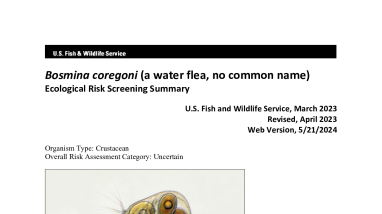
Bosmina coregoni is a species of water flea native to freshwaters of Europe and Asia. In the 1960s, it was introduced to the Great Lakes basin, probably through ballast water exchange. It has expanded its U.S. range to the Northeast, the Pacific Northwest, and Missouri. There are currently no regulations regarding this species within the United States. B. coregoni is a dominant constituent of the zooplankton community in some lakes in the contiguous United States, but specific ecological impacts of its abundance are not clear. Therefore, the History of Invasiveness is classified as Data Deficient. The climate matching analysis for B. coregoni in the contiguous United States indicates establishment concern for this species. High climate match was particularly widespread in the midwestern and northeastern United States. Certainty of this assessment is low due to a lack of evidence regarding the suggested negative impacts of this species’ introduction. The Overall Risk Assessment Category for Bosmina coregoni in the contiguous United States is Uncertain.
Species that are considered uncertain risk need a more in-depth assessment beyond the Risk Summary to better define the species’ risk to U.S. environments.
Publication date
Type of document
Uncertain Risk
Media Usage Rights/License
Public Domain
Program


Species