


Photo By/Credit
Glenne, Gina
Date Shot/Created
05/25/2011Media Usage Rights/License
Public Domain
Image
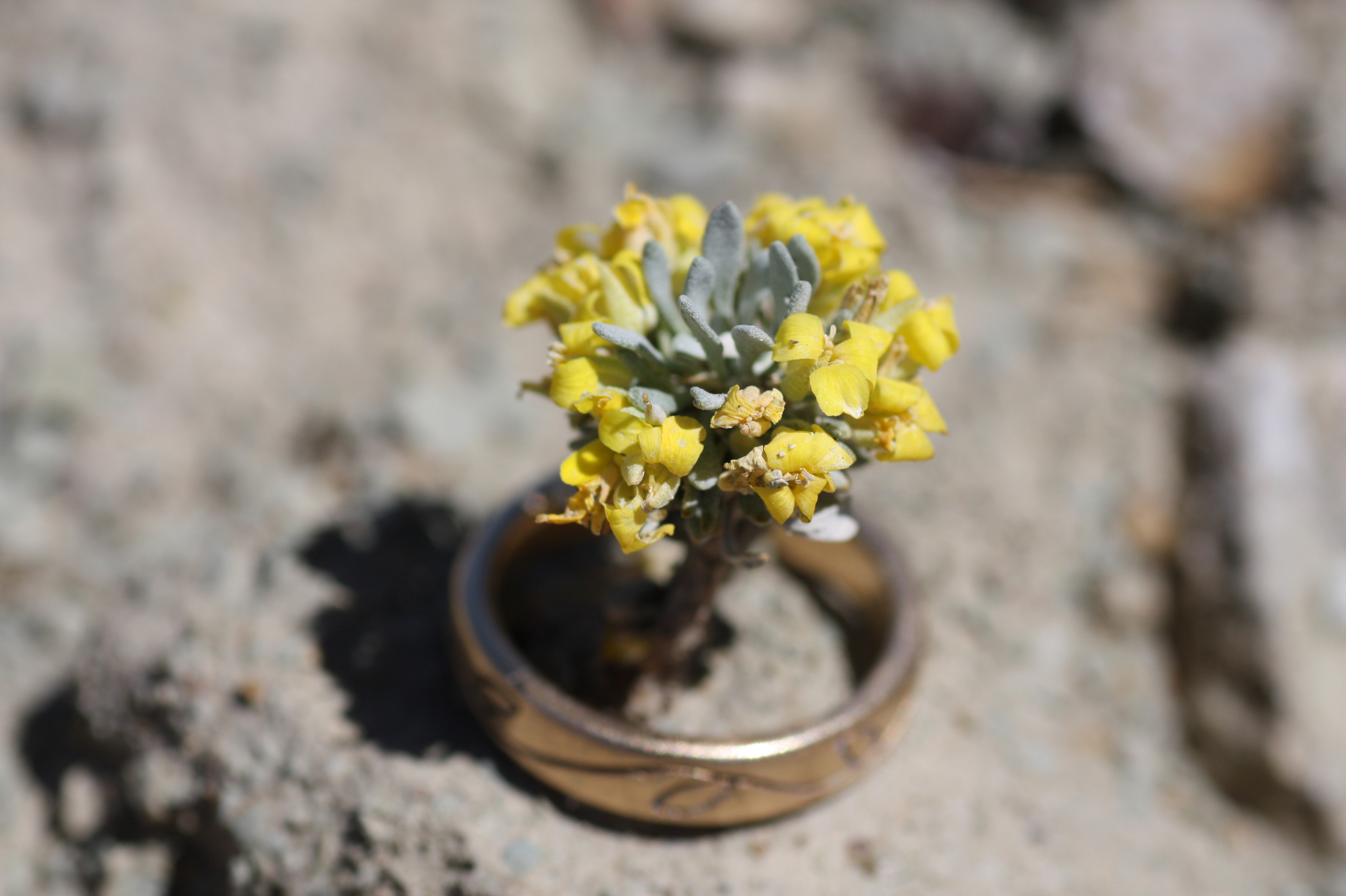
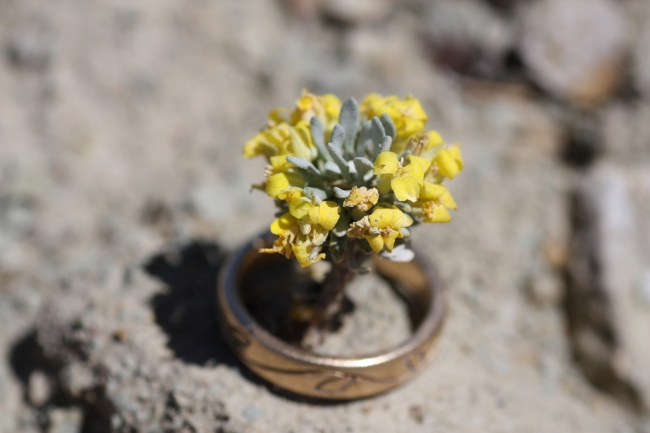
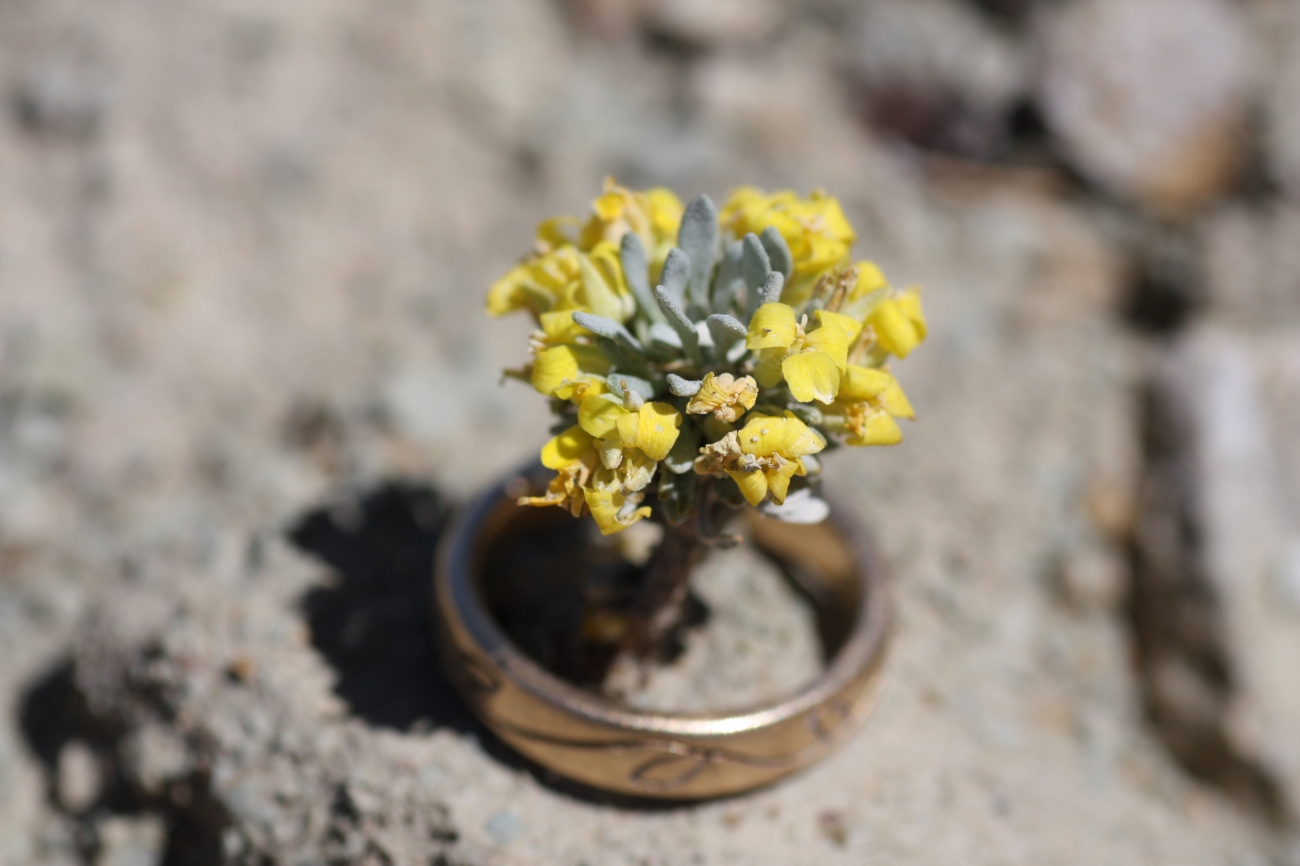
Both the Dudley Bluffs bladderpod (Physaria congesta or Lesquerella congesta) and the Dudley Bluffs twinpod (Physaria obcordata) are rare members of the Brassicaceae (mustard) family. Dudley Bluffs bladderpod is an extremely small cushion plant only 0.4 to 1.2 inches in diameter with a congested mass of bright yellow flowers and narrow silvery leaves rising from a long, thin taproot. The cushion growth habit is an adaptation to erosive badland soils, which has evolved independently in several unrelated taxa in this area. Flowering is typically during April and May, and fruit set from late May into June. Dudley Bluffs twinpod is 4.8 to 7.2 inches tall with oblanceolate, entire leaves 0.4 to 0.6 inches wide and 1.6 to 3.8 inches long, with a silvery sheen due to a dense covering of overlapping, dish-shaped trichomes. The species' scientific name refers to the hear-shaped silique or fruit. Flowers are yellow, and typically present in May and June. These two rare mustards grow on barren white outcrops exposed along drainages by erosion from downcutting of streams in the Picaence Basin in Rio Blanco County, Colorado. The bladderpod is the rarer of the two species; its entire range is limited to within 10 miles of the original type locality. The range of Dudley Bluffs twinpod is slightly broader, with some occurances separated by as much as 23 miles. While the twinpod grows on steep sideslopes, the bladderpod grows on the top and sides of level outcrops where the white shale is exposed.
Species