Written By

Biologists across the Carolinas have been piecing together the troubling mystery of why species like bobcats, foxes, weasels, and skunks are turning up dead. These mid-sized carnivores, known as furbearers, are found in a variety of habitats and feed on diverse diets. The Carolina investigation and lab results show a link between dead furbearers and a substance intended for rodent control. Anticoagulant rodenticides, the same “rat poisons” that keep barns and backyards free of pests, are finding their way into the wild food chain. These chemicals, designed to cause internal bleeding in rodents, are reaching the very animals that help keep rodent populations in balance. From barrier islands to suburban roadsides, state fish and wildlife agency biologists, university researchers, communities, and trappers are working side by side to uncover just how deep this emerging threat runs.
A Predator’s Disappearance Sparks Concern in South Carolina
Kiawah Island, an 11-square mile narrow barrier island of forest and salt marsh salt marsh
Salt marshes are found in tidal areas near the coast, where freshwater mixes with saltwater.
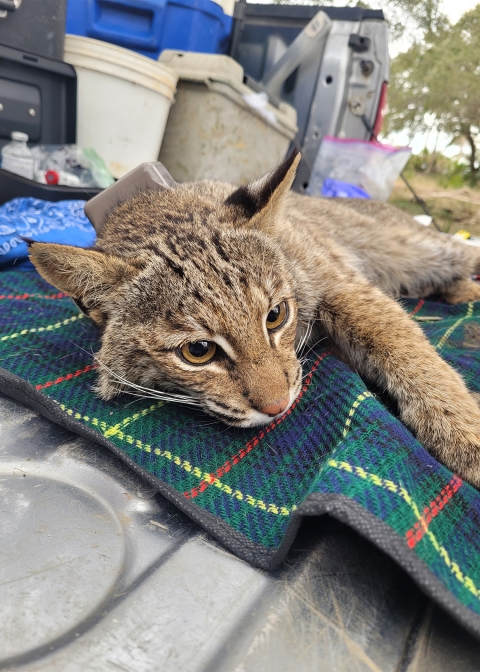
Learn more about salt marsh just southwest of Charleston, is home to one of the longest-running furbearer monitoring efforts in the United States. Radio collars, trail cameras, and decades of local knowledge track a bobcat population that hovers around two dozen animals. Here, bobcats are ecologically important keeping populations of rodents like mice and other small mammals in balance.
When three adult bobcats, including two pregnant females, died between 2019 and 2020, biologists and community members became concerned.
“When this many animals are found deceased in a short time period, biologists start to investigate and often look for signs of disease in a population,” said Meghan Keating, graduate research assistant at Clemson University. “Necropsies showed it was not a disease, but that all three animals had anticoagulant rodenticides in their tissue.” Keating’s research focuses on coastal bobcat ecology in the Southeast, specifically the effects of human development and rodenticide use on small island populations.
According to Keating, compounds found in anticoagulant rodenticides disrupt blood clotting and cause internal bleeding. “One female bobcat showed signs that she died during birth while the other died shortly after giving birth, with anticoagulant rodenticides in their systems blood clotting would have been difficult for these pregnant females.”
With these results the evidence showed that the poisons intended for rodent control had climbed the food chain and claimed predators never meant to encounter them. And this exposure was not an isolated incident.
Trouble for Other Wildlife
Across the state line, on North Carolina’s Bald Head Island, the pattern reemerged. Gray fox tested positive for the same rodenticides after roof rat bait was deployed by pest control companies. Over the next six years, fox numbers dropped. Dead eagles also tested positive for the same rodenticide, most likely the results of secondary exposure after feeding on contaminated rodents.
With a documented pattern, biologists from the North Carolina Wildlife Resources Commission and the South Carolina Department of Natural Resources expanded efforts to understand the impacts of anticoagulant rodenticides across the two states and across different species. This was the first effort to create a baseline of rodenticide exposure in the Southeast, and it would take a network of partners.
Launching a Multi-State Investigation
“We know these anticoagulant rodenticides are showing up in non-target wildlife,” said Caitlin Brett, furbearer biologist for the North Carolina Wildlife Resources Commission. “But we need to know where, in what amounts, and how it’s affecting different species.”
Liver tissue from deceased furbearers including bobcats, gray and red foxes, long-tailed weasels, and the elusive spotted skunk were collected and cataloged across both states. “We rely on roadkill animals, wildlife collected from USDA-APHIS Wildlife Services, and carcasses donated by trappers for our samples,” adds Brett. “This allows us to collect a variety of samples without needing to remove additional wildlife from the landscape.”
Clemson University handles testing logistics, while final testing is done on the advanced equipment at the Pennsylvania Animal Diagnostic Laboratory System at Penn State University. Inside the lab, researchers screen liver samples for an array of anticoagulant rodenticide compounds including warfarin, brodifacoum, bromadiolone, and several others.
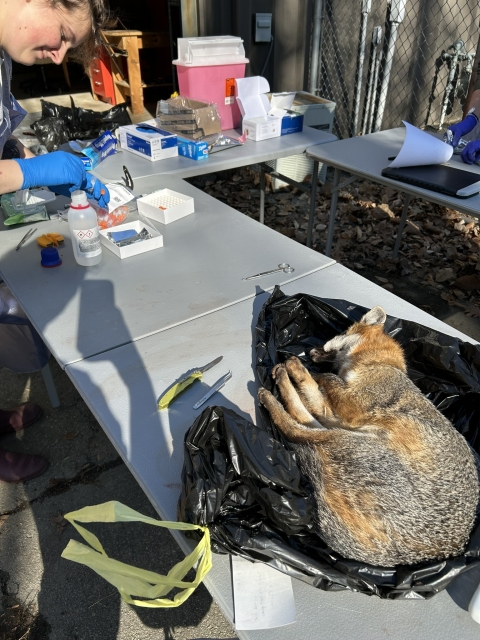
Preliminary results are already helping biologists zero in on anticoagulant rodenticide hotspots and vulnerable populations. Across both states, about two-thirds of the counties that produced samples had furbearers test positive for rodenticides. Notably, American mink, striped skunk, and bobcat samples contained concentrations higher than those reported elsewhere in the US.
Partnership and Project Funding
Each group in this investigative partnership plays an important role. Trappers and Wildlife Services provide vital tissues needed for analyses, university labs prioritize and test tissue samples, state fish and wildlife agency staff collect roadkill and document exposure patterns, and communities like the one on Kiawah Island allow researchers access to conduct long-term research. “This work brings together so many groups because furbearers are important and valued by so many,” adds Brett. From the wildlife biologist that manage ecosystems to island communities that treat furbearers like local celebrities, these species matter.
There is another important partnership that provides funding for this project. State fish and wildlife agency staff time and lab testing costs are funded in part through the Pittman-Robertson Fund a state-industry-federal partnership that funds conservation through federal excise taxes paid by firearm, ammunition, and archery equipment manufacturers. When matched with state hunting and trapping license fees these combined funds support conservation efforts and wildlife research.
“As the region continues to see growing cities and towns there will be continued interaction between humans, furbearers, and their prey,” adds Brett. “In the future we are hoping to expand this baseline research to understand the impacts of anticoagulant rodenticides across the Southeast region.”
Why It Matters
Anticoagulant rodenticides are an emerging threat to these furbearer species already under pressure from habitat loss and disease. Investigation into the impacts of anticoagulants is not limited to the Carolinas, other state fish and wildlife agencies are also collecting data. The Northeast Association of Fish & Wildlife Agencies was awarded a 2025 Multistate Conservation Grant, also funded through Pittman-Roberston funds, to examine anticoagulant rodenticides and other toxins in their region’s furbearer species. This project aims to collect exposure data that wildlife agencies can directly use in conservation and management plans for fisher, fox, and other furbearer species.
Around the nation, investigations continue unfolding with samples still being collected and tested. But already, research is illuminating impacts and connecting dots across state lines and ecosystems. Last year, South Carolina regulators imposed a one-year restriction on certain anticoagulant rodenticides, known as SGARs, noting that the chemicals were affecting non-target wildlife. Under the restrictions these specific rodenticides would only be available for use by certified applicators. Additionally, some communities have also started voluntary programs to decrease rodenticide use including the Bobcat Guardian Pledge program on Kiawah Island. “As more information is gathered, people are becoming aware of the potential harm of anticoagulant rodenticides and they are learning that their choices for pest management can have effects on the ecosystem,” said Keating.
Written By