Some look like fuzzy pincushions or spiky beavertails. Others resemble wacky inflatable tube guys. They are unhuggable, yet we love them. They are cacti, unique to the Americas (except for one species found in South Asia), and span from North to South America. They add beauty, color and diversity to some of the thirstiest areas on the planet.
Cacti’s water-saving adaptations have literally shaped their shape. They are generally top heavy and have wide-spreading roots, allowing rapid water absorption. Instead of broad leaves, they have spines which are modified leaves (not thorns!). Spines capture moisture from the air, provide shade and prevent snacking by animals.
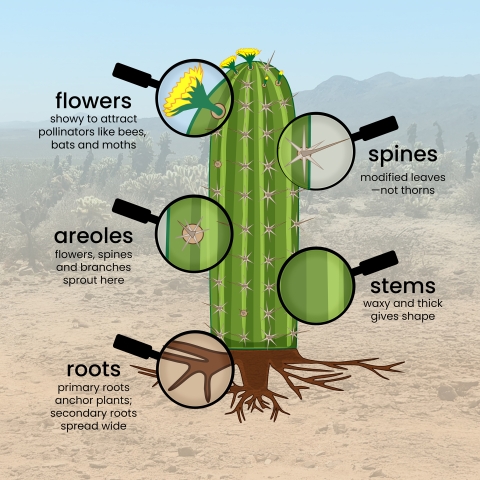
Rather than leaves converting sunlight to energy, their stems take on this job, as well as other functions. Stems provide structure but remain flexible, giving cacti their bizarre shapes. Stems store water and expand or shrink based on water volume. When parched, they shrivel and look like deflated balloons or may retract underground. Saturated cacti bloat and plump up after rehydrating, resembling overinflated accordions.
Their allure makes illegal collection tempting, and because of this, many cacti are threatened or endangered. You can enjoy them through pictures without leaving your home or risking a prick from their spines! Explore the diverse cacti found in the American Southwest, because it’s now time to get to know your cacti.
The Saguaro Cactus: Tall and Stout
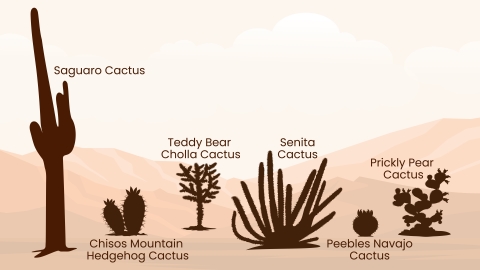
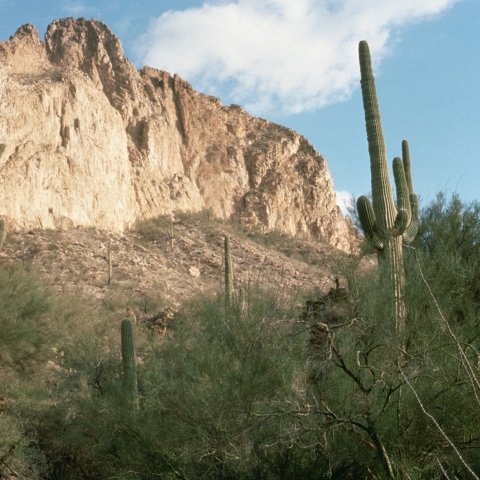
Found in the Sonoran Desert in Arizona, California, and Sonora Mexico, the saguaro cactus is an iconic symbol of the American Southwest. This tall, columnar cactus towers in the desert, appearing like a stoic sentinel. It can reach over 50 feet tall, or about the height of a three-story house, and can weigh up to 250 pounds. When a saguaro is around 50 to 70 years old, arms start to sprout, and each branch can produce flowers and fruits. However, not all saguaros grow at the same rate or even produce arms. Whether alive or dead, this cactus creates cozy homes for wildlife, including the threatened cactus ferruginous pygmy-owl and lesser long-nosed bat.
The Chisos Mountain Hedgehog Cactus: Twisting Cylinder
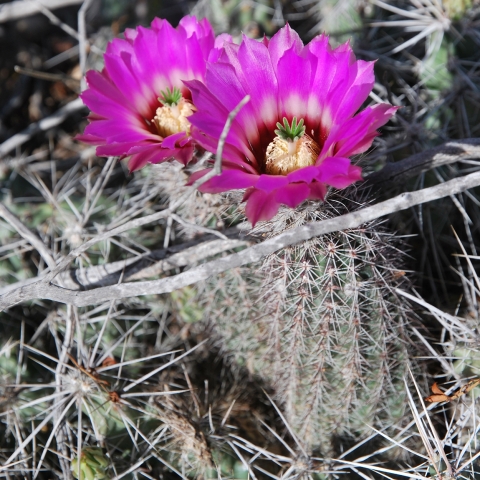
At no more than half a foot tall and less than two inches in diameter, the Chisos Mountain hedgehog cactus blends into the Chihuahuan Desert. This threatened cactus is found only within Big Bend National Park in southwestern Texas. About a dozen twisting ribs punctuate its stem, which is covered in splayed spines that turn white with age. Most individuals have a single stem, but some grow upwards of seven stem spurs. At around four to six years of age, it starts producing deep magenta flowers which are frequented by a ground-nesting cactus bee that specifically pollinates cacti. This seemingly unfriendly cactus is, in fact very outgoing, often growing alongside other plants such as dog cholla cactus or creosote bushes.
The Teddy Bear Cholla Cactus: Fluffy Shrubs
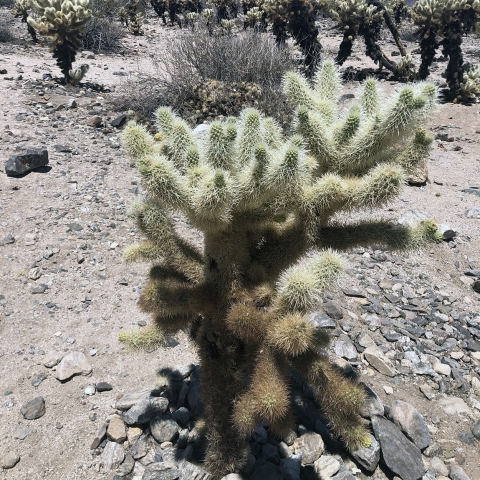
The teddy bear cholla cactus is named for its cuddly appearance, but its fluffy-looking spines are barbed and razor thin. Dense groves of un-cuddly bears grow within the Sonoran Desert in Arizona, California, Nevada and Mexico. Its dark main stem reaches up to 5 feet tall, where multiple bottle brush-like stems radially erupt. Because it produces few fruits that contain a scatter of unviable seeds, the cactus mainly reproduces by plant segment clones. Lower spine clusters fall and latch onto unaware wildlife or unlucky hikers, giving this cactus the nickname “jumping cholla.” From these biting sprouts, genetically identical plants take root. Arizona’s official state bird, the cactus wren, frequently nests within the sturdy, woody interior of the teddy bear cholla, which also provides prickly protection from predators.
The Senita Cactus: Fuzzy Tubes
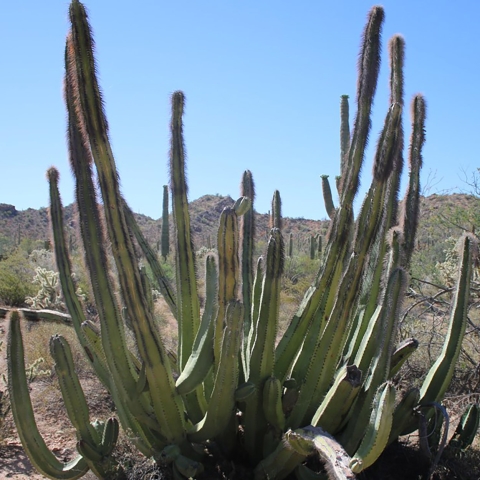
Under the sunny skies of southern Arizona and northwestern Mexico, the senita cactus thrives. Although not as tall as the saguaro cactus, the senita cactus rises over the desert landscape, growing up to 20 feet tall with multiple arms that collectively gesture to about 30 feet wide. The word senita has multiple meanings depending upon the origin and context, but it loosely translates from Spanish as “little old woman.” Commonly called whisker cactus and old man cactus, this cactus gets shaggy as it ages. On its stems, four-inch-long gray hairs (spines) grow in clusters of 15 to 50, often toward the top of its stem. Besides making it appear distinguished, spines prevent sunburn and draw water from the air, directing it down to the stem base. The senita moth lives its entire life within the suburbs of this sprawling cactus and pollinates its pale pink flowers, which open only at night.
Peebles Navajo Cactus: Pincushion
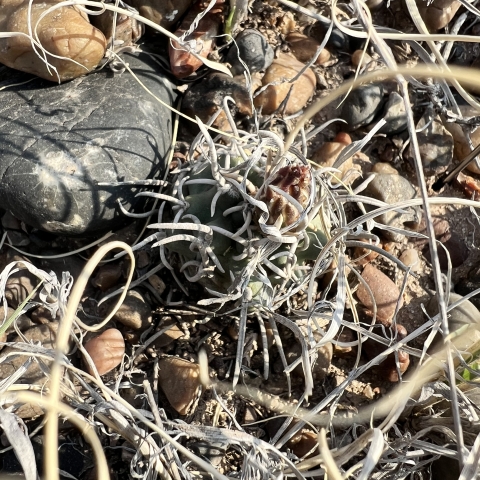
These unassuming miniature desert flora, the endangered Peebles Navajo cacti, grow atop mesas and canyon rims. Their globe-shaped stems are covered in a matrix of overlapping spines and are slightly larger than golf balls, reaching a maximum size of about 2.5 inches in height above the soil by about 2 inches wide. These little guys react to disagreeable weather (drought, extreme heat, or cold) by shrinking their stems and retracting into the ground, with some becoming completely buried. They can remain dormant underground until rains make the soil wet once again. They are at high risk of collection, so please let these wee ones be.
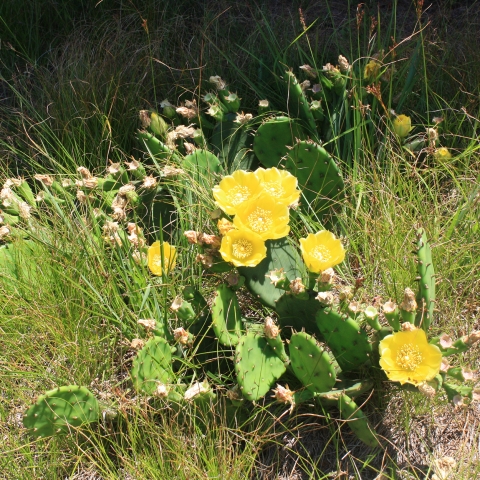
The Prickly Pear Cactus: Spiked Pads (Nopal)
Prickly pear, the most prolific and common of all cacti species, has a huge range, occurring in every state within the continental United States (yes, this includes Alaska!). Its stems are jointed and look like spiked ping-pong paddles, called nopales. Raised polka dots called areoles (similar to buds) pepper the stems, and from these, dense spines emerge that range from 1 to 4 inches long. Prickly pear species have showy flowers with a rainbow of colors. After flowering, pear-shaped fruit emerge where the flower dies, giving this cactus its namesake. The plant provides water, food, protection and shelter to wildlife. This cactus is also an important food, medicine, and crafting plant for many cultures. Nopales are prepared boiled or sautéed, providing an important source of vitamins and minerals.