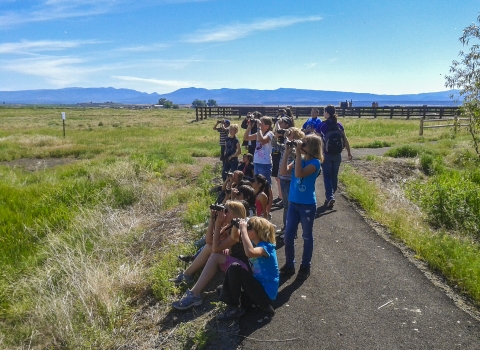
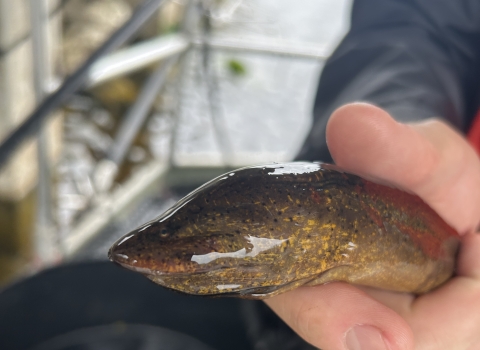
Imagine it’s a picture-perfect summer day and you want to get out and enjoy it in nature — perhaps by taking a hike, launching a kayak, casting a fishing line, or just lounging in a riverside park with a good book.
But what if your go-to trail was overgrown with invasive plants, or the nearest boat ramp was washed out from heavy rains, or your neighborhood fishing pier was in disrepair, or there simply was no public riverfront park near where you live?
It shouldn’t be a challenge to enjoy nature in your community. That’s where we come in.
Since its launch in 2018, the U.S. Fish and Wildlife Service’s Delaware Watershed Conservation Fund has been helping to expand opportunities for the public to access and enjoy nature in their communities.
Every year, in collaboration with the National Fish and Wildlife Foundation, we award grants to partners throughout the four-state watershed for projects that reduce flooding and runoff, restore fish and wildlife habitats, improve water quality, and enhance safe recreational access for the public. Many projects do all of the above.
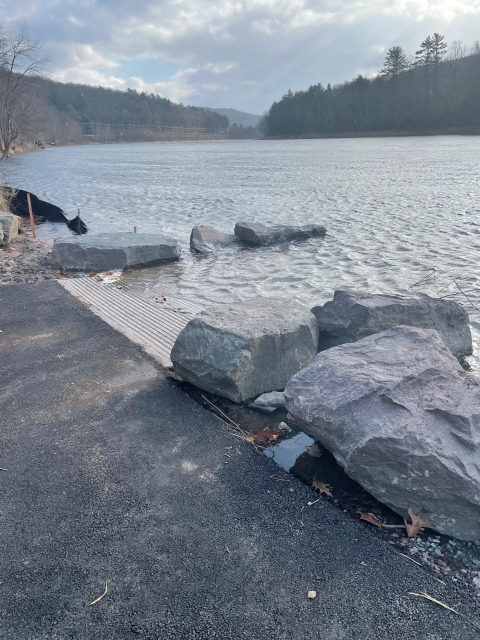
After all, conservation and recreation go hand in hand. Transforming a steep, rutted boat ramp into a gentle, stable slope not only makes it easier to launch a kayak, but it also reduces erosion and runoff, improving water quality and fish habitat.
Projects that support recreation also have positive ripple effects for watershed communities: they improve quality of life, increase property values, and support local economies by drawing in visitors.
Over the past eight years, the Delaware Watershed Conservation Fund has invested more than $20 million in 49 projects that increase recreational opportunities, including by opening or improving access to more than 9,000 acres of land.
Just as there are many ways to enjoy nature, there are many ways to improve access to nature and its benefits, from building new trails to removing in-stream barriers that create hazards for boaters.
Here are four ways the Delaware Watershed Conservation Fund helps partners address public access needs in their communities:
1. Fixer uppers: Improving existing recreation sites
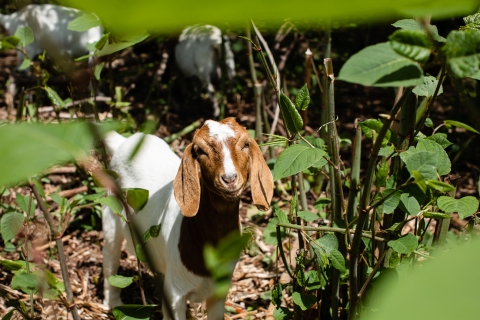
Sometimes a park or a boat ramp just needs a little TLC. Sometimes that involves goats.
In 2019, the Friends of the Upper Delaware received a Delaware Watershed Conservation Fund grant to develop a strategic plan for managing invasive knotweed in the Upper Delaware River watershed. As part of the plan, the Friends set up demonstration sites at three public river access points in upstate New York to showcase treatment options, including grazing with goats and sheep.
They chose river access sites because these spots are particularly prone to knotweed growth, which compromises their recreational value. Knotweed encroaches upon open space, damages infrastructure, crowds out native species, and erodes streambanks, impacting water quality and fish habitat. Through their demonstrations, the Friends restored these public access points and empowered local community members to control knotweed on their own lands.
Meanwhile, at other recreation sites, it’s the lack of vegetation that’s the problem.
Despite its name, the Rodney Reservoir Nature Park in Wilmington, Delaware, was in need of a little more nature. In 2024, the City of Wilmington received a grant to convert 1.5 acres of pavement in the park into rain gardens, establish a one-acre native wildflower meadow, and plant native trees, making the park more inviting for people and wildlife. Trees provide welcome shade during summer heat waves and improve air quality; raingardens absorb and filter stormwater, and wildflowers support pollinators and photo ops.
2. Extreme makeover: Converting abandoned commercial or industrial sites into public spaces
Sometimes it takes vision to see the recreational “diamond in the rough”. Funding from the Delaware Watershed Conservation Fund can help make that vision a reality.
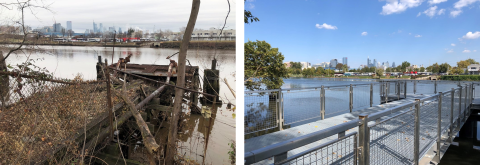
With support from two subsequent grants, the Schuylkill River Development Corporation partnered with Philadelphia Parks and Recreation to plan, design, and implement the transformation of an abandoned industrial pier into a safe, universally accessible recreational pier. The revived site now provides high-quality public access along the Bartram’s Mile greenway, a portion of the Schuylkill River Trail that runs through the heart of Philadelphia.
In rural Callicoon, New York, partners saw potential in a dilapidated RV park on 47 acres along the Upper Delaware River. With support from the Delaware Watershed Conservation Fund, the Trust for Public Land purchased the property, subdivided it into three parcels, and conveyed them to three partners to address local needs. Sullivan County received 40 acres to develop a public riverside park; the New York State Department of Environmental Conservation received 2.5 acres to develop a public boat ramp; and the Town of Delaware received 5 acres to build a green wastewater treatment plant.
3. Parts unknown: Expanding recreation through outreach
Sometimes the biggest barrier to recreation is information, or lack thereof. The Delaware Watershed Conservation Fund can help with that too.
With support from grants in 2021 and 2023, Upstream Alliance coordinated a community driven effort to promote water-based recreation in Camden, New Jersey, through the Cooper River Water Trail: a 15-mile stretch of the Cooper River and the Back Channel of the Delaware River. Upstream Alliance hired 20 people and engaged dozens of volunteers to help raise awareness about recreational opportunities along the city’s waterways — which were once polluted but are now safe for paddling and fishing — through programming and outreach initiatives, including an online map of access sites and points of interest.

A couple hours north of Camden, partners in New Jersey’s Musconetcong River watershed also received funding to promote recreation. In 2021, the Musconetcong Watershed Association was awarded a grant to develop an interactive map with locations of recreational access points and cultural and historical resources throughout the watershed to encourage both residents and visitors to explore the hidden gems along this wild and scenic tributary to the Delaware River.
4. If you build it, they will come: Making more trails, parks, and boat ramps
Sometimes, recreation just needs room to grow. The Delaware Watershed Conservation Fund supports projects that fill the recreational gaps in this densely populated region.
In 2023, a grant allowed the Town of East Bradford, Pennsylvania, to construct a quarter-mile accessible trail and accompanying outdoor interpretive center at the Plum Run Preserve, opening 12 new acres for public access. Another project that year developed a public trail connecting the town of Weatherly, Pennsylvania, to Lehigh Gorge State Park and the 165-mile Delaware & Lehigh Trail.
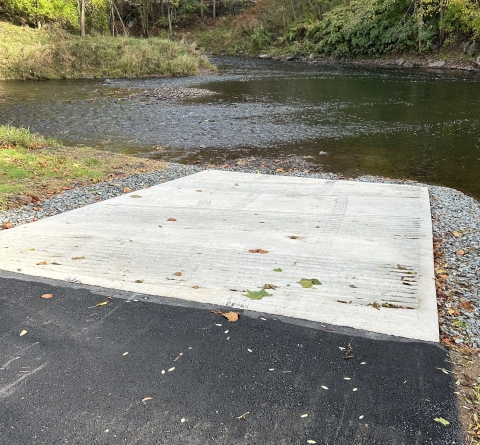
In 2020, 2021, and 2023, the Pennsylvania Fish and Boat Commission received funding to support its own mini-grant program that empowers townships, boroughs, and municipal and county governments in planning, acquisition, development, and rehabilitation of boating facilities along the Pennsylvania portion of the Delaware River.
These investments will ensure boaters and anglers have safe, clean, and updated facilities, and attract more visitors and tourism dollars to local communities as a result.
———
The next round of Delaware Watershed Conservation Fund grants will be announced this fall, including several new projects that will allow our partners to enhance recreational spaces and experiences.
That means next summer, when nature beckons, there will be both new and improved opportunities to get out and enjoy it!