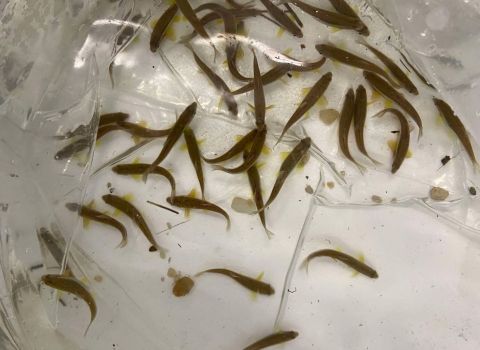
VERNAL, Utah - Jones Hole National Fish Hatchery has completed an extensive remediation project to address an infestation of New Zealand mudsnails, an aquatic invasive species invasive species
An invasive species is any plant or animal that has spread or been introduced into a new area where they are, or could, cause harm to the environment, economy, or human, animal, or plant health. Their unwelcome presence can destroy ecosystems and cost millions of dollars.
Learn more about invasive species that threatened hatchery operations.
Jones Hole plays an important role in supporting recreational fisheries, Tribal trust responsibilities, and local economies throughout the region. The hatchery raises up to 1.2 million fish annually, producing more than 120 tons of cutthroat, Kokanee, and rainbow trout for waters throughout Utah, Wyoming, and Tribal trust fisheries. Popular destinations stocked by the hatchery include Flaming Gorge, Steinaker Reservoir, and Red Fleet Reservoir. According to the Service, these stocking efforts support approximately 185,000 angler days and an estimated $9.25 million in annual economic benefits.
“Protecting the hatchery from aquatic invasive species is essential to sustaining these fisheries, preserving recreational opportunities, and supporting the communities and businesses that depend on them,” said Matthew Wipf, project leader overseeing the Jones Hole remediation.
Utah law also restricts the unauthorized possession and transportation of prohibited aquatic species, reinforcing the importance of preventing their spread through responsible hatchery operations and strong biosecurity practices.
The project included facility-wide treatment, infrastructure upgrades, and enhanced biosecurity measures to protect fish production and support regional conservation efforts.
The invasive snails were first detected on hatchery grounds following a flood in the early 2020s and were subsequently discovered in fish-rearing units in 2025. In response, the U.S. Fish and Wildlife Service launched a comprehensive remediation effort to eliminate the infestation, improve water management, and strengthen the hatchery's defenses against future invasive species threats.
Remediation efforts included removing and transferring fish, pressure washing, disinfecting facilities with hot water, and allowing treated raceways to dry for an extended period before returning fish to the units.
Crews also completed several infrastructure improvements, including copper treatments at critical locations, upgrades to water-control systems, modifications to raceway bypasses, and spring rehabilitation.
The project also established Environmental DNA (eDNA) monitoring locations to support ongoing invasive species surveillance. Together, these improvements enhance the hatchery's ability to isolate water systems, perform routine sanitation, monitor for invasive species, and respond to future biosecurity challenges.
Led by Fish and Wildlife Service personnel, the project involved collaboration among the agency's Fish and Aquatic Conservation program, National Wildlife Refuge System Infrastructure and Maintenance Division, Utah Division of Wildlife Resources, and Wyoming Game and Fish Department.
With remediation and major infrastructure improvements complete, Jones Hole National Fish Hatchery is better equipped to protect aquatic resources, maintain fish production and fulfill its fisheries management, and conservation commitments throughout the region.