Removing Salmon Barriers Through the Mat-Su Fish Passage Program Matanuska Susitna Basin Salmon Habitat Partnership
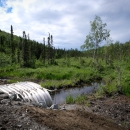
The rivers and lakes of Southcentral Alaska support some of the most productive salmon fisheries in the U.S., essential as both a local food source and healthy sportfishing economy. A major challenge to the productivity and health of these salmon populations are the many fish migration barriers including culverts that may alter the flow of water. Undersized culverts, for example, can increase stream velocity, which can be a barrier to smaller fish. This project on Cloudy Lake, installs a new embedded culvert with a roughened riffle that will reduce water velocity and provide resting areas for juvenile salmon. The project improves connectivity to .93 miles and 37 lake acres in the Big Lake drainage, identified in USFWS assessment as a key overwintering areas for juvenile coho salmon. The project also provides downstream passage by ensuring salmon smolt can emigrate during periods of low flow.