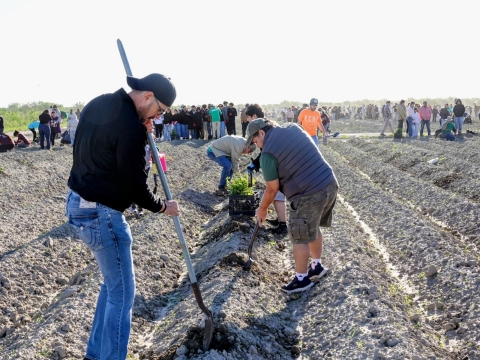
Pharr, TX. – The U.S. Fish and Wildlife Service hosted the 32nd annual Rio Reforestation Event on Saturday, Oct. 17, at the Lower Rio Grande Valley National Wildlife Refuge in south Texas. Over 2,000 volunteers attended and helped plant 10,000 native trees and shrubs at the event. This community reforestation effort continues a decades-long tradition that is helping restore wildlife habitat in southern Texas.
Through partnerships between the U.S. Fish and Wildlife Service and many national and local partners, volunteers are helping restore Tamaulipan thornscrub habitat on Lower Rio Grande Valley National Wildlife Refuge tracts. This effort supports the refuge’s long term conservation goal of improving habitat connectivity and resilience in the area. The event’s restoration action focused on improving wildlife habitat connectivity between Lower Rio Grande Valley and its neighboring refuge, Santa Anna National Wildlife Refuge.
Volunteers arrived in the early morning the day of the event, many with shovels already in hand. Within two hours they had plant all 10,000 trees and shrubs, representing over 38 different species native to the area, including Texas ebony, and elbow bush and granjeno. These saplings will take root in rich brown soils which have been maintained and restored through cooperative agriculture agreements between the refuge and local farmers.
Thamara Flores, Visitor Services Manager at Santa Ana National Wildlife Refuge, first attended a Rio Reforestation event as a volunteer nearly seven years ago. “The Rio Reforestation really brings the community together every year,” said Flores. “Community members that first volunteered decades ago are now bringing their children or grandchildren, so they too can plant trees and carry on that legacy of conservation.”
Since the first annual Rio Reforestation effort in 1992, over 743 acres have been restored through this community conservation event. Many of the early plantings have now grown into mature thornscrub habitats. These dense forests provide nectar for hundreds of butterfly species, year-round habitat for resident songbirds, and migration habitat for hundreds of thousands of migrating raptors that pass through the area. Restoring these important habitats brings community members together and helps conserve wildlife for future generations.
Latest Press Releases