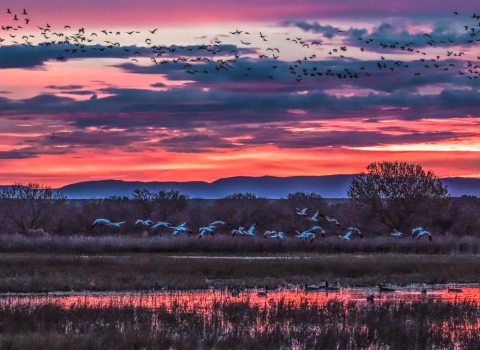
Coastal wetlands are under siege from both increased development and sea-level rise. Coastal wetland habitat conservation is critical to ensure that wildlife and coastal communities continue to thrive for future generations. Over $17 million will be awarded by the U.S. Fish and Wildlife Service to 20 projects in 10 coastal states to protect, restore or enhance more than 13,000 acres of coastal wetlands and adjacent upland habitats under the National Coastal Wetlands Conservation Grant Program. Three restoration projects in California will receive funding to restore coastal wetlands that provide critical habitat for numerous federally listed threatened and endangered species.
State and local governments, private landowners, conservation groups and other partners will contribute over $20 million in additional funds to these projects, which protect, restore or enhance coastal wetlands and adjacent uplands to provide long-term conservation benefits to fish and wildlife and their habitats.
“Wetlands in coastal watersheds, including on national wildlife refuges, are diverse and complex ecosystems that are vital to the nation’s economy and an important part of the nation’s natural heritage. They provide crucial habitat, including breeding grounds, nurseries, shelter and food for fish, birds and other wildlife,” said National Wildlife Refuge System Chief Cynthia Martinez. “The pressure on wetlands is increasing from the demand for land and water, as well as from the effects of climate change climate change
Climate change includes both global warming driven by human-induced emissions of greenhouse gases and the resulting large-scale shifts in weather patterns. Though there have been previous periods of climatic change, since the mid-20th century humans have had an unprecedented impact on Earth's climate system and caused change on a global scale.
Learn more about climate change , and it is vital that we protect them for future generations.”
Coastal wetlands in the United States include both salt marshes in estuaries s and freshwater wetlands that extend inland within the coastal drainages. Coastal wetlands play an important role in reducing flooding from storm surge and in stabilizing shorelines in the face of sea-level rise. According to a Service report, wetlands in coastal watersheds are lost at an average annual rate of 80,000 acres. Conservation of these habitats will not only benefit coastal wetland-dependent wildlife, but will also enhance flood protection and water quality, and provide economic benefits and recreational opportunities for anglers, boaters, hunters and wildlife watchers.
“These grants will also have wide-reaching benefits for local economies, people and wildlife – boosting coastal resilience, reducing flooding problems and protecting natural ecosystems,” added Martinez.
The program, funded in part through taxes paid on equipment and fuel purchases by recreational anglers and boaters, creates significant benefits for the American public. The billions of dollars generated through recreational angling, boating, waterfowl hunting and bird watching benefit communities in the vicinity of wetlands restoration projects.
The Service awards grants of up to $1 million to states based on a national competition, which enables states to determine and address their highest conservation priorities in coastal areas.
California projects receiving grants today are:
Newland Marsh
The California State Coastal Conservancy will receive $1 million to acquire the 26.4-acre Newland Marsh, a key property in the 191-acre Huntington Beach Wetland Complex in Orange County California. Newland Marsh represents an opportunity to enhance an important wetlands complex by acquiring one of the few remaining wetland complexes in southern California. The restored marsh will provide habitat for listed species, 16 species of fish and 75 species of migratory birds, including five threatened and endangered species. The project will also provide public educational opportunities regarding wetland values, ecosystem services and recreational opportunities for wildlife viewing and passive recreation.
Humboldt Bay
The California State Coastal Conservancy is awarded $1 million to restore 20.4-acres of wetlands in Martin Slough in the Elk River watershed, a tributary of Humboldt Bay in Humboldt County, California. The wetlands were historically tidal marshes before they were diked for agriculture. The restoration is critical for the recovery of multiple listed species. The Martin Slough watershed supports important habitat for songbirds, waterfowl, and shorebirds; and critical habitat for anadromous fish, including threatened coho salmon and steelhead trout.
San Francisco Bay Estuary, CA
The California State Coastal Conservancy is awarded $1 million to restore and enhance 68 acres of seasonal coastal wetlands at Bel Marin Keys on San Pablo Bay in the San Francisco Bay Estuary. It is part of the larger Hamilton Wetlands Restoration Project that will result in a restored coastal wetlands complex up to 2,500 acres in extent. The project will restore seasonal wetlands that will provide valuable habitat for migratory waterfowl and shorebirds on the Pacific Flyway, as well as high tide refugia for listed tidal marsh species, including the endangered Ridgeway’s rail. Extensive tidal marsh restoration made possible by the construction of a setback levee will help with resilience to sea level rise.
The National Coastal Wetlands Conservation Grant Program is administered by the Service and funded under provisions of the 1990 Coastal Wetlands Planning, Protection and Restoration Act. Funding is provided by Sport Fish Restoration Act revenue – money generated from an excise tax on fishing equipment, motorboat and small engine fuels.
More information is available at: http://www.fws.gov/coastal/CoastalGrants/index.html.
The U.S. Fish and Wildlife Service works with others to conserve, protect, and enhance fish, wildlife, plants, and their habitats for the continuing benefit of the American people. For more information about our work and the people who make it happen, visit https://www.fws.gov/cno/ or connect with us via Facebook, Twitter, YouTube, and Flickr.
-FWS-
Latest Press Releases