Rock Hall, Maryland – Shoreline erosion, storm damage and climate change climate change
Climate change includes both global warming driven by human-induced emissions of greenhouse gases and the resulting large-scale shifts in weather patterns. Though there have been previous periods of climatic change, since the mid-20th century humans have had an unprecedented impact on Earth's climate system and caused change on a global scale.
Learn more about climate change are urgent threats at Eastern Neck Wildlife Refuge (NWR), a 2,285 acre island on Maryland’s Eastern Shore. Surrounded by the waters of the Chester River and the Chesapeake Bay, the refuge is located at the center of a region where scientists say sea levels are rising at rates three to four times faster than the global average.
The new living shoreline at the refuge will provide protection to 400 acres of high-quality tidal marsh and submerged aquatic vegetation (SAV) along a vulnerable stretch of shoreline that is subject to erosive winds and waves. The $1.5 million project, supported by federal funding for Hurricane Sandy recovery, is expected to be finished by October 31, 2016.
“This living shoreline will help mitigate the effects of increased storm and wave energy as a result of climate change,” said Matt Whitbeck, a wildlife biologist with the U.S. Fish and Wildlife Service’s Chesapeake Marshlands National Wildlife Refuge Complex. “And it will greatly increase the longevity of the refuge’s tidal marsh and open water habitats.”
The project area lies along the southern shoreline of the refuge. Slowing shoreline erosion here will protect tidal marsh habitat and help maintain good habitat conditions within Hail Creek, one of the largest stands of submerged aquatic vegetation (SAV) in the Chester River. This project complements earlier living shoreline work completed in 2009 at Hail Cove, improving Hail Creek’s resiliency to future threats.
Whitbeck said the living shoreline at Hail Cove will be similar in design to one recently completed at Glenn L. Martin National Wildlife Refuge (NWR), also on Maryland’s Eastern Shore. Using a combination of rock breakwaters and restored marsh, the living shoreline will help to slow wave energy and buffer erosion. Living shorelines are designed to let natural coastal processes take place – allowing marine animals, sediment and organic materials to flow in and out of the marsh, while absorbing wave energy and slowing shoreline erosion.
“With this living shoreline for protection, the marshes could stay healthy and productive for at least 50 years without any additional measures,” said Whitbeck. “And we’ll likely see increased habitat for fish nurseries, blue crab and other important wildlife in the Chesapeake Bay.”
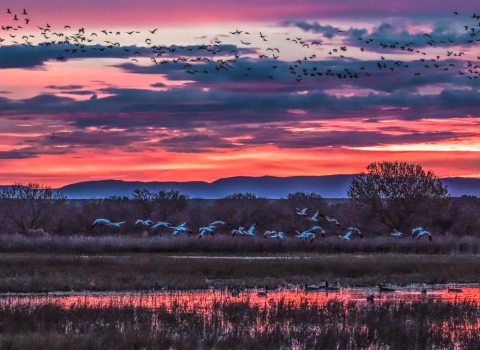
Eastern Neck NWR provides habitat for thousands of wintering waterfowl including tundra swan, which feed off of grasses in the river and narrows. The refuge is a designated Important Bird Area by the Audubon Society, with more than 240 bird species visiting the refuge along with small mammals and many other wildlife species.
***
Latest Press Releases