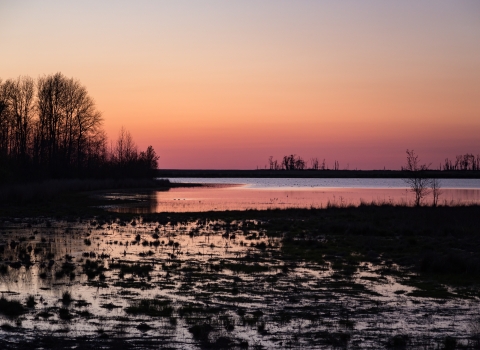
Eagleswood Township, N.J. – The U.S. Fish and Wildlife Service is removing a concrete barrier on Westecunk Creek this week at Edwin B. Forsythe National Wildlife Refuge. The $245,000 project is part of a larger $15 million coastal marsh restoration effort at New Jersey National Wildlife Refuges to restore and strengthen more than 36,000 acres of tidal marsh on New Jersey’s Atlantic coast and the Delaware Bay. The project is supported by federal funding for Hurricane Sandy recovery.
The original concrete barrier and dikes, constructed decades ago to flood the land upstream for cranberry farming, currently block fish passage fish passage
Fish passage is the ability of fish or other aquatic species to move freely throughout their life to find food, reproduce, and complete their natural migration cycles. Millions of barriers to fish passage across the country are fragmenting habitat and leading to species declines. The U.S. Fish and Wildlife Service's National Fish Passage Program is working to reconnect watersheds to benefit both wildlife and people.
Learn more about fish passage in the creek during low water flow conditions. Their removal will restore passage to 8 miles of upstream spawning and rearing habitat for resident and migratory fish species, including alewife, blueback herring, and American eels.
“Restoring the stream and connectivity for fish may help improve the overall health of the aquatic community, which will help support fish populations into the future,” said Rebecca Reeves, fish and wildlife biologist with Edwin B. Forsythe National Wildlife Refuge.
When the barrier removal is completed this month, the contractor will reshape the stream banks to match more natural conditions upstream and plant native vegetation, including Atlantic white cedar. These actions will create healthier stream banks, which Reeves said filter runoff and rainwater, improving water quality downstream. In addition, increased tree coverage over the stream will reduce water temperatures and make the habitat more suitable for fish and other aquatic life.
Amec Foster Wheeler is contractor for the barrier removal project.
To read more about the New Jersey Westecunk Creek Barrier Removal and coastal marsh restoration project, click here. To view photos of the barrier prior to removal, click here. To learn more about other U.S. Fish and Wildlife Service Hurricane Sandy recovery and resilience projects, visit the Hurricane Sandy Recovery website.