


The Southwest Louisiana National Wildlife Refuge Complex is looking for qualified applicants interested in joining our fire program as a Fire Management Specialist (Prescribed Fire and Fuels). The duty location for this position is in Bell City, Louisiana. We are looking for a motivated and engaged fire program leader who is committed to continued growth and mentorship, has a passion for stewardship and management of trust resources, and who communicates well and treats people even better. A $20,000 supplemental pay increase, or 50% of base pay per year, is authorized under Bipartisan Infrastructure Law Bipartisan Infrastructure Law
The Bipartisan Infrastructure Law (BIL) is a once-in-a-generation investment in the nation’s infrastructure and economic competitiveness. We were directly appropriated $455 million over five years in BIL funds for programs related to the President’s America the Beautiful initiative.
Learn more about Bipartisan Infrastructure Law through 9/30/2023.
Where to apply? https://www.usajobs.gov/GetJob/ViewDetails/713123900
Deadline: April 3rd, 2023
Permanent Change of Station/Discretionary – May offer relocation/retention/recruitment incentives.
Please contact Shaun Ziegler, Project Leader at (337) 774-5923 or Shaun_Ziegler@fws.gov for questions or further information.
About the Complex and Area:
The Southwest Louisiana National Wildlife Refuge Complex is comprised of four refuges: Cameron Prairie (complex headquarters), Lacassine, Sabine, and Shell Keys National Wildlife Refuges. The refuges were established to protect wetlands vital for wintering waterfowl and other wetland dependent migratory birds, colonial waterbirds and wildlife populations.
Sabine is the largest refuge in the complex at nearly 125,000 acres, Cameron Prairie covers about 25,000 acres, Lacassine at 35,000 acres, and Shell keys is a small offshore shell island which is now primarily submerged. The complex is located in Louisiana’s Chenier Plain Region, which includes some of the largest protected contiguous marsh habitat on the Gulf Coast and provides some of the best wintering waterfowl habitat in North America and some of the most productive estuarine habitats in the United States.
The complex receives as many as 500,000 visits a year, with a large majority of those visits occurring at Sabine NWR. Public recreation opportunities include fresh and saltwater fishing, crabbing and shrimping, waterfowl hunting, a visitor center with interpretive exhibits at the complex Headquarters, auto tours and walking trails, birding, photography, boating and kayaking, and guided recreational fishing.
The complex headquarters is located in Bell City Louisiana, just south of Lake Charles Metro Area with a population of about 75,000. There are opportunities to live in rural areas, in small towns, or in Lake Charles itself. Hunting, fishing, boating, and other outdoor recreational opportunities abound in the wide-open spaces of Southwest Louisiana and along Gulf Shore beaches, along with
the conveniences of most large cities, excellent health care, and commercial airports located in Lake Charles, Lafayette, or Houston, Texas. Visit https://www.visitlakecharles.org/ to learn more about the area, our fantastic culinary scene, and our unique culture.
Complex Staff and Habitat Management
Staff is comprised of 13 full-time, 1 term, and 1 part-time positions. A significant amount of collaborative work occurs across refuges within the complex, with many staff members serving in collateral fire duty roles and assisting with prescribed fire and fire suppression management. Habitat management consists of marsh restoration and levee management through prescribed burning and wildfire control, water management, invasive species invasive species
An invasive species is any plant or animal that has spread or been introduced into a new area where they are, or could, cause harm to the environment, economy, or human, animal, or plant health. Their unwelcome presence can destroy ecosystems and cost millions of dollars.
Learn more about invasive species control, and hurricane recovery projects.
SWLA Fire Management and Fire Programming
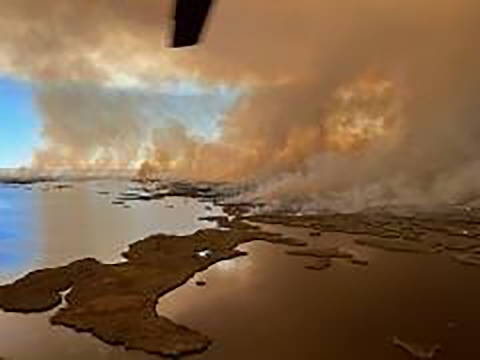
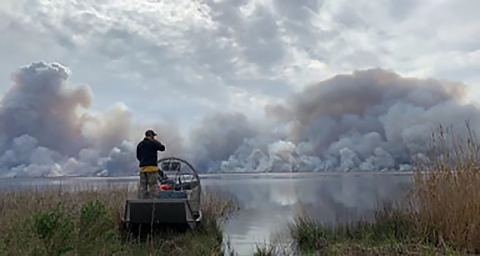
The complex is in a growth phase for its fire program and is actively looking to expand capacity and operations. Currently, the primary prescribed fire season takes place during the dormant season from January through March, although there is ample room and desire to expand operations into the growing season for habitat and vegetative community restoration and for infrastructure and levee maintenance. Fire operations usually involve aerial resources using helicopter ignition platforms, airboats for holding and perimeter ignitions, tracked equipment, as well as wildland engines. Project burns range from a few hundred acres up to 10,000 acres in an operational period depending on objectives and weather conditions. The complex has an active wildfire season in the late summer from lightning strikes with suppression management needs. The program is highly collaborative across the fire zone, the region, and across regions, with the complex receiving assistance as well as staff assisting on other stations. The complex offers a fast paced, dynamic fire program and fire environment with room for continued growth and lots of opportunities.
Interested in working, living, and recreating in Sportsman's Paradise?
We are looking for a motivated and engaged fire program leader who enjoys working towards the conservation mission of the refuge system, committed to continued growth and mentorship, has a passion for stewardship and management of trust resources, and who communicates well and treats people even better.
The rewards and challenges of managing the fire program at a large coastal estuarine refuge complex are many and afford staff an opportunity for professional growth and many memorable natural resource experiences. Apply at the link below. Job Announcement open from 3/20/23 - 4/2/2023.