


Location and Contact Information
About Us
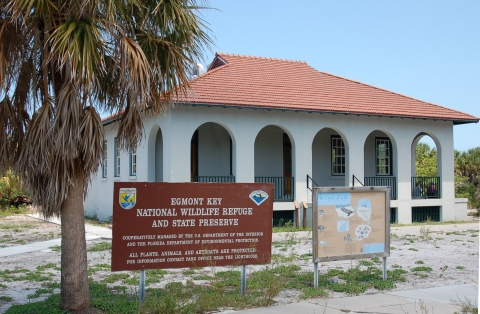
Egmont Key NWR was designated as a national wildlife refuge in 1974. Egmont Key is managed by the U.S. Fish and Wildlife Service as a national wildlife refuge national wildlife refuge
A national wildlife refuge is typically a contiguous area of land and water managed by the U.S. Fish and Wildlife Service for the conservation and, where appropriate, restoration of fish, wildlife and plant resources and their habitats for the benefit of present and future generations of Americans.
Learn more about national wildlife refuge to protect the island’s diverse natural, cultural, and historical features. Egmont Key is also cooperatively managed as a unit of the Florida Park Service as Egmont Key State Park. Egmont Key is on the National Register of Historic Places for playing a prominent role in Florida’s Seminole Indian Wars, the Civil War, and the Spanish-American War.
What We Do
The National Wildlife Refuge System is a series of lands and waters owned and managed by the U.S. Fish and Wildlife Service. Wildlife conservation is at the heart of the refuge system. It drives everything we do from the purpose a refuge is established, to the recreational activities offered there, to the resource management tools we use. Selecting the right tools helps us ensure the survival of local plants and animals and helps fulfill the purpose of the refuge.
Projects and Research
Staff monitors bird populations and collects and records observational data. Sea turtle nesting sites are monitored. Other research projects include studying gopher tortoises, box turtles, and beach erosion.