Seasonal Electrofishing Surveys
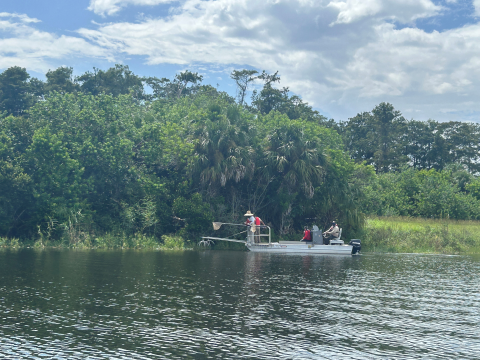
The Peninsular Florida Fish and Wildlife Conservation Office (FWCO) continued its partnership with the Miccosukee Tribe of Indians of Florida by completing wet season fisheries surveys within the canal system of the Miccosukee Reservation Area (MRA). The surveys followed dry season sampling, conducted in April 2026 and were completed in coordination with the Tribe’s Fish and Wildlife Department and Tribal members. Together, the seasonal surveys provide Tribal fisheries managers with a better understanding of how the fish community changes throughout the year.
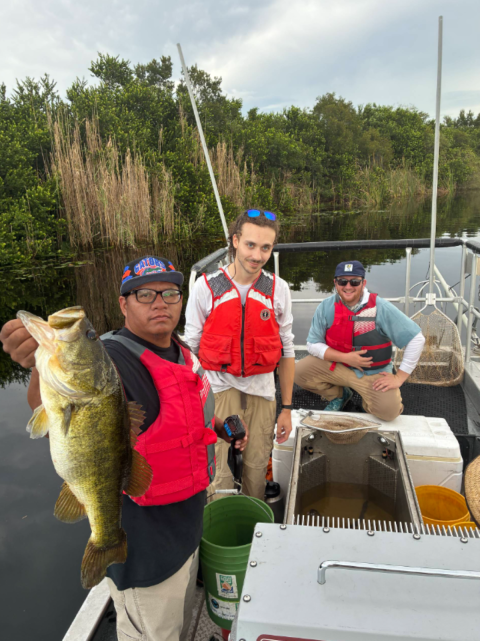
FWCO fish biologists traveled to the Everglades to sample the MRA canal system under high-water conditions, when fish distribution and abundance can differ considerably from the dry season. Asian swamp eels were among the most prevalent species collected during the surveys. Their continued presence, along with other nonnative aquatic species, highlights the ongoing pressures facing native aquatic species communities in the Everglades.
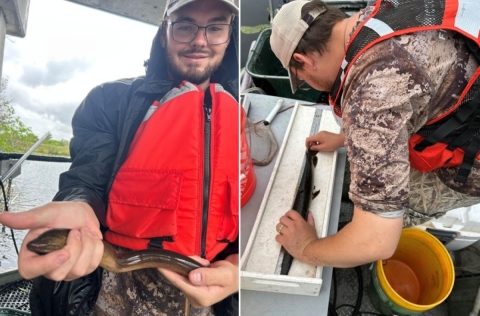
Wild Fish Health Survey
The wet season survey also included a wild fish health component. Biologists Victoria Baglin and Ashlie Peterson from the Service’s Warm Springs Fish Health Center, along with SCA intern Morgan Davis, joined the field effort and collected samples from fish captured during electrofishing. These samples will be analyzed for systemic bacterial, viral, and parasitic infections. Information on the health of wild fish populations in the MRA is very limited, making this effort an important first step toward establishing a baseline for fish health and identifying potential disease concerns.
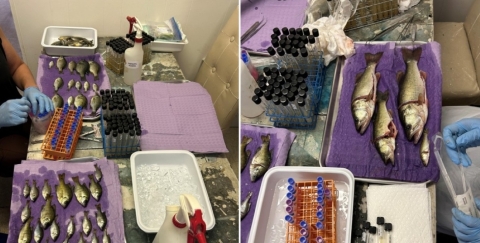
By combining seasonal fisheries surveys with fish health screening, the FWCO, Warm Springs Fish Health Center, and the Miccosukee Tribe are building a more complete picture of the aquatic resources within the MRA. The fieldwork also provides Tribal biologists and members with hands-on experience in fisheries sampling and fish health monitoring, helping build capacity for continued monitoring on the Reservation.