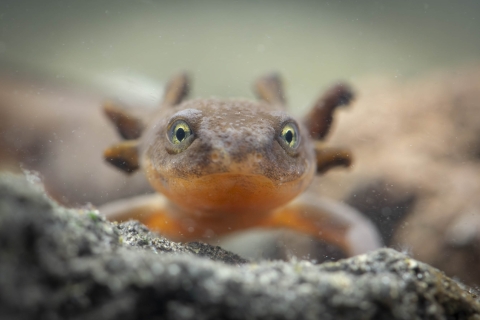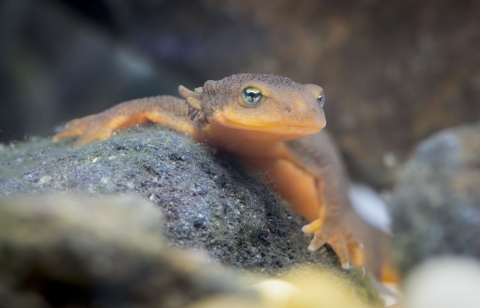
KLAMATH FALLS, Ore. — The U.S. Fish and Wildlife Service is proposing federal protections for the Mazama newt, an amphibian found only in Crater Lake National Park in Klamath County, Oregon. The Service has found that based on the best available scientific information, the newt meets the definition of an endangered species under the Endangered Species Act. The Service is inviting the public’s input on the proposed listing during a 60-day public comment period beginning November 20, 2026
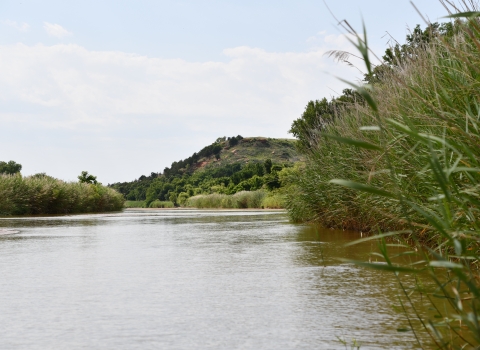
The Mazama newt, also referred to as the Crater Lake newt, is a subspecies of the rough-skinned newt and only occupies Crater Lake’s cold water, steep-walled caldera ecosystem. This species has been separated from surrounding populations for approximately 7,000 years following the eruption of Mount Mazama.
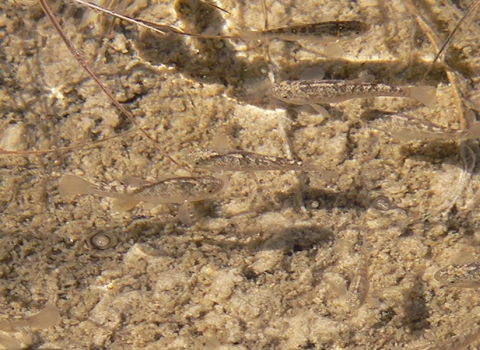
The most prominent threat to the Mazama newt is the nonnative signal crayfish, Kokanee salmon, and rainbow trout in Crater Lake, all introduced between the late 1800s and early 1900s. These species compete with newts for habitat, food and prey upon newt eggs, larvae and adults. Surveys in Crater Lake show the newts have significantly declined from most of their historical shoreline habitats.
A captive rearing program at the High Desert Museum in Bend, Oregon, and a captive breeding program at Oregon Zoo are underway to support conservation of the Mazama newt. In mid-2026, the zoo achieved a monumental success when the captive newts bred and laid eggs for the first time. This year, Crater Lake National Park has begun the removal of nonnative fish and crayfish in a portion of the newt’s habitat.
Analysis of the economic impacts that may occur due to a critical habitat designation is not yet complete. Therefore, the Service has concluded designation of critical habitat for the Mazama newt is not determinable at this time and will continue gathering the required information to complete the economic analysis. The ESA allows the Service an additional year to publish a critical habitat designation that is not determinable at the time of listing.
The proposal and information on how to submit comments can be found on www.regulations.gov by searching under docket number: FWS–R8–ES–2026–2938.
The U.S. Fish and Wildlife Service works with others to conserve, protect, and enhance fish, wildlife, plants, and their habitats for the continuing benefit of the American people. For more information, visit www.fws.gov and connect with us on social media: Facebook, Instagram, X, LinkedIn, Flickr, and YouTube.