The U.S. Fish and Wildlife Service today announced a proposal to list the Ferris’s copper butterfly as a threatened species under the Endangered Species Act and establish species-specific protections under section 4(d) of the Act. A 4(d) rule establishes protective regulations deemed “necessary and advisable to provide for the conservation” of threatened species. The proposed listing comes after a review of the best available scientific and commercial data. The Service is seeking comments on the proposed rule.
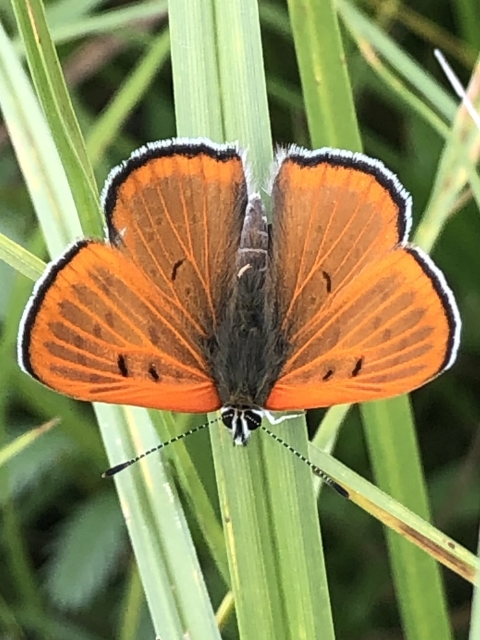
The Ferris’s copper butterfly is a small to medium-sized butterfly with bright orange wings that have gray shading and black spots. The insect is restricted to small waterways and wet meadows in the White Mountains of Arizona that support western dock, its larval hostplant. The butterfly occurs in scattered wet-meadow habitats within 86 watersheds spanning a broader 2,520-square-mile area, mostly within the Apache-Sitgreaves and Gila national forests and on White Mountain Apache and San Carlos Apache tribal lands.
The most significant threat to the Ferris’s copper butterfly is a reduction in water availability that affects its wet meadow habitat. Drought, woody vegetation encroachment and wildfire could decrease the butterfly’s available wetland meadow habitat.
A threatened species is one that is likely to become endangered within the foreseeable future throughout all or a significant portion of its range. The Service finds that the designation of critical habitat for the Ferris’s copper butterfly is not prudent because the butterfly faces a threat of unauthorized collection, and designation could reasonably be expected to increase that threat.
The U.S. Fish and Wildlife Service is seeking comments or information regarding this proposed rule from governmental agencies, tribes, the scientific community, industry and other interested parties. The 60-day comment period closes on Jan. 29, 2027. Information on how to submit comments is available at regulations.gov by searching under docket number FWS–R2–ES–2024–0158.