Chatham, Mass. - The U.S. Fish and Wildlife Service (Service) has approved a comprehensive conservation plan (CCP) that will guide the management of Monomoy National Wildlife Refuge for the next 15 years. Wendi Weber, Northeast Regional Director for the Service, approved the agency’s preferred management alternative (Alternative B) as the CCP for the refuge, and the record of that decision will be published in the March 31st Federal Register. The CCP is available online at http://www.fws.gov/refuge/Monomoy/what_we_do/conservation.html.
The draft CCP was released in April 2014, and was followed by a 6-month comment period. The comments submitted during this time were given careful consideration and led to substantive changes in the Service’s preferred management alternative (Alternative B). The resulting CCP was published for a final 37-day review, which ended on December 7, 2015. Public comments received during the final review period resulted in further clarifications in the CCP. Through this inclusive process, the Service has produced a final CCP that addresses most stakeholder concerns while meeting the refuge’s purposes under law. The Service will begin implementing actions in the CCP and will continue to work in partnership with the town, state agencies, and other partners.
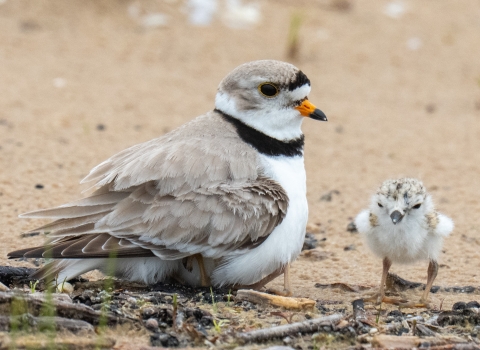
Monomoy National Wildlife Refuge was established in 1944 to provide habitat for migratory birds. The refuge provides important resting, nesting, and feeding habitat for migratory birds, including the federally endangered roseate tern and the federally threatened piping plover. More than ten species of seabirds, shorebirds, and water birds nest on the islands. The refuge also supports the second largest nesting colony of common terns on the Atlantic seaboard with over 8,000 nesting pairs.
Latest Press Releases