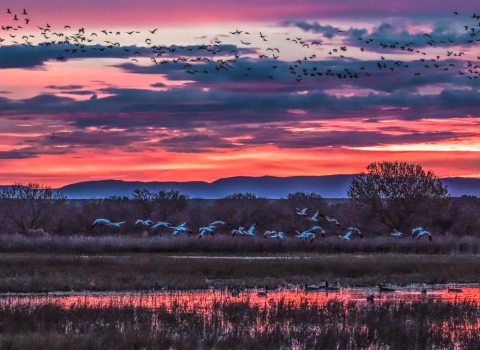
Milton, D.E. – Today, U.S. Senator Tom Carper (D-Del.) and Northeast Regional Director Wendi Weber of the U.S. Fish and Wildlife Service toured Prime Hook National Wildlife Refuge in Milton, DE to view damage to the refuge created by Hurricane Sandy in 2012. They toured affected marsh and beach front and Project Leader Al Rizzo provided an overview of the project design and restoration plans that will begin on schedule next month.
The Service has worked closely with the U.S. Army Corps of Engineers and private consultants to complete restoration plans and environmental compliance documents. The project will repair breached impoundments and reconstruct severely damaged shoreline, including critical dune restoration. The project will also restore approximately 4,000 acres of back-barrier tidal marsh which will enhance and support a long stretch of barrier beach along the Delaware Bay.
Restored marshes at the refuge will provide a more resilient coast against future storms. These investments will help minimize the effects on adjacent and nearby communities such as Milton and Milford, and create additional habitat for birds such as rufa red knots, American oystercatchers, and piping plovers.
Dredging of the internal channel will begin in mid-June and marsh recovery will begin in October 2015. The resilience and restoration efforts are funded by $38 million appropriated through the Disaster Relief Appropriations Act of 2013.
“One of my top priorities has been to restore areas of Delaware damaged by Superstorm Sandy, and mitigate the impact of future storms,” said U.S. Sen. Tom Carper. “This project will help restore and stabilize Prime Hook National Wildlife Refuge's critical habitat, and improve the Refuge's long-term resiliency to impacts from more extreme storms and sea level rise.”
Hurricane Sandy was a wake-up call to the vulnerability of the beaches, sand dunes, and coastal marshes that not only provide habitat for fish and wildlife but also protect local communities from flooding. Federal funding for Sandy recovery has provided an unprecedented opportunity to strengthen natural defenses along the Atlantic Coast to protect communities and wildlife against future storms.
“Nature can be a fortress, as well as a force,” said Weber. “Senator Carper’s support for this unprecedented restoration effort is helping to build a stronger coast here in Delaware. We believe that by helping the natural landscape better withstand storms, sea-level rise and the effects of erosion, we can help communities and sustain wildlife for future generations.”
Collectively the Service and other Department of the Interior agencies are investing $787 million in hundreds of Hurricane Sandy restoration and resilience projects to clean up and repair damaged refuges and parks; restore coastal marshes, wetlands and shoreline; connect and open waterways to improve flood control; and increase our scientific understanding of how these natural areas are changing.
These restored natural areas also provide opportunities for fishing, hiking, wildlife watching and other recreational opportunities that improve the quality of life for local residents and give a boost to the tourist economy that is the lifeline of many coastal communities.
Latest Press Releases