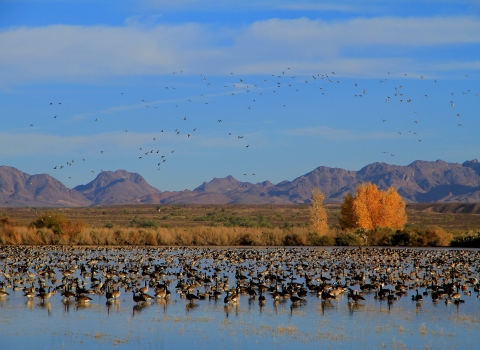
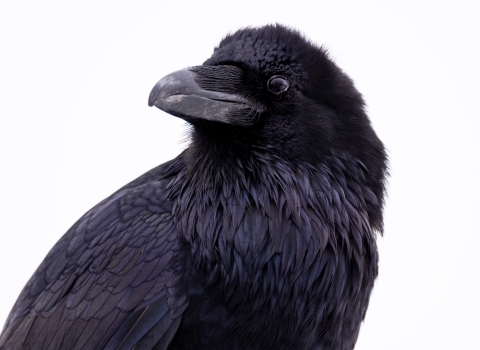
Two Midwest projects totaling $1.9 million are among the Migratory Bird Conservation Commission’s $28 million in funding for the U.S. Fish and Wildlife Service and its partners to purchase, lease, restore or otherwise conserve more than 128,000 acres of wetland habitats for ducks, bitterns, sandpipers and other birds in the United States.
Approved funding announced November 13, 2014, includes two grants for the Midwest region totaling $1,993,723. Those went to the Iowa Department of Natural Resources and Minnesota Pheasants Forever.
The award for the Iowa Department of Natural Resources project is $1 million. The project will permanently protect 2,655 acres and enhance 517 acres in the floodplain of the Central Mississippi River in Iowa. The project area includes two National Wildlife Refuges and a Wetland of International Importance, both in an important migration corridor.
Reclaiming wetland areas that have been converted to agriculture, this project is the first step in restoring part of the migratory habitat for canvasback, tundra swan, lesser scaup and other species. The grantee will manage existing flood control levees to provide dependable wetland habitat for birds.
The award to the Minnesota Pheasants Forever was $993,723. Its focus is the Northern Tallgrass Prairie, an area undergoing extensive conversion to agriculture at rates not seen in decades. Grant funding in this region is critical to driving matching funds and conservation efforts.
Minnesota Pheasants Forever will acquire 1,597 acres in land purchases and 210 acres in conservation easements. They will also restore 294 acres on lands open to the public by improving water flow and planting native prairie seeds. This project will improve breeding waterfowl habitat and create a functional landscape for wildlife.
The commission also recognized the contributions of Michigan Rep. John Dingell, who is retiring after an unprecedented 45 years of service as a member.
“Our nation’s efforts to conserve migratory birds have no better supporter than Congressman Dingell, who has worked tirelessly over more than four decades to protect and restore the wetland and upland habitat so vital to them,” said Secretary of the Interior Sally Jewell, who chairs the commission. “Today, during his final meeting, we continued this legacy with the acquisition and conservation of vital habitat so important not only to birds but to countless other species of wildlife.”
“Many people don’t realize how important swamps, bogs, marshes and other wetlands are to maintaining the populations of birds we see flying overhead and visiting our backyards,” said Wildlife Service Director Dan Ashe. “These habitats play a crucial role in breeding, migration and other parts of migratory bird life cycles.”
Of the total funds approved by the commission, $24.6 million will be provided through North American Wetlands Conservation Act grants to conserve more than 127,000 acres of wetlands and adjoining areas in 16 states. Eight of the 24 grants will target species or areas affected by the Deepwater Horizon oil spill in the Gulf of Mexico.
Grants made through this program require matching investments; the projects approved today will leverage an additional $54.4 million in non-federal matching funds. More information about these grant projects is available here.
The commission also announced the approval of more than $3.5 million for fee title land acquisitions of more than 1,700 acres on four national wildlife refuges. These funds were raised largely through the sale of Federal Migratory Bird Hunting and Conservation Stamps, commonly known as “Duck Stamps.” For every dollar spent on Federal Duck Stamps, 98 cents go directly to acquire habitat for protection in the National Wildlife Refuge System. This year the Federal Duck Stamp celebrates its 80th anniversary.
This year also marks the 85th anniversary of the commission, which first met in February 1929. Members include U.S. Senators Thad Cochran of Mississippi and Mark Pryor of Arkansas; U.S. Representative Robert Wittman of Virginia; Secretary of Agriculture Tom Vilsack, John Dingell of Michigan (retiring) and Environmental Protection Agency Administrator Gina McCarthy.
Latest Press Releases