Bismarck, North Dakota - Conservation experts from federal, state and non-governmental conservation groups represented by the Plains and Prairie Potholes Prairie Potholes
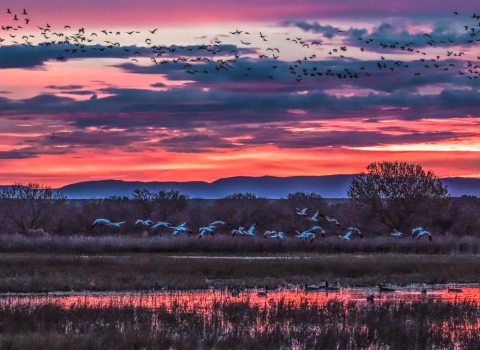
These freshwater marshes are found in the upper Midwestern prairies, especially the Dakotas and Minnesota. Depressions that were created by retreating glaciers about 10,000 years ago;, they fill with water during spring, providing important habitat for waterfowl and many other species. Indeed, the Prairie Pothole Region is often called America’s “duck factory” since around half of the continent’s ducks spend at least part of the year there. The prairie potholes are an important water source, and they help recharge underground aquifers.
Learn more about Prairie Potholes Landscape Conservation Cooperative (LCC) today announced 2013 funding opportunities for research proposals that examine land-use and invasive species invasive species
An invasive species is any plant or animal that has spread or been introduced into a new area where they are, or could, cause harm to the environment, economy, or human, animal, or plant health. Their unwelcome presence can destroy ecosystems and cost millions of dollars.
Learn more about invasive species to inform on-the-ground conservation and natural resources management.
“Impacts of climate change climate change
Climate change includes both global warming driven by human-induced emissions of greenhouse gases and the resulting large-scale shifts in weather patterns. Though there have been previous periods of climatic change, since the mid-20th century humans have had an unprecedented impact on Earth's climate system and caused change on a global scale.
Learn more about climate change , energy development, and shifting agricultural practices augment pre-existing and growing natural resources challenges like invasive species, urban expansion, and land conversion across the northern great plains and prairie pothole region,” said LCC Coordinator Rick Nelson. “As representatives of the broader conservation community, we are investing in research that examines the interactions of multiple stressors on our unique natural resources.”
The Plains and Prairie Potholes LCC is responsible for identifying, prioritizing, and supporting research that addresses scientific uncertainties related to landscape-scale natural resources challenges. The geography associated with LCC partners covers parts the northern Great Plains, prairie potholes and river systems of Minnesota, Iowa, Nebraska, North Dakota, South Dakota, Montana and Wyoming, and the Canadian provinces of Alberta, Saskatchewan, and Manitoba.
“By building the research that supports answers to these questions, we can better prepare ourselves for future conservation efforts to protect fish, wildlife, plants and other key resources that contribute to the social, economic and intrinsic value of the northern Great Plains and prairie potholes region,” Nelson said.
Research proposals must be received by December 7, 2012. Available funds up to $500,000 will be awarded by March 2013. Individual projects in past funding cycles have ranged from $10,000 to $500,000. Proposal requirements are detailed at: http://www.fws.gov/midwest/documents/2013PPPLCCgrantsNotice.pdf.
Latest Press Releases