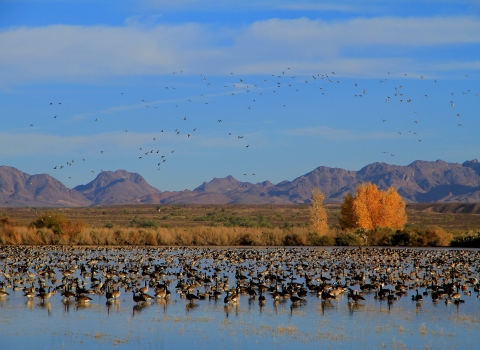
The U.S. Fish and Wildlife Service manages more than 850 Waterfowl Productions Areas (WPA) totaling more than 168,000 acres throughout the State of Minnesota. It is widely known to waterfowl hunters that these locations provide some of the best waterfowl hunting in the state. It is not so well known that most of these WPAs are also open to deer hunting.
There are five Wetland Management Districts located in Minnesota. Each district manages many WPAs and operates a district office staffed by U.S. Fish and Wildlife Service personnel who can provide information about WPAs, hunting and other activities within the district. For example, the Detroit Lakes Wetland Management District, located in northwestern Minnesota, manages 159 WPAs covering almost 40,000 acres within its management area of Becker, Clay, Mahnoman, Norman and Polk counties. The District Office, 218/847-4431, is located 1.5 miles north of Detroit Lakes on Tower Road. Other districts include: Fergus Falls, 218/736-9534; Litchfield, 320/693 2849; Morris, 320/589-1001; and Windom, 507/831-2220.
The boundaries of all WPAs are posted with green and white WPA signs. If hunting is not allowed on a particular WPA it is clearly posted. Safety is the main reason hunting would not be allowed on any WPA. Motorized vehicles are not allowed on WPAs as vehicle tracks flatten netting cover and create predator highways into the area. Permanent deer stands may not be constructed on WPAs, portable stands are allowed.
Deer hunters are reminded that waterfowl hunting season is still in progress and that waterfowl hunters, often in camouflage, and their dogs, may also be hunting in any of the WPAs. It is critical that good hunting skills and ethics are always used to ensure the safety and success of all hunters. It is also critical to be aware of who or what may be in the background when taking aim.
Waterfowl Production Areas are purchased with proceeds from the sale of Federal Duck Stamps. These lands are used to provide habitat for plants and wildlife. The U.S. Fish and Wildlife Service is the principal federal agency responsible for conserving, protecting, and enhancing fish and wildlife and their habitats for the continuing benefit of the American people. The Service manages the 93-million-acre National Wildlife Refuge System comprising more than 500 national wildlife refuges, thousands of small wetlands, and other special management areas. It also operates 66 national fish hatcheries and 78 ecological services field stations.
The U.S. Fish and Wildlife Service is the principal Federal agency responsible for conserving, protecting and enhancing fish, wildlife and plants and their habitats for the continuing benefit of the American people. The Service manages the 93-million-acre National Wildlife Refuge System which encompasses more than 530 national wildlife refuges, thousands of small wetlands and other special management areas. It also operates 66 national fish hatcheries, 64 fishery resource offices and 78 ecological services field stations. The agency enforces Federal wildlife laws, administers the Endangered Species Act, manages migratory bird populations, restores nationally significant fisheries, conserves and restores wildlife habitat such as wetlands, and helps foreign governments with their conservation efforts. It also oversees the Federal Aid program that distributes hundreds of millions of dollars in excise taxes on fishing and hunting equipment to state fish and wildlife agencies. For further information about the programs and activities of the U.S. Fish and Wildlife Service in the Great Lakes-Big Rivers Region, please visit our home page at: http://midwest.fws.gov
Latest Press Releases