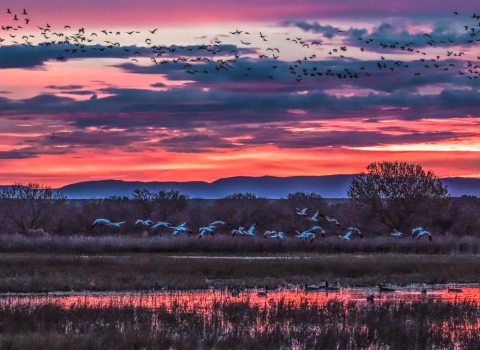
In 1991, lead shot was phased out for use in waterfowl hunting because it was found to be toxic to ducks and geese that ingest it while feeding. At that time, steel shot became the only legal load for waterfowl hunting. If the Service goes forward with the proposal, waterfowlers would have a choice of four types of shot (steel, bismuth-tin, tungsten-iron, and tungsten-polymer) for the 1998-99 season.
"This is consistent with the Services policy to provide hunters with as many options as possible in choosing shot to use when waterfowl hunting while still protecting birds from poisoning," said Paul Schmidt, chief of the Services Migratory Bird Management Office.
The use of tungsten-iron as non-toxic shot was temporarily approved for use during the 1997-98 season. The proposal to extend the temporary approval for the 1998-99 season poses little risk to the resource and would provide Federal Cartridge Company the time needed to complete the full range of tests on the shot material.
The new shot material, tungsten-polymer, was submitted for Service approval by Federal this year. While results of the 30-day toxicity tests on both shots suggest that these materials pose little threat to waterfowl through ingestion, additional testing will be conducted before permanent approval will be granted by the Service.
As with last years temporary approval of tungsten-iron shot, the Service is not proposing to approve the use of tungsten-polymer shot in Alaskas Yukon-Kuskokwim Delta because of concern that the absorption of tungsten into the femur, kidney, and liver could potentially affect the threatened spectacled eider, a species already subject to adverse weather, predation, and lead poisoning.
A decision whether to grant the temporary approval of tungsten-polymer shot will be issued this summer after a 30-day public comment period. Comments will be accepted until August 26, 1998.
Comments may be sent to: Chief, Office of Migratory Bird Management, U.S. Fish and Wildlife Service, 1849 C Street, NW., Mail Stop 634 ARLSQ, Washington, DC 20240.
The U.S. Fish and Wildlife Service is the principal Federal agency responsible for conserving, protecting, and enhancing fish and wildlife and their habitats for the continuing benefit of the American people. The Services nearly 93 million acres include 514 national wildlife refuges, 78 ecological services field stations, 66 national fish hatcheries, 50 wildlife coordination areas, and 38 wetland management districts with waterfowl production areas.
The agency enforces Federal wildlife laws, manages migratory bird populations, restores nationally significant fisheries, conserves and restores wildlife habitat such as wetlands, administers the Endangered Species Act, and helps foreign governments with their conservation efforts. It also oversees the Federal Aid program that distributes Federal excise taxes on fishing and hunting equipment to state wildlife agencies. This program is a cornerstone of the Nations wildlife management efforts, funding fish and wildlife restoration, boating access, hunter education, shooting ranges, and related projects across America.
-FWS-
Latest Press Releases