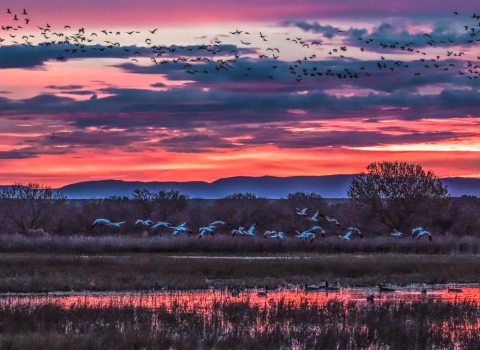
While the use of non-toxic shot has been a requirement for waterfowl hunting on WPAs since 1992, these restrictions now apply to all hunters on WPAs except those hunting turkey and deer. Nationally, over 650,000 acres of land within WPAs are open to public hunting, fishing and trapping.
The new non-toxic shot requirement will reduce the lead poisoning risk to wildlife on these tracts of important wildlife habitat. Upland areas associated with wetlands provide critical nesting cover for both waterfowl and upland birds like ring-necked pheasants, marsh hawks (Northern Harrier), and meadowlarks. Traditionally, these upland areas have also been favored by small game hunters because of their ability to hold game. Shot pellets deposited during fall hunting seasons can later be ingested by waterfowl and other wildlife feeding in these areas. Studies have shown the ingestion of just two or three lead shot pellets can be lethal to waterfowl.
About 85 percent of the nations WPA acreage is located in North Dakota, South Dakota, and Minnesota. Iowa, Michigan, Montana, Nebraska, and Wisconsin also contain these important production areas.
Non-toxic shot currently approved for use by the Service includes shot made of steel or bismuth. Tungsten-iron and tungsten-polymer shot, presently under review, are also likely to be approved for the 1998/1999 hunting season. Upon approval, notice would be published in the Federal Register. Non-toxic shot shells are available commercially in popular shotgun gauges and loads. Non-toxic shot is also available for those hunters who load their own shells and for those who use primitive muzzleloading firearms. Both modern (breechloading) and muzzleloading firearms used on WPAs are restricted to non-toxic shot use.
Although commercially available, tungsten-matrix and tin shot have not received approval at this time.
The U.S. Fish and Wildlife Service is the principal Federal agency responsible for conserving, protecting and enhancing fish, wildlife and plants and their habitats for the continuing benefit of the American people. The Service manages the 93-million-acre National Wildlife Refuge System which encompasses more than 530 national wildlife refuges, thousands of small wetlands and other special management areas. It also operates 66 national fish hatcheries, 64 fishery resource offices and 78 ecological services field stations. The agency enforces Federal wildlife laws, administers the Endangered Species Act, manages migratory bird populations, restores nationally significant fisheries, conserves and restores wildlife habitat such as wetlands, and helps foreign governments with their conservation efforts. It also oversees the Federal Aid program that distributes hundreds of millions of dollars in excise taxes on fishing and hunting equipment to state fish and wildlife agencies. For further information about the programs and activities of the U.S. Fish and Wildlife Service in the Great Lakes-Big Rivers Region, please visit our home page at: http://midwest.fws.gov
Latest Press Releases