The PFW program is a Service initiative that, since 1987, has been conducted in cooperation with private landowners who volunteer their lands for conservation purposes. Through this habitat-restoration program, the Service has:
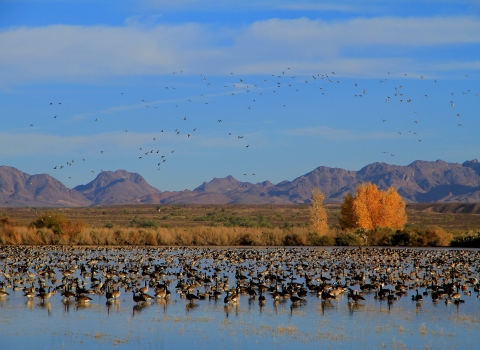
Restored important wetlands and associated uplands for migratory birds, endangered species and anadromous fish on private, non-Federal and tribal lands; and, .
Encouraged partnerships to cost-share restoration projects with state fish and wildlife agencies, soil and water conservation districts, communities, tribes and conservation organizations.
The PFW program enables the Service to provide funds, technical assistance and equipment for habitat-restoration projects. In the Region, emphasis is on the restoration of drained wetlands (prairie potholes) and associated upland habitats. Through this outreach effort, the Service has assumed a leadership role in the restoration of important habitats.
The Partners for Wildlife program, thanks to the volunteer efforts of many conservation-minded landowners, along with our dedicated, enthusiastic partners, continues to make significant gains restoring important fish and wildlife habitats, said Regional Director Bill Hartwig.
Most of the restored wetlands are on privately owned lands, where projects have been completed in voluntary cooperation with more than 3,000 landowners. Most PFW projects are completed at no cost to landowners. To receive this free assistance, landowners voluntarily agree to protect their restored habitats for no less than 10 years. More than 1,000 partners, who have been the backbone of the PFW program, have contributed funds, in-kind services, materials and equipment.
Since the PFW program began, the Region has been a national leader in on-the-ground accomplishments. Nearly 67,000 acres of wetlands (19 percent of all acres restored by the program across the Nation) and almost 17,000 basins were restored between 1987-96 in the Upper Midwest.
In addition to enhancing fish and wildlife habitats, other soil and water conservation values associated with the PFW program include:
Flood water and runoff retention within wetland basins.
Decreased soil erosion by stabilizing sediment-producing areas.
Additional outdoor recreational opportunities for the public.
Conservation education and outreach.
New economic opportunities for landowners and local communities.
Nationwide results since 1987 include more than 360,000 acres of wetlands, 170,000 acre of grasslands, 930 miles of riparian riparian
Definition of riparian habitat or riparian areas.
Learn more about riparian habitats and 100 miles of in-stream aquatic habitat restored.
During 1996, the PFW program restored more than 51,400 acres of wetlands, 43,600 acres of grasslands, 400 miles of riparian corridors and 40 miles of in-stream aquatic habitat. More than 1,600 private landowners voluntarily participated.
For more information on the Partners for Wildlife program, landowners in Illinois, Indiana, Iowa, Michigan, Minnesota, Missouri, Ohio and Wisconsin may contact their local U.S. Fish and Wildlife Service field station. They may also contact the Branch of Private Lands in the Regional Office (Minneapolis-St. Paul) at (612) 725-3570.
The U.S. Fish and Wildlife Service is the principal Federal agency responsible for conserving, protecting and enhancing fish, wildlife and plants and their habitats for the continuing benefit of the American people. The Service manages the 93-million-acre National Wildlife Refuge System which encompasses more than 530 national wildlife refuges, thousands of small wetlands and other special management areas. It also operates 66 national fish hatcheries, 64 fishery resource offices and 78 ecological services field stations. The agency enforces Federal wildlife laws, administers the Endangered Species Act, manages migratory bird populations, restores nationally significant fisheries, conserves and restores wildlife habitat such as wetlands, and helps foreign governments with their conservation efforts. It also oversees the Federal Aid program that distributes hundreds of millions of dollars in excise taxes on fishing and hunting equipment to state fish and wildlife agencies. For further information about the programs and activities of the U.S. Fish and Wildlife Service in the Great Lakes-Big Rivers Region, please visit our home page at: http://midwest.fws.gov
Latest Press Releases