U.S.Fish and Wildlife Service Director John Turner today announced completion of a draft plan to guide management of the National Wildlife Refuge System into the next century. The plan, entitled "Refuges 2003 - A Plan for the Future," is the culmination of an intensive effort to explore alternative management options for the 91 million-acre Refuge System.
Since the founding of the first national wildlife refuge national wildlife refuge
A national wildlife refuge is typically a contiguous area of land and water managed by the U.S. Fish and Wildlife Service for the conservation and, where appropriate, restoration of fish, wildlife and plant resources and their habitats for the benefit of present and future generations of Americans.
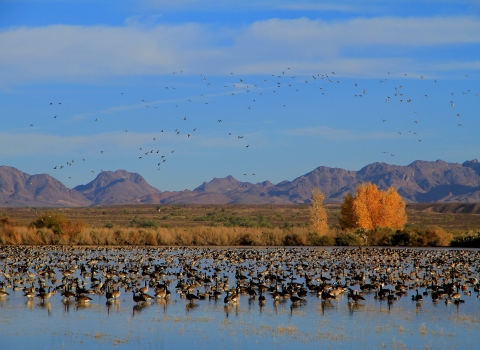
Learn more about national wildlife refuge at Pelican Island, Florida, in 1903, the Refuge System has grown to over 485 units in all SO states and several territories. Managed with the primary purpose of benefitting wildlife, this network of lands provides vitally important habitat for migratory birds, mammals, fish, endangered species, and a wide diversity of other wildlife species.
In releasing the document, Turner noted, "The Refuge System is facing some tough challenges and will face even more in the years ahead. This document will set a steady course for future refuge management, leading up to the 100th anniversary of the system in 2003. The actions outlined reflect how the Refuge System should grow and adapt in order to accomplish its mission to conserve wildlife for all Americans."
The document combines a draft management plan and an Environmental Impact Statement (EIS). The Service first published a comprehensive EIS on refuge operations in 1976 and committed itself to completion of an update in 10 years.The Service reinitiated the process in 1986 and published an initial draft plan and EIS in 1988. Comments received at that time raised questions concerning the array of alternatives examined, their scope, and whether the environmental impacts had been evaluated adequately. After reviewing the comments, the Service withdrew the draft plan/EIS and announced it was undertaking a more thorough planning process.
The plan released for printing today outlines seven alternatives for refuge management, including a "balanced" alternative that is proposed by the Service for action. Each alternative represents a different management emphasis and reflects issues raised during an extensive public involvement and seeping effort conducted earlier in the planning process.
Each of the seven alternatives is evaluated with respect to 28 management actions considered key to operation of the Refuge System (see attached list). The bulk of the document is a presentation of the various alternatives. The environmental consequences of each alternative are reviewed extensively in order to better understand the implications of management decisions and satisfy requirements of the National Environmental Policy Act.
| But "Refuges 2003" is much more than a "plan for the future." The volume also offers an in-depth look at the current status of the Refuge system and what may lie ahead. It also represents a definitive look at the system as a whole, its history, and the various policies and regulations under which it is managed. |
"In conclusion," Turner said, "I believe this effort meets the diverse interests of the public while assuring responsible management of the lands the Service has been entrusted to conserve for wildlife."
Turner has formally transmitted the "Refuges 2003 11 document to the Government Printing Office for printing and distribution to the numerous organizations, Congressional offices, and governmental agencies that have been involved throughout the planning effort. An executive summary outlining the major provisions of the full document will be distributed to over 8000 organizations, agencies, and individuals who have indicated their desire to receive such materials during the public involvement and scoping phases of the effort. These mailings will be made in about six weeks. Those not receiving a document from this mailing should contact: u.s. Fish and Wildlife Service, Division of Refuges, 4401 North Fairfax Drive, Room 670, Arlington,Virginia 22203, and request a copy.
Latest Press Releases