Under the exchange legislation proposed by the Department of the Interior and signed into law by the President on November 2, 1992, the Interior Departments U.S. Fish and Wildlife Service will receive bottomland hardwood acreage located along the White River between the existing Cache River National Wildlife Refuge and White River National Wildlife Refuge.
"This land contains some of the most productive fish and wildlife habitat found in North America," said Secretary of the Interior Manuel Lujan. "It is a relatively untouched river basin area important to wintering waterfowl and a home to bald eagles and a number of other endangered and threatened species."
In return for the Arkansas land, Potlatch will receive 17,625 acres of Federal land owned by the Forest Service and the Bureau of Land Management in Idaho. These lands, which Potlatch will manage for sustained timber harvest, do not have significant wildlife or wetland values. Much of the land is in scattered pockets within larger blocks of mixed Federal and private ownership. Management of such scattered tracts is difficult. "This consolidation of various inholdings and smaller tracts of land mirrors a basic tenet of effective land management and wildlife conservation. This exchange agreement will make the highest and best use of these lands for present and future generations of both people and wildlife," said Assistant Secretary for Fish and Wildlife and Parks Mike Hayden.
As part of the legislation, Potlatch is to transfer 1,170 acres it holds in Idaho to the Forest Service and Bureau of Land Management. Of this land, 279 acres will be given to the Bureau of Land Management to provide public access to recreational opportunities in the Lolo Creek Management Area. Another 891 acres will be transferred to the U.S. Forest Service, 680 acres for addition to the Grandmother Mountain Wilderness Study area, and 211 acres for public recreation.
"This deal is a win-win proposition for everyone," said John Turner, Director of the U.S. Fish and Wildlife Service. "We receive a large contiguous tract of the highest-quality wetland and wildlife habitat at no direct cost to the taxpayer while Potlatch receives solid timber lands having a lesser wildlife conservation value."
The new land will be added to the Cache River and White River National Wildlife Refuges, thus making it possible for the Service to manage a total of more than 170,000 acres of river and adjoining wetlands for wildlife.
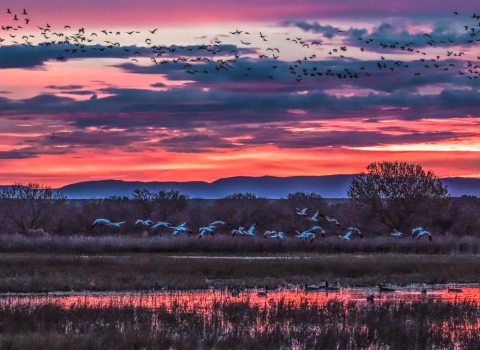
The Arkansas land consists of largely undisturbed oxbows, lakes, and riverine areas that flood early and consistently, even in dry years, providing excellent -- and reliable -- waterfowl habitat. An estimated 10 percent of the entire mallard population in the Nations Central Flyway winters on these lands.
Existing federal and state wetlands in the area have already been designated as Wetlands of International Importance under the RAMSAR Convention, an international agreement to protect wetlands considered to be of global importance. It is anticipated the newly acquired wetlands will also receive this designation once the exchange is completed.
The Service is to prepare a comprehensive management plan for the two existing refuges and the new land within the next two years. During that time, hunting on the acquired Potlatch lands will continue under state seasons and bag limits. The law provides that the exchange is to take place within 60 days.
The U.S. Fish and Wildlife Service is the principal Federal agency responsible for conserving, protecting and enhancing fish, wildlife and plants and their habitats for the continuing benefit of the American people. The Service manages the 93-million-acre National Wildlife Refuge System which encompasses more than 530 national wildlife refuges, thousands of small wetlands and other special management areas. It also operates 66 national fish hatcheries, 64 fishery resource offices and 78 ecological services field stations. The agency enforces Federal wildlife laws, administers the Endangered Species Act, manages migratory bird populations, restores nationally significant fisheries, conserves and restores wildlife habitat such as wetlands, and helps foreign governments with their conservation efforts. It also oversees the Federal Aid program that distributes hundreds of millions of dollars in excise taxes on fishing and hunting equipment to state fish and wildlife agencies. For further information about the programs and activities of the U.S. Fish and Wildlife Service in the Great Lakes-Big Rivers Region, please visit our home page at: http://midwest.fws.gov
Latest Press Releases