The seaside hoary elfin butterfly is a small butterfly that is only known to exist at three sites, two of which are in Oregon. Elfin butterflies generally prefer open areas including partially stabilized sand dunes and along forest edges. They require large patches of kinnikinnick, a low-growing evergreen shrub found in relic dune habitats, for food, shelter, and egg deposition.
Over the last decade, populations of this small coastal butterfly have declined as kinnikinnick patches are outcompeted by both native shore pine and non-native woody species such as yellow bush lupine, Scotch broom, and gorse. One of the last known populations of this butterfly is found near the 300-acre Pistol River State Scenic Viewpoint at the mouth of the Pistol River in Curry County, Oregon.
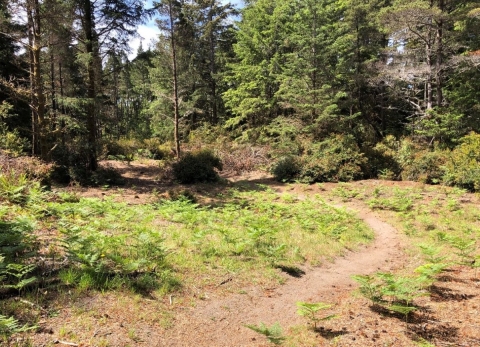
Two other rare plants found in the same ecosystem within the park are the Federally threatened sand dune phacelia plant and the rare dark-eyed gilia, a diminutive annual plant often found growing around clumps of phacelia. These plants are only found in native-dominated dune mat plant communities characterized by sparse vegetation and blowing sand with relatively low competition from invasive plants. The remaining small, isolated populations of sand dune phacelia are under threat of extirpation primarily from loss of habitat.
The U.S. Fish and Wildlife Service Coastal Program, Oregon State Parks, and Curry Soil and Water Conservation District began collaborating to restore habitat for the elfin butterfly and rare native dune plants at Pistol River State Scenic Viewpoint in 2021. Before work could begin, significant Tribal coordination occurred to address concerns related to the area’s cultural resources. Working together with the Tribes, the partnership developed a restoration plan that protects cultural resources while supporting rare dune species.
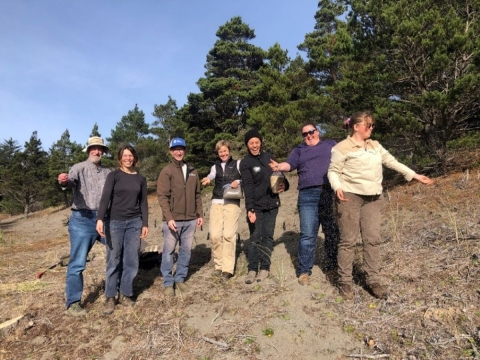
The Coastal Program invested significant technical and financial assistance between 2023 and 2025 to support treatments of invasive plants and removal of trees and woody shrubs on 65 acres of dune habitat to restore endemic plants like kinnikinnick, sand dune phacelia, and dark-eyed gilia. Partners from The Understory Initiative and the Oregon Department of Agriculture’s Native Plant Conservation Program led efforts to produce seedlings for restoration. In December 2025, the partners joined forces to plant seedlings to expand plant populations and create more habitat for the seaside hoary elfin butterflies.
Recovering habitat for rare species is complex - often requiring years of planning and coordination before a project can be implemented. This project would not have been possible if it were not for the dedication of each of our partners.