Location
States
OregonEcosystem
River/streamIntroduction

Reservoirs in the Willamette Basin (Basin) in the U.S. Pacific Northwest are managed for multiple purposes, mainly recreation and flood control. Flooding is a concern in the Fall Creek Reservoir due to its proximity to the three most populous cities in Oregon: Eugene, Salem and Portland. Because water levels fluctuate throughout the year, reservoirs are partially drained in the fall. This prevents large flooding events during winter rains. Specifically, draining is used in the Fall Creek Reservoir in the Basin to assist downstream migration of small fish, as well as to maintain the ability of the reservoir to manage floods.
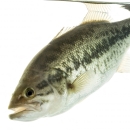
The draining of Fall Creek Reservoir provided an opportunity for researchers to assess the ecosystem impacts of dam draining. A team composed of researchers from Oregon State University, the U.S. Army Corps of Engineers, and the U.S. Forest Service, assessed dietary patterns of predator fish species. The analysis focused on determining if complete draining events shifted food web relationships, changing the prey consumed by Rainbow Trout (Oncorhynchus mykiss) and Largemouth Bass (Micropterus salmoides)—two predator species that consume small fish such as juvenile Chinook salmon (Oncorhynchus tshawytscha), a federally threatened species in the Basin. To assess impacts, researchers used nitrogen stable isotope analysis because when a predator consumes prey, it retains the prey's “signature” in its tissue.
Chinook salmon (Chinook) are a cold-water, anadromous fish species (i.e., they migrate upriver from the sea to spawn) native to the Northern Pacific. The Basin is important for Chinook because it provides key spawning habitat and freshwater habitat for juveniles. While dams are being constructed around the globe for energy provision and water security, dams in the Willamette Basin pose several challenges for Chinook. Most notably, dams prevent juvenile salmon from reaching historic spawning areas by impeding their migration to upstream habitats. In response, natural resource managers in the Basin are attempting to restore native Chinook above dams and improve downstream passage for the fish. To reduce the impacts of dams on Chinook, the Oregon Fish and Wildlife Commission recently adopted the Wild Fish Management Policy.
Key Issues Addressed
While the Willamette Basin was once home to only cold-water fish species, including Chinook salmon, the construction in the Basin created warm-water pool systems that led to temperature stratification in the upstream reservoir, benefiting native and non-native fish species able to take advantage of the gradient. However, dams also trapped Chinook, preventing them from easily migrating downriver. These ecosystem changes have allowed both native cold-water Rainbow Trout and invasive warm-water Largemouth Bass to proliferate in the Basin. Both of these species prey on juvenile Chinook.
Researchers investigated whether draining events resulted in lasting ecosystem shifts that led predators to consume different prey. They applied nitrogen stable isotope analysis of fins because it is associated with less risk of injury to captured fish. Another benefit of this stable isotope analysis is that it leaves a distinctive mark, reducing the chances of recapturing the same fish.
Prior to this study, there was an absence of research on the impacts of reservoir draining--even though reservoirs are regularly drained for sediment mobilization. This study fills a gap in knowledge about how reservoir draining impacts food web relationships in reservoirs. Findings allow resource managers to better understand the impacts of draining, ensuring more sustainable management practices into the future.
Project Goal
Investigate if draining Fall Creek Reservoir for short periods of time in the fall changes food web relationships through the following spring and summer
Project Highlights
Confirmation of Lab Results: Observed changes to predator-prey relationships from the field research demonstrated dramatic food web differences that have rarely been observed outside of lab studies.
- Food Web Relationships Changed: The predatory fishes that remained in the reservoir after fall draining and refilling occupied a different trophic position than the same species in other reservoirs. These changes lasted through the following season. Researchers believe the predator fish (both Largemouth Bass and Rainbow Trout) stopped consuming small-sized fish (such as juvenile Chinook) that moved downstream during draining.
- Isotope Analysis: Researchers compared food web dynamics using stable isotope analysis. They compared the diets of large predatory fish in the Fall Creek Reservoir with those in three nearby reservoirs in the Willamette Basin. Sampling took place during the summer months (June-August) of 2013 and 2014, when the reservoirs were full. Isotope analysis of Largemouth Bass and Rainbow Trout tissue in Fall Creek Reservoir revealed lower isotope ratios of δ15N (delta-N-15; a measure of the ratio of the two stable isotopes of nitrogen present in prey fishes) than those present in fish tissue in the other reservoirs, indicating predators are feeding on prey lower in the food chain.
- Reduction in Predation Pressures: Reduced predation on juvenile Chinook and other small fish suggests there was an increase in predation of invertebrates. Researchers argue the most likely cause of trophic position changes (i.e., the alteration of feeding patterns and food web relationships) was the lower densities of prey fishes. Researchers posit predation pressures on juvenile Chinook may be reduced with draining because draining allows small fish to move downstream, forcing predators to consume other prey.
Lessons Learned

Coordination with managers who supervise reservoir operations is essential for scientists to collect baseline data at research sites prior to draining. This ensures researchers do not have to rely on reference sites, as done in this study. Reference site characteristics (physical, chemical, biological) are used as baseline data; i.e., conditions in reference sites are used as a basis against which the key site is compared to evaluate ecological conditions. Using reference sites increases the cost of a project; without pre-data it is challenging for researchers to determine whether differences actually correspond to the studied treatment or are associated with differences in the study sites.
In the long-term, researchers found that investigating broad questions about the ecosystem (an initial focus of the study) provided data for other subsequent research questions that could apply to other study areas and systems. While focusing on ecosystem-wide dynamics seems daunting–due to time and financial costs–researchers derived a broader base of information for future research questions to better inform management decision making. For example, the broad focus of this research on ecosystem-wide dynamics led to findings that might reduce the risk of a parasite for endangered salmonids, or salmonids of concern.
Finally, researchers learned that the Fall Creek Reservoir is a low productivity system due to low nutrient presence. Researchers initially thought there would be more productivity after fall draining because of the movement of sediment and the ensuing resuspension of material. They found some evidence that suggests this resuspension might have happened. However, it was not enough to cause a surge in the presence of nutrients. A high nutrient environment can cause algal blooms. Because reservoirs are upstream of communities that use downstream waters as drinking water, it is important to prevent harmful algal bloom events (which was not a concern in this system due to low nutrient levels).
Next Steps
- Evaluate the impacts of reservoir draining in other basin systems and at other times of year
- Use findings from this research to answer management questions and inform conservation measures in the Willamette Basin
- Assess reservoir productivity (in other systems) to determine draining impacts in other reservoirs
Funding Partners
- U.S. Army Corps of Engineers
- The Research, Monitoring and Evaluation Group, with participation from the Oregon Department of Fish and Wildlife and the National Marine Fisheries Service
Resources
- Hamilton, S.K., Murphy, C.A., Johnson, S.L., and Pollock, A. (2022). Water quality ramifications of temporary drawdown of Oregon reservoirs to facilitate juvenile Chinook salmon passage. Lake and Reservoir Management. Lake and Reservoir Management. https://www.tandfonline.com/doi/full/10.1080/10402381.2021.2017082
- Murphy, C. A., Arismendi, I., Taylor, G. A., and Johnson, S. L. (2019). Evidence for lasting alterations to aquatic food webs with short-duration reservoir draining. PloS one. https://journals.plos.org/plosone/article?id=10.1371/journal.pone.0211870
Contact
Christina A. Murphy, PhD, Assistant Unit Leader at USGS Maine Cooperative Fish and Wildlife Research Unit, and Assistant Professor in the Department of Wildlife, Fisheries, and Conservation Biology, University of Maine: christina.murphy@maine.edu
CART Lead Author
Mariana Sofia Rodriguez McGoffin, PhD candidate, School of Geography, Development and Environment, University of Arizona
Suggested Citation
Rodriguez McGoffin, M., S. (2022). “Effects of Short-Term Reservoir Draining on Aquatic Food Webs in the Willamette Basin.” CART. Retrieved from https://www.fws.gov/project/reservoir-draining-aquatic-food-webs.