



Photo By/Credit
Barnes, Dr. Thomas G./USFWS
Date Shot/Created
06/02/2005Media Usage Rights/License
Public Domain
Image
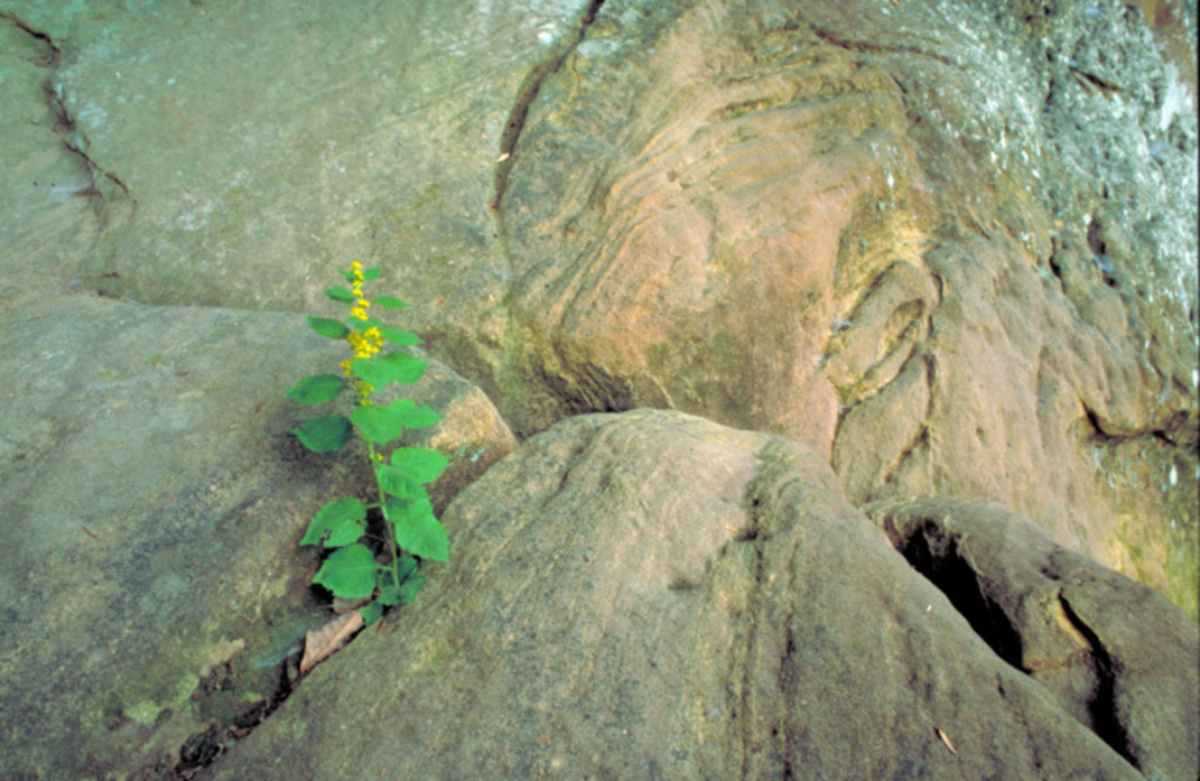
This yellow flower is threatened. The primary threat to the survival of white-haired goldenrod is the many visitors to rockshelters in the Red River Gorge area each year. In 1989, approximately 260,000 people visited the Red River Gorge Geological Area (Fig, personal communication, 1990). The Red River Gorge has an extensive trail system, and many of these trails pass through or near rockshelters. Damage by visitors reached a peak in the 197O's (Fig, personal communication, 1990). During this period, 75 percent of the occurrences of this species were severely damaged, and 11 occurrences (3,422 individuals) were extirpated (Varner, personal communication, 199O). One monitored occurrence declined from 415 stems to 85 stems, and another occurrence declined from 828 stems to 32 stems between the early 197O's and the mid-1980's (Varner, personal communication, 199O). The heavy use of rockshelters by hikers, campers and rock climbers results in several types of damage to individual plants. Trampling can damage the current year's growth, or it can damage seeds or cause them to be dispersed to unsuitable sites. If trampling is severe, it may also damage the underground rhizomes, which often grow only 1 to 2 cm beneath the ground surface (D. Taylor, USFS, personal communication, 199O). Visitors also damage plants by dumping garbage and building fires in rockshelters. Plants that were damaged by trampling and fire building during heavy visitation in the 197O's recolonized these areas once they were left undisturbed (Fig, personal communication, 1990). In areas where disturbance continues for long periods, the plants may never recover. Other goldenrod species show reduced growth in compacted soil as compared to loose soil (Schmid and Bazzaz 1990). Even if plants are able to recolonize trampled areas, their growth may be stunted because of soil compaction.
Species