Written By

The USFWS Coastal Program partnered with Great Land Trust (GLT) to conserve 300 acres of wetland and upland habitat adjacent to the 564-acre Potter Marsh in Cook Inlet at Turnagain Arm, about 15 miles southeast of Anchorage Alaska. The Watershed Park is located between Anchorage Coastal Wildlife Refuge and Chugach State Park, creating a significant corridor for wildlife conservation and recreation. It supports abundant fish and wildlife, including 130 species of migratory and resident birds, because of the diversity of habitat in a relatively small area.
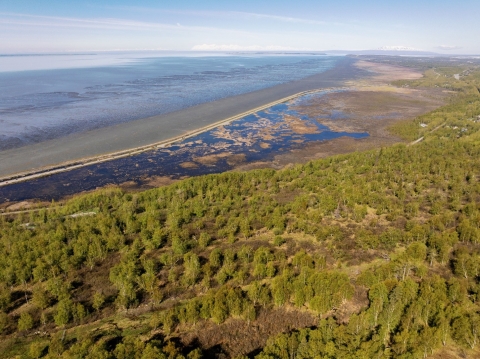
The Coastal Program helped GLT strategize phases of the project and secure project funding. The acquired land has now been transferred to the Municipality of Anchorage (MOA) Department of Parks & Recreation to be managed as a public park, with a conservation easement conservation easement
A conservation easement is a voluntary legal agreement between a landowner and a government agency or qualified conservation organization that restricts the type and amount of development that may take place on a property in the future. Conservation easements aim to protect habitat for birds, fish and other wildlife by limiting residential, industrial or commercial development. Contracts may prohibit alteration of the natural topography, conversion of native grassland to cropland, drainage of wetland and establishment of game farms. Easement land remains in private ownership.
Learn more about conservation easement held by GLT to safeguard its ecological values.
“This has been a long-awaited project for the Anchorage community, and we are thrilled to see it come to fruition,” said Ellen Kazary, Executive Director of GLT. “Not only will this park provide new opportunities for wildlife viewing and hiking, but it will also protect critical habitats, including wetlands, streams, and forests that support abundant wildlife in the new park and in Potter Marsh. It’s a win for both conservation and the community.”
The project was made possible through strategic partnerships and generous funding. The property owner, GCI, a telecommunications company, sold 200-acres below market value and the discounted sale price was used to leverage several federal grants, including two National Coastal Wetland Conservation Grants and a North American Wetland Conservation Act grant from the U.S. Fish and Wildlife Service, and the first-ever Community Forest Program grant in Alaska from the U.S. Forest Service. Further, MOA Real Estate Department designated 100 acres of adjacent land for conservation and parkland. Additional financial support came from the Rasmuson Foundation, Anchorage Audubon, Bass Pro Shops and Cabela’s Outdoor Fund, ConocoPhillips Alaska, and Alaska Conservation Foundation. GLT also raised over $240,000 from local community donors.
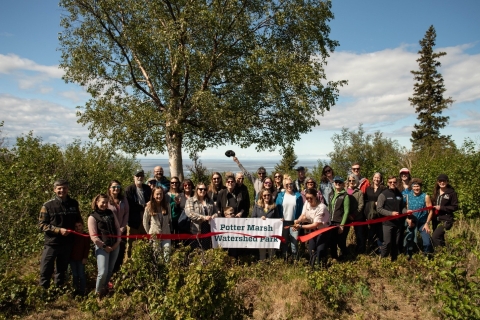
GLT and MOA are collaborating to lead a master planning process for Potter Marsh Watershed Park with input from the community. The park offers several miles of hiking trails and boardwalks to take in views of Potter Marsh, the wildlife refuge, and Turnagain Arm.
“It’s no secret that people come to Anchorage, and they stay in Anchorage because of the amount of parks, open spaces, and recreational opportunities we can provide,” said Taylor Keegan, Superintendent for the MOA Parks and Recreation Department.
The park is destined to become a treasured destination for nature lovers, birdwatchers, and outdoor enthusiasts living in or visiting Anchorage.