$18.3 Million Awarded to Projects in the Pacific Region
WASHINGTON – Secretary of the Interior Ken Salazar today announced nearly $66 million in grants to enable 25 states to work with private landowners, conservation organizations and other partners to protect and conserve the habitat of threatened and endangered species. The grants, awarded through the Cooperative Endangered Species Conservation Fund include $18.3 Million to benefit numerous species in Washington, Oregon and Hawaii.
“These grants are part of our ongoing commitment to work with states and other partners to ensure America’s beautiful land and wildlife are conserved for future generations,” Salazar said. “They provide the means for states to develop the long-term partnerships with landowners and communities necessary to conserve habitat and foster stewardship that will bring species back from the threat of extinction.”
Authorized by Section 6 of the Endangered Species Act, the competitive grants enable states to work with private landowners, conservation groups and other agencies to initiate conservation planning efforts and acquire and protect habitat to support the conservation of threatened and endangered species.
This year, the Cooperative Endangered Species Fund provides approximately $10 million through the Habitat Conservation Planning Assistance Grants Program, $41 million through the Habitat Conservation Plan Land Acquisition Grants Program, and $15 million through the Recovery Land Acquisition Grants Program. The three programs were established to help avoid potential conflicts between the conservation of threatened and endangered species and land development and use.
Habitat Conservation Plans (HCPs) are agreements between a landowner and the Service. These agreements allow a landowner to undertake otherwise lawful activities on their property, even if they may result in the death, injury or harassment of a listed species, when that landowner agrees to conservation measures designed to minimize and mitigate the impact of those actions. HCPs may also be developed by a county or state to cover certain activities of all landowners within their jurisdiction and may address multiple species.
Under the HCP Land Acquisition Grants Program, the Service provides grants to states or territories for land acquisition that complements the conservation objectives of approved HCPs. Among recipients of todays HCP Land Acquisition grants is the state of Montana, which is receiving a $6.0 million grant to acquire 3,600 acres in the Northern Rocky Mountains. The purchase of this acreage will complement the Plum Creek Native Fish Habitat Conservation Plan, protecting high-quality riparian riparian
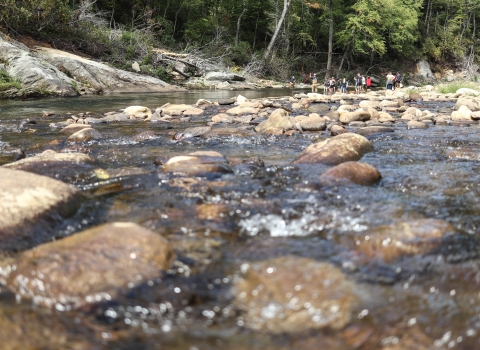
Definition of riparian habitat or riparian areas.
Learn more about riparian habitat for the bull trout, westslope cutthroat trout and mountain whitefish. Acquiring these lands will link adjacent protected wilderness and roadless areas, which also benefit the grizzly bear, Canada lynx, and gray wolf. This acquisition involves a model conservation partnership with several diverse parties that have created the momentum for the largest conservation effort in the country, including the Blackfoot Challenge and the even larger initiative to protect as much of the Crown of the Continent as possible.
The HCP Planning Assistance Grants Program provides grants to states and territories to support the development of HCPs through funding of baseline surveys and inventories, document preparation, outreach and similar planning activities. For example, the states of Indiana, Iowa, Michigan, Missouri and Ohio will receive a total of $3,362,364 to assist in the development of a landscape-level, multi-species HCP throughout the states to provide conservation benefits to listed species, while accommodating wind development. The plan will provide a means for wind energy developers to avoid, minimize, mitigate and compensate for adverse effects to protected species. As a part of the HCP, the five states will work in collaboration with Minnesota, Illinois and Wisconsin, the wind industry, and The Conservation Fund to lead a strategic conservation planning process that focuses on integrating species needs with potential habitat mitigation across the landscape.
The Recovery Land Acquisition Grants Program provides funds to states and territories to acquire habitat for endangered and threatened species with approved recovery plans. Habitat acquisition to secure long term protection is often an essential element of a comprehensive recovery effort for a listed species. One of this year’s grants will provide $800,000 to enable the Texas Parks and Wildlife Department to acquire a 413-acre tract to protect nesting habitat of the golden-cheeked warbler and black-capped vireo. The property is also expected to benefit the endangered Tobusch fish-hook cactus.
For a complete list of the 2010 grant awards for these programs (Catalog of Federal Domestic Assistance Number 15.615), see the Service’s Endangered Species Grants home page at http://www.fws.gov/endangered/grants/.
Habitat Conservation Plan Land Acquisition Grants in Washington:
Methow Watershed, Phase 7 - (Okanogan County, WA) $4,500,000.
The Methow, Phase 7 project will secure 3,025 acres and additional stream frontage protecting critical wolf habitat, spawning and rearing habitat for listed salmonids, landscape corridors for listed carnivores and their mule deer prey, and habitat for at least 23 at-risk species covered by the Plum Creek HCP. The Methow River Watershed is perhaps the most intact and ecologically functional major drainage in eastern Washington, supporting a unique and diverse assemblage of fish and wildlife species. Nationally, it is one of the few places where endangered and threatened grizzly bears, gray wolves, lynx, bull trout, and salmon occur together, and it is the home of Washington’s first documented wolf pack.
Okanogan-Similkameen Watershed, Phase 3 - (Okanogan County, WA) $1,500,000.
Phase 3 of the Okanogan-Similkameen project will acquire 1,370 acres which will contribute toward securing two ecologically critical animal movement corridors, one for wide-ranging carnivores and their ungulate prey that links the North Cascades Ecosystem with the Kettle/Selkirk Mountains Ecosystem, and the other linking the shrub-steppe habitat of the Columbia Basin with the grassland/shrub-steppe habitat of southern British Columbia. The project will conserve habitat for at least 48 species listed as threatened or endangered (5 Federal, 8 State, and 35 Canadian). The project has the added benefit of supporting local economies by encouraging ecologically sustainable land use and maintaining working ranch landscapes.
Mt. St. Helen’s Forest - (Skamania County, WA) $6,000,000.
Columbia Land Trust, as a subgrantee, will acquire approximately 3,000 acres in the Pine Creek watershed within the Mt. St. Helens Forest to permanently protect the highest priority lands that will most benefit three federally listed species: bull trout, northern spotted owl, and gray wolf. The acquisition of the property will contribute significant habitat connectivity in the southern Cascade Mountain Range. DNR will provide land match through the transfer of approximately 670 acres to the Columbia Falls Natural Area Preserve and the Columbia Land Trust will acquire approximately 800 acres within the Mt. St. Helens Project site as match.
Mt. Si Inholdings - (King County, WA) $1,200,000.
This project will protect 520 acres of old growth forest in eastern King County in Washington State through acquisition of a 42-acre in-holding within the State’s Mt. Si Natural Resource Conservation Area. The Department of Natural Resources will provide 478 acres as match for the acquisition. Protection of this land will provide vital landscape connections that will enhance adjacent protected areas and increased protection for marbled murrelets and northern spotted owls.
Puyallup River Levee Setback (Pierce County, WA) $271,700.
Pierce County, as a subgrantee to the Department of Natural Resources will acquire three parcels owned by a single landowner along the Puyallup River. This acquisition will allow the County to complete the acquisition phase of the Puyallup River Levee Setback Project at the South Fork project site, which will reconnect about 50 acres of aquatic and riparian habitat with the Puyallup River. The project will provide benefit to multiple endangered and threatened species including bull trout, and will provide public benefit through improved flood hazard management through the restoration of historic floodplain habitat and geomorphic processes.
Habitat Conservation Planning Assistance Grants in Hawaii, Oregon and Washington:
Hawaii - Finalizing the HCP for Game Mammal Management in North Kona, Hawai‘i (Hawai‘i County, Hawai‘i) $183,000. This funding will allow for the completion of the HCP in the Pu‘uanahulu Game Mammal Management Area and the Pu‘uwa‘awa‘a Cooperative Game Management Area, North Kona. This is one of the largest areas designated for game mammal production in the State and currently has or had 10 endangered animals and 34 endangered plants in the area. Completion of the HCP will address the potential impacts of game mammal management on the listed plants and critical habitat of several plant and animal species that may be impacted by game management activities.
Oregon - Upper Deschutes Basin Habitat Conservation Plan (Jefferson, Crook, and Deschutes Counties, OR) $407,400. This funding will assist the seven primary irrigation districts in the Deschutes Basin that comprise the Deschutes Basin Board of Control and the City of Prineville in the development of an HCP that will benefit aquatic and riparian-dependant species in the upper Deschutes Basin, including bull trout and steelhead, while meeting current and future irrigation and municipal water needs in a balanced, economically viable, and sustainable manner. The HCP, when completed, will provide ecosystem benefits to large areas of the upper Deschutes River basin, which includes the Metolius, Crooked, and Deschutes River Basins.
Washington - Washington State Hydraulic Project Approval HCP (Statewide, all 39 counties, WA) $753,553. The Washington Department of Fish and Wildlife (WDFW) will enter its sixth and final year of habitat conservation planning for activities authorized under the state’s primary fish-protection law, the Hydraulic Project Approval (HPA) authority. WDFW will complete an HCP to conserve fish and shellfish species, while achieving long-term certainty that HPA activities meet federal species protection requirements. The HCP planning process includes substantial public involvement. Listed species that will benefit include bull trout; steelhead; and Chinook, Coho, and sockeye salmon. Unlisted species include but are not limited to: coastal cutthroat trout; green sturgeon; Pacific, river, and western brook lamprey; California floater mussel; and giant Columbia River limpet.
Aquatic Resources HCP (Statewide, all 39 counties, WA) $330,000. Washington State Department of Natural Resources is entering the final year of a planning process to develop a multi-species, programmatic Habitat Conservation Plan. The HCP will ensure that authorized activities on 2.6 million acres of state-owned aquatic lands in marine, estuarine, and freshwater environments promote sustainable ecosystems, minimize cumulative impacts, and increase protection, conservation, and recovery efforts for 30 species of fish and wildlife.
Washington Department of Fish and Wildlife, Wildlife Areas HCP (Statewide, all 39 counties, WA) $481,637. This grant allows the Washington Department of Fish and Wildlife to finalize the development of an HCP for its land management program on more than 900,000 acres across the state. The HCP will offer benefits to more than 50 listed and at-risk species and land users by providing certainty that land management activities meet Federal species protection requirements. Listed species that will benefit include but are not limited to: pygmy rabbit, woodland caribou, western snowy plover, northern spotted owl, marbled murrelet, bull trout, Chinook salmon, steelhead, Oregon silverspot, golden paintbrush, and Kincaid’s lupine. Unlisted species include greater sage-grouse, northern goshawk, burrowing owl, Oregon spotted frog, Larch Mountain salamander, coho salmon, Mardon skipper, Taylor’s checkerspot, and giant Columbia River limpet.
Recovery Land Acquisition Grants in Hawaii and Washington:
Hawaii - Kainalu Forest Watershed Acquisition, Phase II (Maui County, HI) $1,500,000. This grant provides the additional funds necessary for the acquisition of a perpetual conservation easement conservation easement
A conservation easement is a voluntary legal agreement between a landowner and a government agency or qualified conservation organization that restricts the type and amount of development that may take place on a property in the future. Conservation easements aim to protect habitat for birds, fish and other wildlife by limiting residential, industrial or commercial development. Contracts may prohibit alteration of the natural topography, conversion of native grassland to cropland, drainage of wetland and establishment of game farms. Easement land remains in private ownership.
Learn more about conservation easement over 614 acres of strategic watershed on the eastern end of the of Moloka‘i. Stretching from the summit almost to the ocean, this connected parcel follows the traditional Hawaiian land delineation and management system or ahupua‘a. The property has several identified federally listed threatened or endangered species as well as critical habitat in and around the proposed easement area. Listed species benefitting include: ko‘oko‘olau (Bidens wiebkei), ‘awikiwiki (Canavalia molokaiensis), koki‘o ke‘oke‘o (Hibiscus arnottianus ssp. immaculatus), pua‘ala (Brighamia rockii), haha (Cyanea dunbariaeii), nanu (Gardenia brighamii), loulu (Pritchardia munroi), Phyllostegia hispida, ells shearwater (Puffinus auricularis newelli), and n?n? (Branta sandvicensis).
Washington - Golden Paintbrush (Castilleja levisecta) at Heritage Preserve (County, WA) $1,258,500. This funding will enable the Whidbey Camano Land Trust, as a subgrantee to Washington Department of Natural Resources, to protect one of the 12 remaining Federally Threatened and State Endangered golden paintbrush (Castilleja levisecta) populations still existing in the world. This rare prairie plant population on Whidbey is part of a 59-acre protection project that includes a unique coastal old-growth forest, important eroding shoreline bluff and crucial wildlife habitat. The Land Trust will manage the golden paintbrush site to protect, augment, and restore the population as identified in the U.S. Fish and Wildlife Service Recovery Plan for Golden Paintbrush.