The Bureau of Reclamation and the U.S. Fish and Wildlife Service have just completed an important fish ladder project at the Coleman National Fish Hatchery in Anderson, Calif., the largest salmon hatchery outside of Alaska. This ladder has been built to improve fish passage fish passage
Fish passage is the ability of fish or other aquatic species to move freely throughout their life to find food, reproduce, and complete their natural migration cycles. Millions of barriers to fish passage across the country are fragmenting habitat and leading to species declines. The U.S. Fish and Wildlife Service's National Fish Passage Program is working to reconnect watersheds to benefit both wildlife and people.
Learn more about fish passage on Battle Creek, a tributary of the Sacramento River. It assists the salmon and steelhead passage upstream while allowing the hatchery to continue to collect spawning fall-run Chinook salmon in sufficient numbers to perpetuate the runs at the hatchery.
The new fish ladder is about 10 times larger than the previous fish ladder and will help improve managers? ability to separate spawning populations of Central Valley spring- and fall-run Chinook salmon. Spring-run Chinook are threatened species under the Endangered Species Act. The ladder should contribute to the success of the Battle Creek Salmon and Steelhead Restoration Project, which is working to improve fish passage and habitat in the upstream reaches of Battle Creek.
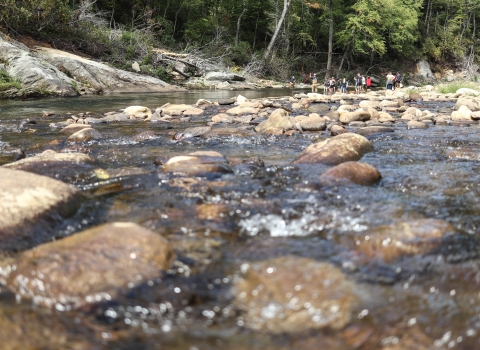
Visitors to Coleman National Fish Hatchery at the annual Return of the Salmon Festival on Oct. 18 will be able to see the new ladder and observe fish in the creek, the hatchery's holding ponds and in some parts of the new ladder.
To view a photo of the first fish to use the new ladder: visit http://www.fws.gov/cno. For more information, please contact Janice Pinero, Reclamation (916) 978-5041 or Scott Hamelberg, Coleman National Fish Hatchery (530) 356-8622.
The mission of the U.S. Fish and Wildlife Service is working with others to conserve, protect and enhance fish, wildlife, plants and their habitats for the continuing benefit of the American people. We are both a leader and trusted partner in fish and wildlife conservation, known for our scientific excellence, stewardship of lands and natural resources, dedicated professionals and commitment to public service. For more information on our work and the people who make it happen, visit http://www.fws.gov/cno.