Idaho Does Not Establish Need for Listing
The U.S. Fish and Wildlife Service has completed its evaluation of a petition to protect the mountain whitefish (Prosopium williamsoni) in the Big Lost River, Idaho, under the Endangered Species Act (ESA).
The Service reviews all petitions to decide whether they contain substantial scientific information that listing may be warranted. The mountain whitefish in the Big Lost River review concluded that substantial scientific or commercial information was not provided indicating that such ESA protection may be warranted. Accordingly, the Service will not be initiating an in-depth status review at this time in response to the petition.
The Service made this determination in response to a petition received in June, 2006 from Western Watersheds Project seeking to add the species to the Federal List of Threatened and Endangered Wildlife and Plants. The petitioner requested that the species be listed as a separate species, subspecies, or as a distinct population segment, and also requested that critical habitat be designated.
"We will continue to learn more about this fish and its needs, and support ongoing conservation efforts for the mountain whitefish in the Big Lost River by working closely with the Idaho Department of Fish and Game, the Salmon-Challis National Forest, Trout Unlimited and local landowners," said Jeff Foss, field supervisor of the Snake River Fish and Wildlife Office in Boise, Idaho.
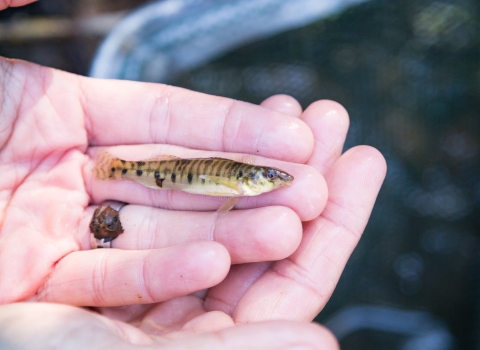
Mountain whitefish, sometimes known as mountain herring, are members of the Salmonidae family and are found throughout mountainous areas of western North America in Canada and the United States. The species is known to occur in the States of Washington, Oregon, Idaho, Wyoming, Montana, Colorado, Utah, Nevada and California. Their preferred habitat is cold water streams and lakes, and some populations are restricted to lakes or isolated sink basins.
There are additional populations of mountain whitefish that occur in other sink drainages, such as tributaries in the Lahontan Basin in California and Nevada and the Bonneville Basin in Utah. Populations in these basins are similar to the Big Lost River population in that all are relict populations of mountain whitefish that formerly resided in large Pleistocene lake systems that are now closed basins.
The Service asks the public to submit any new information that becomes available concerning the status of mountain whitefish occurring in the Big Lost River at any time. This information will help us continue to monitor the status and trends, potential threats, and management actions that might affect mountain whitefish in the Big Lost River. We encourage interested parties to continue to gather data that will assist with the conservation of this species.
If you wish to provide information regarding mountain whitefish in the Big Lost River, you may submit your information or materials to the Field Supervisor, Snake River Fish and Wildlife Office, 1387 S. Vinnell Way, Room 368, Boise, Idaho 83709.
A copy of the finding about the mountain whitefish in the Big Lost River was published in todays Federal Register and is available on the Internet at http://idahoes.fws.gov, or by contacting the Field Supervisor at the address above or by calling (208) 378-5243.
The U.S. Fish and Wildlife Service is the principal Federal agency responsible for conserving, protecting and enhancing fish, wildlife and plants and their habitats for the continuing benefit of the American people. The Service manages the 97-million-acre National Wildlife Refuge System, which encompasses 548 national wildlife refuges, thousands of small wetlands and other special management areas. It also operates 69 national fish hatcheries, 64 fishery resources offices and 81 ecological services field stations. The agency enforces federal wildlife laws, administers the Endangered Species Act, manages migratory bird populations, restores nationally significant fisheries, conserves and restores wildlife habitat such as wetlands, and helps foreign and Native American tribal governments with their conservation efforts. It also oversees the Federal Assistance program, which distributes hundreds of millions of dollars in excise taxes on fishing and hunting equipment to state fish and wildlife agencies.