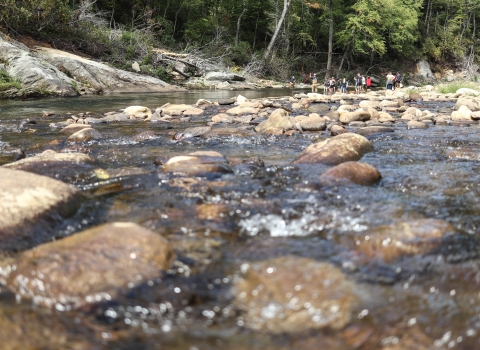
The U.S. Fish and Wildlife Service recently purchased 13.36 acres for the Petit Manan National Wildlife Refuge in Hancock County, Maine. The property, purchased on April 17 from Simon and Edna Litten of Altamont, N.Y., was the last remaining privately owned in-holding within the boundary of the refuge's Gouldsboro Bay Division, according to Charlie Blair, refuge manager.
8 "I greatly respect the Litten's decision to ensure that this property will forever protect prime habitat for bald eagles, waterfowl, wading birds, and shorebirds as part of the National Wildlife Refuge System," said Blair.
8 "We found it very gratifying to see this land protected and to participate in the completion of the refuge. We waited five years for funding to become available because we didnt want to have the refuge damaged by development," said Simon Litten on behalf of himself and his wife, Edna.
The Service's Northeast Region successfully secured funding from the Land and Water Conservation Fund In-holding Account for the purchase. The property included two potential building lots and a road right-of-way through the refuge.
8 Historically the site of Gouldsboro's town center, the Gouldsboro Bay Division now consists of mature conifer and northern hardwood forest, intertidal wetlands and other important coastal habitats for fish and wildlife. The Petit Manan National Wildlife Refuge is part of the Maine Coastal Islands National Wildlife Refuge, which also includes Cross Island, Franklin Island, Seal Island, and Pond national wildlife refuges. The refuges protect islands, estuaries, freshwater wetlands, forests, and other important habitats for migratory birds, threatened and endangered species, and other native wildlife along the length of Maines coast.
8 The U.S. Fish and Wildlife Service is the principal federal agency responsible for conserving, protecting and enhancing fish, wildlife and plants and their habitats for the continuing benefit of the American people. The Service manages the 95-million-acre National Wildlife Refuge System, which encompasses 545 national wildlife refuges, thousands of small wetlands and other special management areas. It also operates 69 national fish hatcheries, 64 fishery resources offices and 81 ecological services field stations. The agency enforces federal wildlife laws, administers the Endangered Species Act, manages migratory bird populations, restores nationally significant fisheries, conserves and restores wildlife habitat such as wetlands, and helps foreign and Native American tribal governments with their conservation efforts. It also oversees the Federal Assistance program, which distributes hundreds of millions of dollars in excise taxes on fishing and hunting equipment to state fish and wildlife agencies.
gri-FWS-