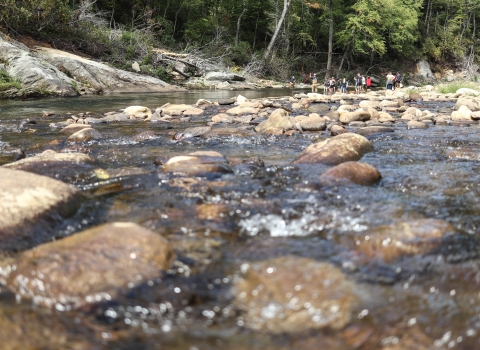
A federal court in Milwaukee today sentenced Rachel L. Mueller, 48, of Princeton, Wis., to serve two years of probation, perform 80 hours of community service and pay restitution of $1,552 for ordering the dumping of pesticides on Fox River National Wildlife Refuge in south-central Wisconsin.
Mueller is a former employee of Grand River Cooperative, a farm supply and services company in Markesan, Wis. In June 2004, the U.S. Fish and Wildlife Service hired Grand River Cooperative to apply herbicides to a 50-acre unit of the refuge.
Mueller ordered subordinate Benjamin D. Jahnke to do the job. Jahnke admitted in federal court that after spraying a few acres, his rig became stuck. After a local farmer used his tractor to free the rig, Mueller told Jahnke to dump 250 gallons of herbicide in the rig’s sprayer on the ground to lighten the load on the rig. She then instructed Jahnke to not mention the incident to anyone.
On March 10, the same federal judge, U.S. Magistrate Aaron E. Goodstein, sentenced Jahnke, 27, of Manchester, Wis., to serve two years probation, perform 50 hours of community service and pay restitution of $1,552 for his role in the illegal pesticide dump.
Dumping pesticides on a national wildlife refuge national wildlife refuge
A national wildlife refuge is typically a contiguous area of land and water managed by the U.S. Fish and Wildlife Service for the conservation and, where appropriate, restoration of fish, wildlife and plant resources and their habitats for the benefit of present and future generations of Americans.
Learn more about national wildlife refuge is a violation of the National Wildlife Refuge Administration Act, a federal law that directs management of refuges and areas used for the protection and conservation of fish and wildlife. The maximum penalty for violating this law is one year confinement and/or $25,000 fine.
The U.S. Fish and Wildlife Service is the principal federal agency responsible for conserving, protecting and enhancing fish, wildlife and plants and their habitats for the continuing benefit of the American people. The Service manages the 95-million-acre National Wildlife Refuge System, which encompasses 545 national wildlife refuges, thousands of small wetlands and other special management areas. It also operates 69 national fish hatcheries, 63 Fish and Wildlife Management offices and 81 ecological services field stations. The agency enforces federal wildlife laws, administers the Endangered Species Act, manages migratory bird populations, restores nationally significant fisheries, conserves and restores wildlife habitat such as wetlands, and helps foreign governments with their conservation efforts. It also oversees the Federal Assistance program, which distributes hundreds of millions of dollars in excise taxes on fishing and hunting equipment to state fish and wildlife agencies.