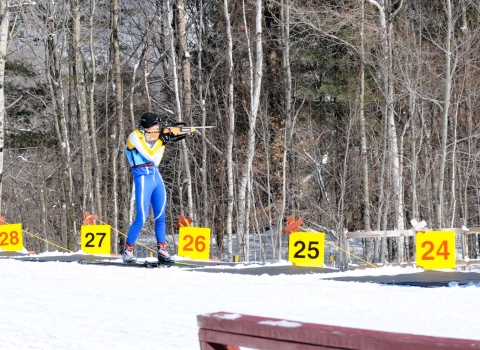
The Sacramento National Wildlife Refuge (NWR) Complex hosted more than 370 youngsters at youth waterfowl hunts in February in an effort to recruit future hunters and engage young people with nature.
Denise Dachner, Outdoor Recreation Planner for the refuge complex, said the hunts were held February 4-5 at Sacramento, Delevan and Colusa Refuges. She said the refuges have hosted post-season youth hunts since 1996 (and in-season junior hunts since 1991) with assistance from the California Department of Fish and Game, California Waterfowl Association (CWA) and other partners.
"Hunters are some of the most reliable allies of wildlife conservation because they spend a lot of time in close contact with nature," Dachner said. "With hunting license sales declining during the past several years, were trying to promote interest in the sport. These hunts also give us an opportunity to talk about conservation, the proper use of hunting equipment and the value of wildlife habitat on the refuge. Young people are impressionable, so our hope is that they will embrace that ethic and carry it with them for the rest of their lives."
According to a 2001 national survey published by the U.S. Fish and Wildlife Service - the federal agency that manages the 95-million-acre National Wildlife Refuge System - hunting license sales decreased by 7 percent between 1991 and 2001. Census data shows that the U.S. population during that same period increased by about 13 percent.
To provide public access for wildlife-dependent recreation, many refuges have promoted hunting programs as long as they are compatible with the purposes of the refuge and the Refuge System. Currently 317 refuges have announced hunting programs, and several, like the Sacramento NWR Complex, have established special programs for young people.
Tom Reed, national hunting and fishing coordinator for the Service, said at least 22 refuges across the Refuge System host youth waterfowl hunts. Reed said that number - based on informal surveys - is likely higher, and dozens more refuges have expressed interest in hosting youth hunts.
Dachner said the refuge complex hosts nine hunts each year - three in-season junior and six post-season youth hunts. The junior hunts are open to all hunters (16 or younger) and the youth hunts are open to all hunters (15 or younger) with a valid hunting license and they must be accompanied by an adult. During many of the hunts, CWA volunteers facilitate a hunter quiz that tests their waterfowl identification, distance judgment, and safety knowledge. Also, gift packs and displays about wetland habitat, setting decoy spreads, and the federal duck stamp are provided.
"These hunts draw a mix of kids from all kinds of backgrounds," she said. "But they all share an excitement for being out in nature. It's an experience that many of them wont forget."
This year Dachner said 372 youth hunters participated in the three post-season youth hunts at the Sacramento NWR Complex - an all time record turnout and approximately 88 more than last year. Parents and adults often remark that they also enjoy the hunt for many reasons - from spending individual quality time with their son or daughter to help hone their hunting skills, learning about waterfowl management, to just enjoying the great outdoors," she said.
The refuge complex - which consists of five national wildlife refuges and three wildlife management areas that comprise more than 35,000 acres of wetlands and uplands in Californias Sacramento Valley - is winter home to a variety of waterfowl and game birds, including gadwall, green-winged teal, white-fronted geese, snow geese, pintail, wigeon, shovelers, ring-necked pheasants, turkey and California quail.