The U. S. Fish and Wildlife Service announced today that a petition to list the American dipper in the Black Hills of South Dakota under the Endangered Species Act (ESA) did not provide adequate information to indicate that listing may be warranted. However, the Service will continue to monitor the status of the dipper, a passerine bird which occupies habitat along mountain streams in western North America. The negative petition finding was published today in the Federal Register.
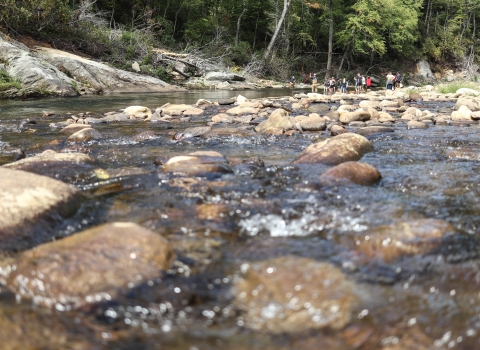
The Service made the determination in response to a petition received from the Biodiversity Conservation Alliance, Center for Native Ecosystems, Native Ecosystems Council, Prairie Hills Audubon Society and Jeremy Nichols requesting that the Service emergency list the American dipper in the Black Hills as a distinct population segment under the ESA. Although the population is discrete from other American dipper populations, the information in the petition and Service files do not indicate that the Black Hills population lives in a unique ecological setting in relation to the remainder of the taxon. The cold, fast moving mountain stream habitat that the dipper needs is not unique to the Black Hills and can be found throughout the western half of North America, including in the Rocky Mountains, where the species is relatively abundant. However, if new, substantial information becomes available, the Service will reevaluate this finding.
"The Service will remain interested in the Black Hills population of the American Dipper," said Mitch King, the Services Acting Regional Director for the Mountain-Prairie Region. "We applaud the conservation efforts of States and others."
The South Dakota Game, Fish and Parks Department has been monitoring the American dipper in the Black Hills. It was listed in 1996 as a threatened species in the State of South Dakota. The dipper is also federally protected under the Migratory Bird Treat Act.
Dipper nest surveys in the Black Hills were started in 1993 and became more extensive from 2003-2005. The lowest number of dippers reported on Spearfish Creek was 10 in 1997, with only 2 nests found. In 2004, 49 dippers were reported on Spearfish Creek, with 31 nest attempts; and 12 adults, and 7 nest attempts, were observed on Whitewood Creek.
The American dipper has a strong, stout bill, which enables the bird to probe and forage for aquatic insects among rocks. The gray bird has rather large feet with strong toes and claws that enable the bird to grip rocks and pebbles on streambeds. The dippers dense plumage insulates it from low air and water temperatures and has helped the species adapt to living in cold streams and creeks. This special plumage also helps with evaporative cooling in hot weather.
The ESA provides for citizens to petition the Service to add to or remove species from the lists of threatened and endangered wildlife and plants. The Service is required to make a 90-day finding on whether the petition presents substantial information that the petitioned action may be warranted.
For more information about this finding, please visit the Services web site at http://southdakotafieldoffice.fws.gov/AmDipper_main.htm or contact the Fish and Wildlife Services South Dakota Ecological Services Field Office at 605-224-8693.
- FWS -
For more information about the U.S. Fish and Wildlife Service,
visit our home page at http://www.fws.gov