The U.S. Fish and Wildlife Service today released its final Comprehensive Conservation Plan (CCP) for the 17,525-acre
Lake Ophelia NWR CCP provides a clear statement regarding the future management of the refuge over the next 15 years and ensures that the refuge's management actions are consistent with refuge purposes and the mandates of the National Wildlife Refuge System. Lake Ophelia National Wildlife Refuge will become a highly productive bottomland hardwood forest and open wetland ecosystem, which will provide a diverse complex of habitats that protect and restore biological diversity for the enjoyment and benefit of present and future generations. Habitat restoration and management activities will be directed toward waterfowl, neotropical migratory birds, the threatened Louisiana black bear, and other resident and migratory wildlife. The Refuge will foster new partnerships with the community and provide opportunities for wildlife-dependent recreation. It will provide for the following:
- Conduct comprehensive assessments of existing fish and wildlife resources;
- Recruit and train staff and improve existing facilities and access to the Refuge;
- Contribute to maintaining biological diversity within the Mississippi Alluvial Valley ;
- Manage habitats to reduce threats and problems (i.e., forest fragmentation, loss of old growth forests) associated with species of concern;
- Fully participate in Louisiana black bear recovery efforts;
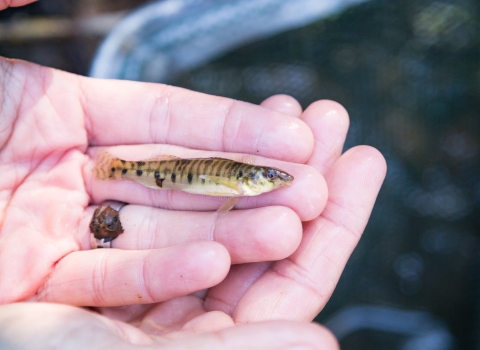
- Restore and enhance the fishery resource in Lake Ophelia , Duck, and West Cut Lakes
- Expand appropriate and compatible wildlife-dependent recreational opportunities.
The plan also provides increased opportunities for public use that are appropriate and compatible with the ?wildlife first? mandate. Improvements will be made to the Refuge's exterior and interior access roads to provide all-weather vehicular access to a broad segment of the public. Opportunities for hiking and ATV use will be provided to support wildlife-dependent recreation to the extent that these activities do not significantly interfere with or detract from the achievement of wildlife conservation. Wildlife observation sites and platforms; interpretive trails, boardwalks, and kiosks; and restrooms will be provided at specific sites to allow for fully accessible environmental education and interpretation programs. Quality fishing and hunting programs will be provided, consistent with sound biological principles with sufficient focus on waterfowl/waterbird sanctuary, loafing, feeding, and courting requirements. Fishing will be permitted on Lake Ophelia, Duck Lake, Westcut Lake, Nicholas Lake, Possum Bayou, and Frazier-Whitehorse Lake. A visitor services plan, incorporating an aggressive and proactive promotion of both on- and off-site programs, will be developed and implemented.
For a free copy of the plan, please contact Tina Chouinard, Natural Resource Planner, Central Louisiana National Wildlife Refuge Complex, 401 Road , Marksville , Louisiana , 71351 , or telephone 318/253-4238 . These documents can also be viewed or downloaded from the following website address: http://www.fws.gov/southeast/planning/ under "Final Documents?.
The U.S. Fish and Wildlife Service is the principal federal agency responsible for conserving, protecting and enhancing fish, wildlife and plants and their habitats for the continuing benefit of the American people. The Service manages the 95-million-acre National Wildlife Refuge System, which encompasses 545 national wildlife refuges, thousands of small wetlands and other special management areas. It also operates 69 national fish hatcheries, 63 Fish and wildlife management offices and 81 ecological services field stations. The agency enforces federal wildlife laws, administers the Endangered Species Act, manages migratory bird populations, restores nationally significant fisheries, conserves and restores wildlife habitat such as wetlands, and helps foreign governments with their conservation efforts. It also oversees the Federal Assistance program, which distributes hundreds of millions of dollars in excise taxes on fishing and hunting equipment to State fish and wildlife agencies.