The U.S. Fish and Wildlife Service published today a final rule designating 8,007 acres of critical habitat for Fish Slough milk-vetch - a plant found exclusively in a desert wetland oasis in Mono and Inyo counties in southeastern California. Click here for frequently asked questions
In June 2004, 8,490 acres were proposed as critical habitat for the milk-vetch. A 483-acre parcel in Inyo County was not designated as critical habitat because surveys have demonstrated that neither the milk-vetch nor its habitat occur in the parcel.
Federal land accounts for 5,401 acres of the designated critical habitat, while the city of Los Angeles owns 2,440 acres. The remaining 166 acres are located on State-owned lands. The final rule was published in today's Federal Register.
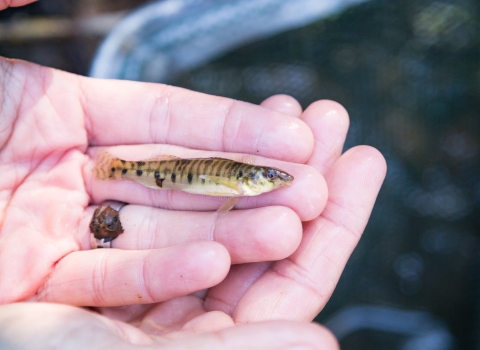
Fish Slough milk-vetch (Astragalus lentiginosus var. piscinensis) gets its name from a rare desert ecosystem north of the city of Bishop called Fish Slough. The slough ? which the Bureau of Land Management classifies as an "Area of Critical Environmental Concern? ? combines geographic isolation, geology, climate, and hydrology to create one of the richest floras in the Great Basin. Fish Slough encompasses wetlands, alkali meadows, and uplands. In addition to the Fish Slough milk-vetch, Fish Slough also provides habitat for several rare plant and animal species, including the federally protected Owens pupfish and a plant called King's ivesia.
Fish Slough milk-vetch, a member of the pea family, is a perennial with lavender flowers. Threats faced by the plant include habitat destruction from off-road vehicle use; moderate to intense levels of cattle grazing; grazing by native animals; competition with non-native plant species; changes in its preferred habitat; ground water pumping and water diversions that alter the Fish Slough hydrology.
" align=left>
" align=left> Native plants are important for their ecological, economic, and aesthetic values. Plants play an important role in development of crops that resist disease, insects, and drought. At least 25 percent of prescription drugs contain ingredients derived from plant compounds, including medicine to treat cancer, heart disease, juvenile leukemia, malaria, and assist in organ transplants. Plants are also used to develop natural pesticides.
" align=left>
Under the Endangered Species Act (ESA), critical habitat identifies geographic areas that contain features essential for the conservation of a threatened or endangered species and may require special management considerations. The designation of critical habitat does not affect land ownership or establish a refuge, wilderness, reserve, preserve, or other conservation area conservation area
A conservation area is a type of national wildlife refuge that consists primarily or entirely of conservation easements on private lands. These conservation easements support private landowner efforts to protect important habitat for fish and wildlife and major migration corridors while helping to keep agricultural lands in production.
Learn more about conservation area . It does not allow government or public access to private lands. Critical habitat has a regulatory impact only on Federal agencies; private or non-Federal agencies are not affected unless they undertake projects that involve Federal funding or permits.
In 30 years of implementing the ESA, the Service has found that designation of critical habitat provides little additional protection for most listed species, while preventing the agency from using scarce conservation resources for activities with greater conservation benefits.
In almost all cases, recovery of listed species will come through voluntary cooperative partnerships, not regulatory measures such as critical habitat. Habitat is also protected through cooperative measures under the ESA, including Habitat Conservation Plans, Safe Harbor Agreements, Candidate Conservation Agreements and state programs. In addition, voluntary partnership programs such as the Service's Private Stewardship Grants and the Partners for Fish and Wildlife program also restore habitat. Habitat for listed species exists on many of the Service's national wildlife refuges and state wildlife management areas.
Fish Slough milk-vetch was listed as a threatened species in 1998. This critical habitat designation was completed in response to a lawsuit filed by the Center for Biological Diversity and the California Native Plant Society. A copy of the final rule, economic analysis, and other information about Fish Slough milk-vetch is available on the Internet at http://ventura.fws.gov, or by calling the Ventura Fish and Wildlife Office at 805/644-1766.
" align=left>