The U.S. Fish and Wildlife Service has completed a recovery plan for the endangered Ouachita rock pocketbook (Arkansia wheeleri). The rock pocketbook is a rare freshwater mussel found only in portions of Oklahoma, Arkansas, and Texas.
ewer than 2,000 of the endangered mussels occupy an 88-mile stretch of the Kiamichi River in southeastern Oklahoma and a 69-mile section of the Little River in Oklahoma and Arkansas. Even smaller numbers have been found in Arkansas within the Ouachita River and in Red River tributaries in Texas.
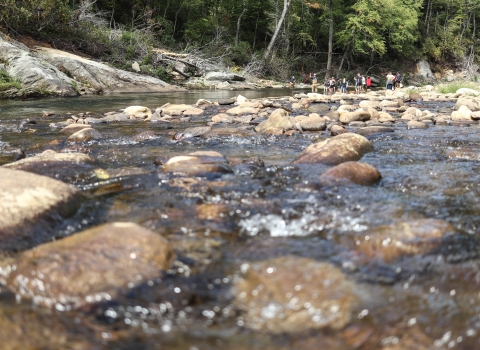
Listed as endangered in 1991, the Ouachita rock pocketbook inhabits pools, backwaters, and side channels of certain rivers and creeks in and near the Ouachita Uplift. The species occupies stable substrates containing gravel, sand, and other materials and is always found within large beds rich with other mussel species.
The recovery plan provides a blueprint for how to restore self-sustaining, viable mussel populations within the species? historical range. The plan sets priorities for specific management actions and identifies potential partners in the endeavor. It contains objective, measurable criteria for determining when the species? status will have improved sufficiently so that protection under the Endangered Species Act is no longer needed.
Poor water quality and fragmenting of populations by major river impoundments have led to the mussel's decline. Additional threats include proposals for further water resource development, potential land use changes, direct disturbance of river channels, possible invasion by the exotic zebra mussel, and a lack of knowledge about the species? reproduction.
The recovery plan is available on the internet at: http://ecos.fws.gov/docs/recovery_plans/2004/040602.pdf
lso a fact sheet, and other information are available on the internet at:
http://ifw2es.fws.gov/oklahoma/rockpock.htm
ontact the U.S. Fish and Wildlife Service, Oklahoma Ecological Services Field Office, 222 South Houston Avenue, Suite A, Tulsa, OK 74127 or call 918/581-7458 to have the materials mailed to you.
The U.S. Fish and Wildlife Service is the principal Federal agency responsible for conserving, protecting and enhancing fish, wildlife and plants and their habitats for the continuing benefit of the American people. The Service manages the 95-million-acre National Wildlife Refuge System, which encompasses 544 national wildlife refuges, thousands of small wetlands and other special management areas. It also operates 69 national fish hatcheries, 63 Fish and Wildlife Management offices and 81 ecological services field stations. The agency enforces federal wildlife laws, administers the Endangered Species Act, manages migratory bird populations, restores nationally significant fisheries, conserves and restores wildlife habitat such as wetlands, and helps foreign governments with their conservation efforts. It also oversees the Federal Assistance program, which distributes hundreds of millions of dollars in excise taxes on fishing and hunting equipment to state fish and wildlife agencies.