Media are invited to enjoy a day on the Mississippi River with biologists from the Genoa National Fish Hatchery as they begin spring netting operations on Pool 9 of the Upper Mississippi, 30 miles south of La Crosse, Wis.
Interested media should contact Doug Aloisi, hatchery manager, at 608-689-2605, to arrange a trip. Biologists will be out on the river between 8 a.m. and noon, Monday through Friday, from now until the last week of April.
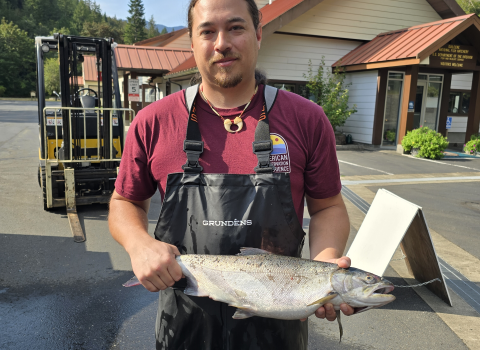
You can expect to see large pike and walleye being caught, handled, spawned and released. You’ll also have the opportunity to interview the U.S. Fish and Wildlife Service biologists who take to the river each spring to ensure that healthy populations of these sport fish remain in the Upper Mississippi to fill anglers’ creels.
And you’ll enjoy a springtime boat ride on the river and a front-and-center view of bald eagles and other migrating wildlife returning to the Upper Mississippi.
Each spring, hatchery biologists collect adult northern pike and walleyes that are ready to spawn. Eggs are taken from the adult fish by gently applying pressure to the abdomen and expressing the eggs into dishpans. The milt (sperm) from the males are added and mixed, and the eggs are placed into hatching jars and cared for until hatching.
The hatchery takes 1 million to 2 million pike eggs yearly, and 8 to 20 million walleye eggs per season. The adults and 10 to 20 percent of the resulting fry are released unharmed back into the river to maintain healthy fish populations.
Eggs and fry that are retained are reared for ongoing hatchery programs such as endangered mussel recovery; stocked in lakes to increasing recreational opportunities on tribal and federal lands; or supplied to other state conservation agencies to further their sport fish restoration programs. Anglers can reel in northern pike that are more than 3 feet long.
Operated by the U.S. Fish and Wildlife Service, Genoa National Fish Hatchery has been in existence since 1932 with the creation of the Upper Mississippi River Wildlife and Fish Refuge. Its mission is working with partners to restore and maintain fish and other aquatic resources at self-sustaining levels for the benefit of the American public.
The U.S. Fish and Wildlife Service is the principal Federal agency responsible for conserving, protecting and enhancing fish, wildlife and plants and their habitats for the continuing benefit of the American people. The Service manages the 95-million-acre National Wildlife Refuge System, which encompasses 544 national wildlife refuges, thousands of small wetlands and other special management areas. It also operates 69 national fish hatcheries, 63 Fish and Wildlife Management offices and 81 ecological services field stations. The agency enforces federal wildlife laws, administers the Endangered Species Act, manages migratory bird populations, restores nationally significant fisheries, conserves and restores wildlife habitat such as wetlands, and helps foreign governments with their conservation efforts. It also oversees the Federal Assistance program, which distributes hundreds of millions of dollars in excise taxes on fishing and hunting equipment to state fish and wildlife agencies.