On March 14, 1903, President Theodore Roosevelt established the first National Wildlife Refuge near Sebastian, Florida. In an effort to protect the last remaining breeding grounds for brown pelicans, President Roosevelt signed an executive order establishing Pelican as a federal bird reservation. This act marked the first time that the federal government set aside land for the primary purpose of conserving wildlife. Today, there are nearly 540 national wildlife refuges protecting over 95 million acres of habitat across America. From bison to butterflies and salmon to sandhill cranes, national wildlife refuges conserve land for more than 1,000 species of fish and wildlife. One hundred years after the establishment of the first refuge and on the opposite side of the continental United States, an additional 341 acres, known as Snag Boat Bend, will be opened to the public as part of the Willamette Valley National Wildlife Refuge Complex.
A Century of Wildlife Conservation and International Migratory Bird Day Festivities will be celebrated in the Willamette Valley on Saturday, May 10, 2003 at the Snag Boat Bend Unit, William L. Finley, and Baskett Slough National Wildlife Refuges. These refuges are a part of a complex of National Wildlife Refuges in the Willamette Valley, which also includes Ankeny National Wildlife Refuge. The Valley refuges are a mixture of native prairies, wetlands, oak savanna, meandering creeks, riparian riparian
Definition of riparian habitat or riparian areas.
Learn more about riparian forests, and farm fields. Canada geese, ducks, swans, songbirds, hawks, beaver, otters, deer, elk, and bobcats call these refuges home.
The Snag Boat Bend Unit of the Willamette Valley National Wildlife Refuge Complex (Grand Opening Celebration: Saturday, May 10, 10:00 a.m. - 1:00 p.m.)
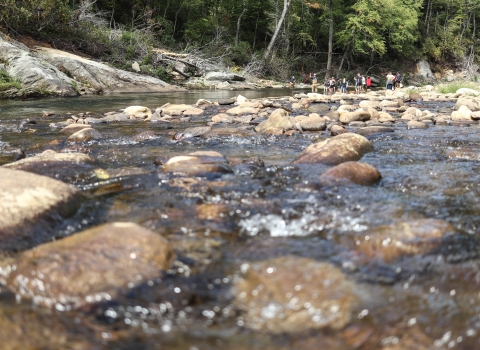
To mark the 100th year anniversary of the National Wildlife Refuge System, the U.S. Fish and Wildlife Service will be opening Snag Boat Bend to the public. Snag Boat Bend, located at the confluence of Lake Creek and the Willamette River, is a mixture of wetland, riparian, backwater sloughs, riverine, and agricultural habitats. The new refuge provides habitat for over 100 species of birds, including ducks, swans, shorebirds, egrets, herons, hawks, owls, and a variety of songbirds. Western pond turtles, red-legged frogs, river otters, beaver, and deer also call this refuge home. Named after a huge S-curve in the Willamette River, Snag Boat Bend will provide great opportunities for wildlife viewing, hiking, photography, and education. This refuge provides a great opportunity to restore declining native flood plain habitat along the Willamette River. Over 6,000 native trees and shrubs have been planted this year alone - thanks to the many volunteers, the Greenbelt Land Trust, and the dedication of refuge staff. Join us on May 10th and learn about this fabulous new addition to the Willamette Valley National Wildlife Refuge Complex.
Opening ceremonies will begin at 10:00 a.m., followed by guided walks with Refuge Managers and biologists. Join us in hiking the trails, walking on the new boardwalk, and catching a view of wood ducks from the new observation blind. Learn about the rare western pond turtle, recent habitat restoration, and plans for the future. Watch a bird banding demonstration, and experience first-hand the benefits of this new refuge unit.
(The Snag Boat Bend Unit is located 1 mile east of Corvallis and 11 miles south of Oregon Highway 34 on Peoria Road.)
William L. Finley National Wildlife Refuge (International Migratory Bird Day Festivities: Saturday, May 10, 10:00 a.m. - 4:00 p.m.