In addition, the Service will hold a public hearing on the proposal on Wednesday, December 8, 1999, in Jefferson City, Missouri, from 7 p.m. to 10 p.m. The public may offer oral comments at the hearing or submit written comments. The hearing will be preceded by an informal open forum from 5 p.m. to 6:30 p.m. During the open forum, Service representatives will be available to answer questions about the scaleshell and the proposal to list the species as endangered. The forum and hearing will be held at the Runge Conservation Nature Center Auditorium in Jefferson City. The nature center is located north of Highway 50 on Highway 179.
The Service proposed to list the scaleshell as an endangered species on August 13, 1999. During the subsequent comment period, several requests were made to the Service for a public hearing, because of this the comment period has been reopened. Following the close of the comment period, the Service will evaluate all available information on the status of the scaleshell, and then make a determination whether to list the scaleshell as endangered. A plant or animal is designated as endangered if it is in danger of extinction throughout all or a significant portion of its range.
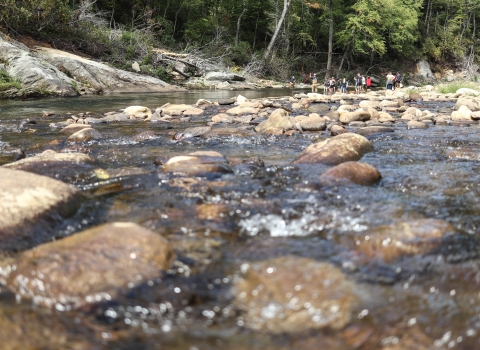
Nearly 75 percent of historically known river populations of scaleshells have disappeared. The species once inhabited 53 rivers or streams throughout most of the eastern United States, with populations found as far west as Oklahoma, but now is found only in 13 rivers. Scaleshells currently exist in Missouri (Meramec River, Big River, Bourbeuse River, Gasconade River and possibly Big Piney River); Arkansas (St. Francis River, Spring River, South Fork Spring River, Strawberry River, South Fourche LaFave River, Cossatot River, Saline River, and Little Missouri River); and Oklahoma (Kiamichi River). Of these populations, 10 are thought to be declining. The status of the scaleshell in the Missouri River in South Dakota is unknown.
More information on the Services proposal to list the scaleshell as endangered can be found in the August 13 Federal Register or by contacting the Services Ecological Services office in Columbia, Missouri, at 573-876-1911 extension 110.
The U.S. Fish and Wildlife Service is the principal federal agency responsible for conserving, protecting, and enhancing fish and wildlife and their habitats for the continuing benefit of the American people. The Service manages the 93-million-acre National Wildlife Refuge System comprising more than 500 national wildlife refuges, thousands of small wetlands, and other special management areas. It also operates 66 national fish hatcheries and 78 ecological services field stations.
The agency enforces federal wildlife laws, administers the Endangered Species Act, manages migratory bird populations, restores nationally significant fisheries, conserves and restores wildlife habitat such as wetlands, and helps foreign governments with their conservation efforts. It also oversees the Federal Aid program that distributes hundreds of millions of dollars in excise taxes on fishing and hunting equipment to state wildlife agencies. For further information about the programs and activities of the U.S. Fish and Wildlife Service in the Great Lakes-Big Rivers Region, please visit our home page at: http://www.fws.gov/r3pao/