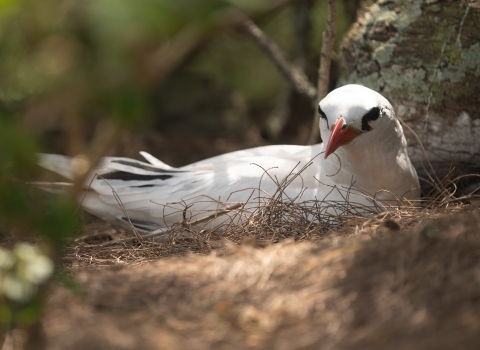
Piping plovers are small, sand colored, ground nesting shorebirds found along the beaches of the Great Lakes. You may encounter piping plover eggs or the small, fuzzy, flightless chicks that will be hatching soon when you visit Great Lakes beaches. Once hatched, plover chicks will hop and run along the shore searching for food. Eggs and the flightless chicks are extremely vulnerable to dogs and beach walkers who may accidently step on them. The agencies ask that while you are out enjoying the natural environment, please take a few precautions to ensure you do not cause damage to this native Great Lakes species.
You can help assure the recovery of this native bird by complying with signs that close areas to certain activities, volunteering with local programs, learning more about how you can help protect piping plovers in your area, and simply being aware of how your actions affect the environment.
Piping plovers once nested on the wide beaches of sand and cobble located throughout the Great Lakes area. However, due to increased development and loss of habitat, the species is now limited to the more undisturbed shoreline areas of Michigan, Wisconsin, Illinois and Ohio.
Thanks to recent efforts, piping plovers appear to be increasing their numbers and range. In 1998, the number of piping plover nesting pairs increased from 23 to 24. This is up from an all-time low of 12 nesting pairs in 1990. Also in 1998, a pair of plovers nested along Lake Superior in Wisconsin, near the Apostle National Lakeshore, for the first time in 15 years.
Although the population has been increasing since 1990, the number of Great Lakes piping plovers is still critically low. Full recovery of the plover is far from being achieved. Many more breeding pairs need to be established throughout the Great Lakes area before their population can be considered stable. It will take the continuing efforts of volunteers, agencies, and especially the public, to ensure the survival of the most endangered Great Lakes bird.
The U.S. Fish and Wildlife Service is the principal federal agency responsible for conserving, protecting, and enhancing fish and wildlife and their habitats for the continuing benefit of the American people. The Service manages the 93-million-acre National Wildlife Refuge System comprising more than 500 national wildlife refuges, thousands of small wetlands, and other special management areas. It also operates 66 national fish hatcheries and 78 ecological services field stations.
The agency enforces federal wildlife laws, administers the Endangered Species Act, manages migratory bird populations, restores nationally significant fisheries, conserves and restores wildlife habitat such as wetlands, and helps foreign governments with their conservation efforts. It also oversees the Federal Aid program that distributes hundreds of millions of dollars in excise taxes on fishing and hunting equipment to state wildlife agencies. For further information about the programs and activities of the U.S. Fish and Wildlife Service in the Great Lakes-Big Rivers Region, please visit our home page at: http://www.fws.gov/r3pao/