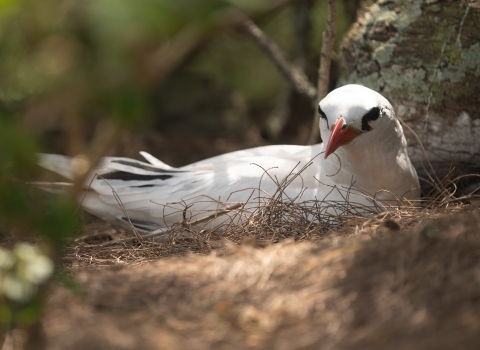
"Coastal ecosystems make up about 10 percent of the nations land area, but 40 percent of our National Wildlife Refuges are in coastal areas and 80 percent of non-game migratory birds and waterfowl depend on the coasts for nesting, foraging, and resting habitat" Service Director Jamie Rappaport Clark said. "Human population density already is five times greater along Americas coasts than it is in the countrys interior. Continued population growth along the coasts makes it all the more critical that we take appropriate action to conserve these irreplaceable ecosystems that support such a diversity of wildlife, as well as homes, jobs, and recreational opportunities for people."
The U.S. Fish and Wildlife Service Coastal Program is a non-regulatory, partnership-based program that restores and protects coastal habitats, removes and retrofits barriers to fish passage fish passage
Fish passage is the ability of fish or other aquatic species to move freely throughout their life to find food, reproduce, and complete their natural migration cycles. Millions of barriers to fish passage across the country are fragmenting habitat and leading to species declines. The U.S. Fish and Wildlife Service's National Fish Passage Program is working to reconnect watersheds to benefit both wildlife and people.
Learn more about fish passage in coastal watersheds and estuaries, and controls exotic invasive species invasive species
An invasive species is any plant or animal that has spread or been introduced into a new area where they are, or could, cause harm to the environment, economy, or human, animal, or plant health. Their unwelcome presence can destroy ecosystems and cost millions of dollars.
Learn more about invasive species that threaten coastal ecosystems. The program focuses on a variety of habitat types, including salt marshes, maritime forests, dunes, coastal prairies, mudflats and stream banks. The program serves projects on both private and public lands.
The Coastal Program works closely with other Federal, State, Tribal and local government agencies, conservation organizations, business, and private landowners. Program biologists provide these partners with technical and financial assistance to produce on-the-ground results that benefit fish and wildlife resources in coastal areas. Because Service funds are leveraged with partners funds in these efforts, the Coastal Programs ability to conserve important habitats is more than tripled.
The three coastal areas to receive funding for the first time under the program in FY 2000 present unique habitat conservation challenges:
o Pacific Islands projects will use native vegetation for reforestation efforts aimed at reducing sedimentation and restoring silt-covered coral reefs, work with partners to develop conservation easements on fragile coastal habitats, and enhance nesting habitat for sea turtles.
o Great Lakes projects will restore stream-side habitats important to native recreational fisheries, restore shoreline wetlands to improve fish spawning success, and work with partners to acquire habitat for piping plovers and bald eagles.
o Alaska projects will restore stream-side habitat along the Cook Inlet, restore important anadromous fisheries habitat on the Kenai River, and work with partners to protect undeveloped coastal mud flats, tidal marshes and forests.
Expansion of the program will ensure that the technical and financial assistance it provides will now be available to partners in all coastal regions of the U.S. Fish and Wildlife Service. The three new locations join ongoing Service efforts in the Gulf of Maine, Southern New England/New York Bight, Delaware Bay, Chesapeake Bay, Albemarle/Pamlico Sound, South Carolina Coast, Everglades/South Florida, Texas Coast, Southern California/San Diego Bay, San Francisco Bay, and Puget Sound.
For more information about the Services Coastal Program, write to the Division of Habitat Conservation, U.S. Fish and Wildlife Service, 4401 North Fairfax Drive, Room 400, Arlington, Virginia 22203; or visit the programs Internet site at http://www.fws.gov/cep/coastweb.html. The U.S. Fish and Wildlife Service is the principal Federal agency responsible for conserving, protecting and enhancing fish, wildlife and plants and their habitats for the continuing benefit of the American people. The Service manages the 93-million-acre National Wildlife Refuge System which encompasses more than 520 national wildlife refuges, thousands of small wetlands and other special management areas. It also operates 66 national fish hatcheries, 64 fish and wildlife management assistance offices, 64 Fishery Resource Offices and 78 ecological services field stations. The agency enforces Federal wildlife laws, administers the Endangered Species Act, manages migratory bird populations, restores nationally significant fisheries, conserves and restores wildlife habitat such as wetlands, and helps foreign governments with their conservation efforts. It also oversees the Federal Aid program that distributes hundreds of millions of dollars in excise taxes on fishing and hunting equipment to state fish and wildlife agencies.
-FWS-