Written By

Over the past two decades, monarch butterfly numbers across North America have declined significantly, prompting the U.S. Fish and Wildlife Service (USFWS) to list monarchs as threatened under the Endangered Species Act and to work with partners to identify threats monarchs and take steps to conserve them throughout their range.
Last year, the USFWS Coastal Program in Central California partnered with Althouse & Meade, a biological and environmental consulting firm, to pilot technology to track monarch movement and migration.
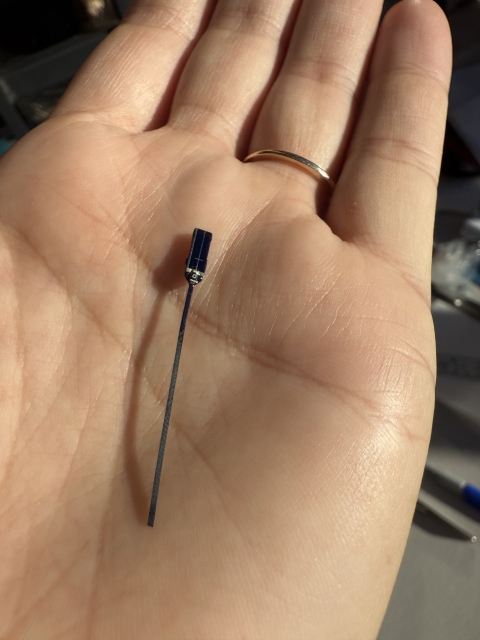
The study uses solar-powered radio telemetry tag technology, which transmits geospatial data from a remote source via radio waves. In this case, the telemetry tag is a small device attached to the back of a monarch. The tags will be used to monitor how monarchs use overwintering habitat and nearby nectar flowers. Weather data is also being collected at the site and will be used in conjunction with the movement data to further understand monarch habitat needs. The goal of this project is to increase our understanding of monarch butterfly use of overwintering groves in coastal California. The results will be used to better inform restoration and management of monarch overwintering groves.
In November, the Coastal Program and Althouse & Meade staff worked with the City of Goleta, Legacy Works, California State Parks, and other USFWS staff to tag monarchs at three different overwintering sites in San Luis Obispo and Santa Barbara Counties.
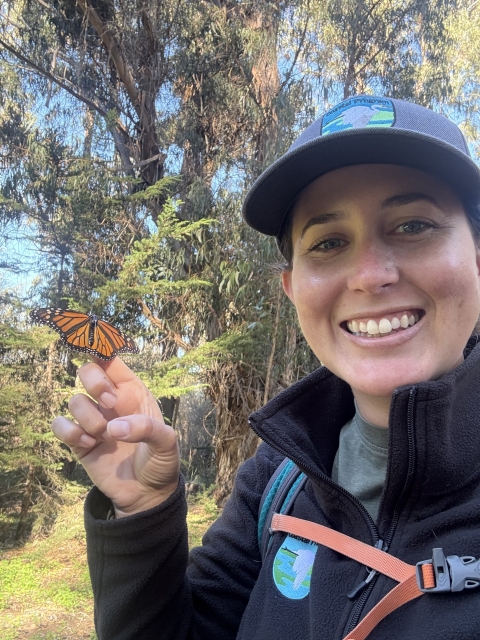
Monarch collection and tagging efforts started early in the morning, while the temperature was below 55 degrees and the butterflies could not fly easily. This is because monarchs are ectotherms (“cold-blooded”) and depend on the warmth of the sun to reach optimal body temperature to fly. Once the monarchs were collected, they were stored in a cooler to keep their temperature at or below 55 degrees. They were identified as male or female and then weighed and measured to ensure they were large enough to be tagged. The radio tags were then attached to their backs using eyelash glue.The eyelash glue is known to withstand the rain and even hurricane winds!
The public is welcome to participate in data collection for this effort using the Project Monarch App which can be downloaded on a smart phone. The App has a map of all tagged monarchs and a feature allowing data entry.The information learned from this study will enhance monarch butterfly conservation efforts and help improve restoration techniques in overwintering groves.