Written By

You cannot talk about coastal habitat restoration on the Texas coast without mentioning Jarrett ("Woody") Woodrow.After an 18-year career with the U.S. Fish and Wildlife Service (USFWS) Coastal Program in Texas, Woody is retiring at the end of January 2026. Woody joined the Coastal Program after 14 years with Texas Parks and Wildlife Department where he worked on coastal restoration and supervised staff carrying out habitat conservation projects. Woody’s ability to build relationships and trusted partnerships has led to projects that have literally changed the landscape of coastal Texas for the benefit of endemic fish, wildlife, plants and the communities that rely on these coastal natural resources.
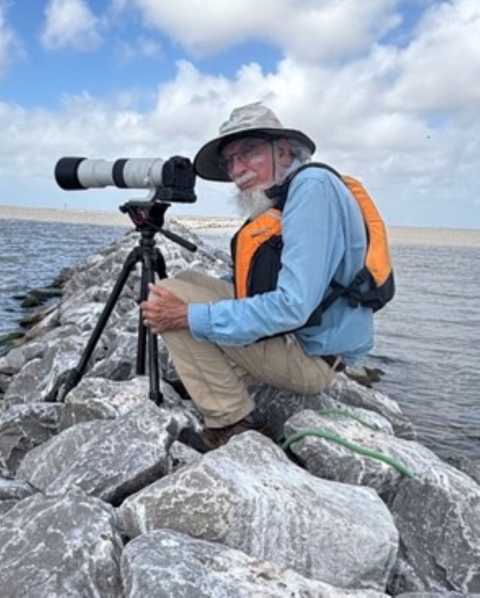
When asked about his career in the Coastal Program Woody commented "One of the things that stuck with me throughout my public service career and is especially true about how the Coastal Program works with partners, is the classic quote by Margaret Meade, "Never doubt that a small group of thoughtful, committed citizens can change the world; indeed, it's the only thing that ever has." Despite all the challenges that we face in our conservation roles, we are not alone. Solutions that we may perceive as impossible become possible when we help each other, by working toward a goal."
Woody says it is all about supporting the work of our partners, but he has truly been the guiding force that helped develop and maintain long-term partnerships to further conservation.You can see Woody’s fingerprints on some of the largest coastal restoration projects in Texas such as the Salt Bayou Watershed Restoration Plan that has resulted in the hydrologic restoration of tens of thousands of acres of coastal marsh on the upper Texas coast and rebuilt more than 17 miles of beach and dunes to protect the marsh. Or projects like the Bahia Grande Restoration project in south Texas, that restored more than 10,000 acres of coastal habitat on Laguna Atascosa National Wildlife Refuge.
During the 2010 Deepwater Horizon oil spill and disaster, Woody deployed to USFWS Region 4 to assist the DOI Natural Resources Damage Assessment (NRDA) team to begin developing restoration plans for Gulf resources affected by the spill. One of the Early Restoration Plans Woody helped develop included more than $20 million to rebuild colonial nesting waterbird islands on the upper Texas coast. The NRDA Trustees, Coastal Program and other partners continue to implement the Early Restoration Plan, and Woody worked with the Trustees to develop and implement restoration actions to address injured resources in Texas.
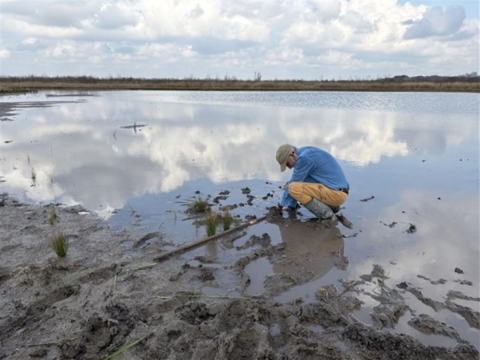
One of the last Coastal Program projects Woody worked on is the restoration of Dressing Point Island. Dressing point is a colonial waterbird nesting island located on the middle Texas coast and part of Big Boggy National Wildlife Refuge. The island is rapidly eroding due to storms and sea-level rise.In 2010, the Coastal Program began working with Ducks Unlimited (DU) to develop preliminary plans to restore the Island. Because of Woody’s preliminary work with DU and his work with the NRDA Trustees, the island was included as one of the Deepwater Horizon Early Restoration projects. Construction began in September of 2025 and includes a rock breakwater to protect the island and additional land mass increasing the size of the island by 7 acres. The island is expected to be completed in January and is a remarkable tribute to Woody’s work with numerous partners.
We wish Woody well in retirement and he will be missed in the Coastal Program.In retirement, Woody plans to volunteer for the Mid-coast Refuge Complex through its Friends group, build a second wooden boat, pursue his interests in music and photography and spend more time outdoors with his wife, Jennifer Wilson.