Location
States
ArizonaEcosystem
River/streamIntroduction
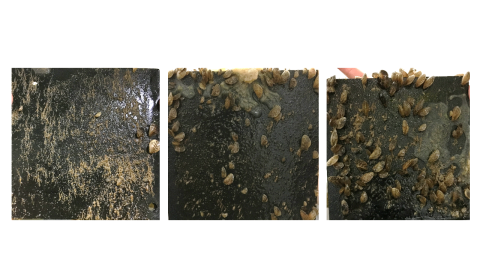
Quagga mussels (Dreissena bugensis) are nonnative freshwater mollusks that were discovered in the lower Colorado River system in 2007. Quagga mussels’ ability to attach to hard surfaces and quickly colonize water supply systems in hydroelectric facilities threatens the reliability of power generation and water delivery by clogging intakes and engines, pipes, and water transport structures. Following discovery of the species, the Bureau of Reclamation (Reclamation) immediately embarked on a concerted effort to learn more about quagga mussels and their control. Between 2009 and 2018, Reclamation and RNT Consulting Inc. tested the effectiveness of ultraviolet (UV) light for mussel settlement (attachment) prevention at Hoover, Davis, and Parker Dams.
Several studies carried out in the 1990’s have shown that flow-through UV light treatment systems have the ability to prevent attachment of mussel larvae on downstream surfaces in piped systems. These UV systems are installed directly on a pipe so that water can be exposed and treated by UV lamps as it flows through the pipe at normal rates. Reclamation began initial testing at Hoover Dam in 2009, where a UV unit was installed on a single generator cooling water pipe to examine the effectiveness of downstream mussel settlement (when a mussel physically attaches to a hard surface) reduction and the ease of operation in a hydropower plant.
Following the Hoover study, a full-sized medium pressure Hydro-Optic Disinfection (HOD) UV system was installed on a cooling line at Davis Dam (Arizona/Nevada) in 2013. Reservoir water (containing larvae) entered the hydropower cooling system, passed through the UV system and was treated with UV light. Mussel settlement reduction and the impact of UV on the larvae was tested at four doses (100, 50, 40, and 20 millijoules per square centimeter (mJ/cm2)), with significant settlement reduction observed at each dose. The successful research at Davis Dam led to the installation of UV on all four generator cooling systems at Parker Dam where additional research was conducted to examine the UV treatments’ effectiveness for preventing several types of biofouling. Biofouling is the unwanted accumulation of living organisms. The study at Parker Dam examined the reduction of biofouling related to settlement of mussels, bacteria, freshwater sponges, and hydroids. The installation at Parker Dam also provided information about cost savings associated with reduced maintenance of piped systems protected by UV.
Key Issues Addressed
Dreissenid mussel infestation is a growing concern among water management facilities throughout the Western United States, as mussel infestations threaten infrastructure and efficient hydropower production. Conventional treatment methods such as chemical oxidant treatment (chlorine) are costly, environmentally adverse, and require discharge permitting. Consequently, there is a need for innovative treatment methods that will prevent or limit mussel colonization in such facilities. UV light is one such treatment, as it does not require discharge permitting and has no detrimental effects to the environment. UV light treatments within the UVB and UVC range of the electromagnetic spectrum (<320 nm) are thought to be the most effective at disabling mussels and preventing attachment. UV treatment is only appropriate for the larval stages of mussels as they have a transparent/translucent shell which the UV light can more easily penetrate.
Project Goals
- Examine the effects of UV treatment on mussel larvae and colonization reduction at a range of UV doses
Determine if UV is an effective treatment for mussel control in piped systems and if it reduces other types of biofouling
Determine if UV can reduce maintenance costs associated with mussel colonization
Project Highlights
Labor Cost Savings: UV units were installed on each of the four cooling water systems at Parker Dam in 2015. Prior to UV installation, all heat exchangers required cleaning and maintenance as a result of mussel fouling and overheating. The increased maintenance required approximately 640 staff hours, annually. After UV installation the heat exchangers have not required maintenance, saving approximately $80,000 per year in labor. UV treatment was also found to reduce bacteria and sponge biofouling. UV installation is currently in progress at Hoover Dam and Glen Canyon Dam.
Positive Results: The Hydro-Optic Disinfection (HOD) UV system installed at Davis Dam effectively reduced quagga mussel settlement at all doses tested. Mussel settlement was reduced by 88% at the lowest dose (20 mJ/cm2) and a 99% reduction was observed at the highest dose (100 mJ/cm2). Larvae exposed to UV experienced delayed mortality, and mortality rates were variable based on UV dose, monthly environmental conditions, and larvae size. In general, higher doses produced greater mortality while low levels of mortality were seen in control samples at each dose. The power usage of the UV unit at Parker Dam was also monitored during the study and was found to be relatively inexpensive. The annual cost to power the UV unit installed at Davis Dam at a dose of 40 mJ/cm2 was between $3,150 and $4,350. The annual cost to power the unit at 20 mJ/cm2 was approximately $1,950.
Additional Findings: When the UV unit was installed at Hoover, the cooling water system was retrofitted so that water was being supplied from the tailrace (the location where the outflow of the dam enters the river) rather than the penstock (an enclosed pipe that delivers water to hydro-turbines from the upstream reservoir). It was discovered that using tailrace water instead of penstock water resulted in an additional reduction of mussel settlement. There are typically fewer mussel larvae present in the tailrace water because adult mussels do not prefer to settle in this location like they do upstream. The benefits of using tailrace water also include the reduction of mussel shell debris and a reduction in power plant noise levels, as the centrifugal pumps used to pump the water from the tailrace emit lower decibel levels.
Lessons Learned
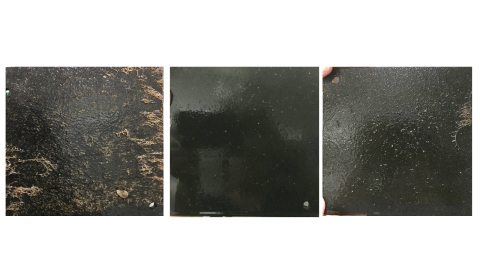
More Work to Be Done: Additional research is needed to better understand what UV doses and additional treatments would be required to achieve complete mortality of quagga mussel larvae.
The results of this study indicate that UV light treatment for the prevention of quagga mussel settlement in hydropower generator cooling systems can be effective. The results may also be useful for water managers interested in using UV to control mussels in other applications. Where immediate and complete larvae mortality is the main objective, a significantly higher dose would need to be tested.
Although this specific UV system was found to cause larvae mortality and limit settlement, it cannot be assumed that the same results would be achieved in every location, as water quality and site-specific conditions will vary. Before a UV system is deployed for mussel treatment, it is important to conduct similar testing for each specific set of circumstances.
This study found that treatment with the medium-pressure HOD UV system (designed to deliver a dose of 100 millijoules per square centimeter (mJ/cm2) can be effective in preventing quagga mussel settlement in hydropower cooling water systems. Site-specific water quality plays an important role in the effectiveness of UV treatment for mussel settlement prevention. The results of this study indicate that water temperature may impact the robustness of larvae and their ability to survive the treatment. Increased levels of turbidity (decreased UVT readings, or less clear water) limit UV penetration and can greatly impact the effectiveness of this control strategy against larvae. It is suggested that self-cleaning strainers should be installed upstream of the UV units to remove large debris which can impact the function of the UV unit. It is possible that self-cleaning strainers will not be able to handle the debris loads experienced at some sites, therefore installation location should be carefully considered.
Next Steps
Continue to monitor treatment effectiveness at the Parker Dam UV installation
Install UV systems at Hoover and Glen Canyon Dams
Provide guidance and input to other agencies who are considering installing UV mussel control systems
Continue to investigate other control methods where UV treatment is not feasible
Funding Partners
Resources
Pucherelli et al. (2018). “Control of Biofouling in Hydropower Cooling Systems using HOD Ultraviolet Light.” Management of Biological Invasions 9(4): 451-461.
Pucherelli, S.F. and Claudi, R. (2017). “Evaluation of the effects of ultra-violet light treatment on quagga mussel settlement and veliger survival at Davis Dam.” Management of Biological Invasions 8(3): 301-310.
Pucherelli, S., F. (2018). “Control of Biofouling in Hydropower Cooling Systems using HOD Ultraviolet Light.” Research and Development Office, Final Report ST-2018-1712-01.
Pucherelli, S., F. (2014). “Evaluation of the Effects of Ultra-Violet Light Treatment on Quagga Mussel Veligers at Davis Dam.” Research and Development Office, Final Report 2014-01-0891.
- Bureau of Reclamation Technical Service Center
Contact
Sherri Pucherelli, Biologist, Bureau of Reclamation: spucherelli@usbr.gov
Case Study Lead Author
Deanna Morrell, Program Analyst, Bureau of Reclamation, dmorrell@usbr.gov
Suggested Citation
Morrell, D., P. (2020). “Impact of Ultraviolet Light Treatment to Control Quagga Mussel Larvae Settlement.” CART. Retrieved from https://www.fws.gov/project/uv-light-control-invasive-larvae.