


Photo By/Credit
Koerner, Tom/USFWS
Date Shot/Created
10/19/2015Media Usage Rights/License
Public Domain
Image
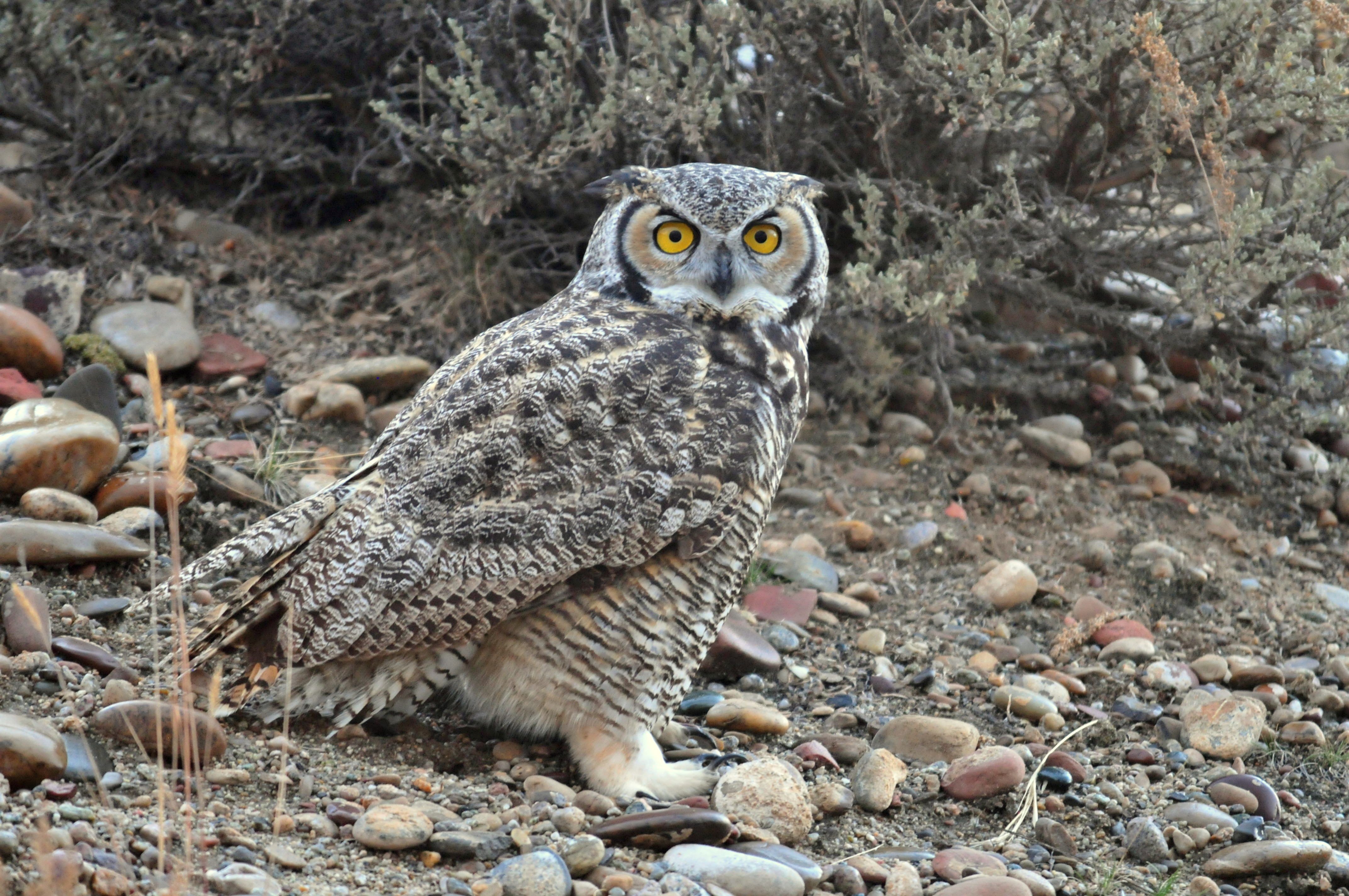
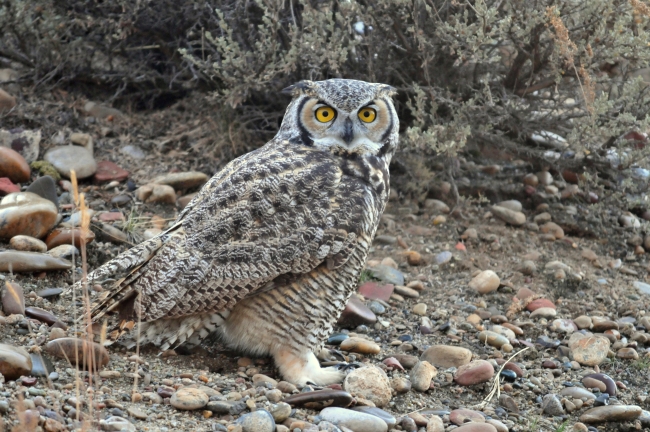
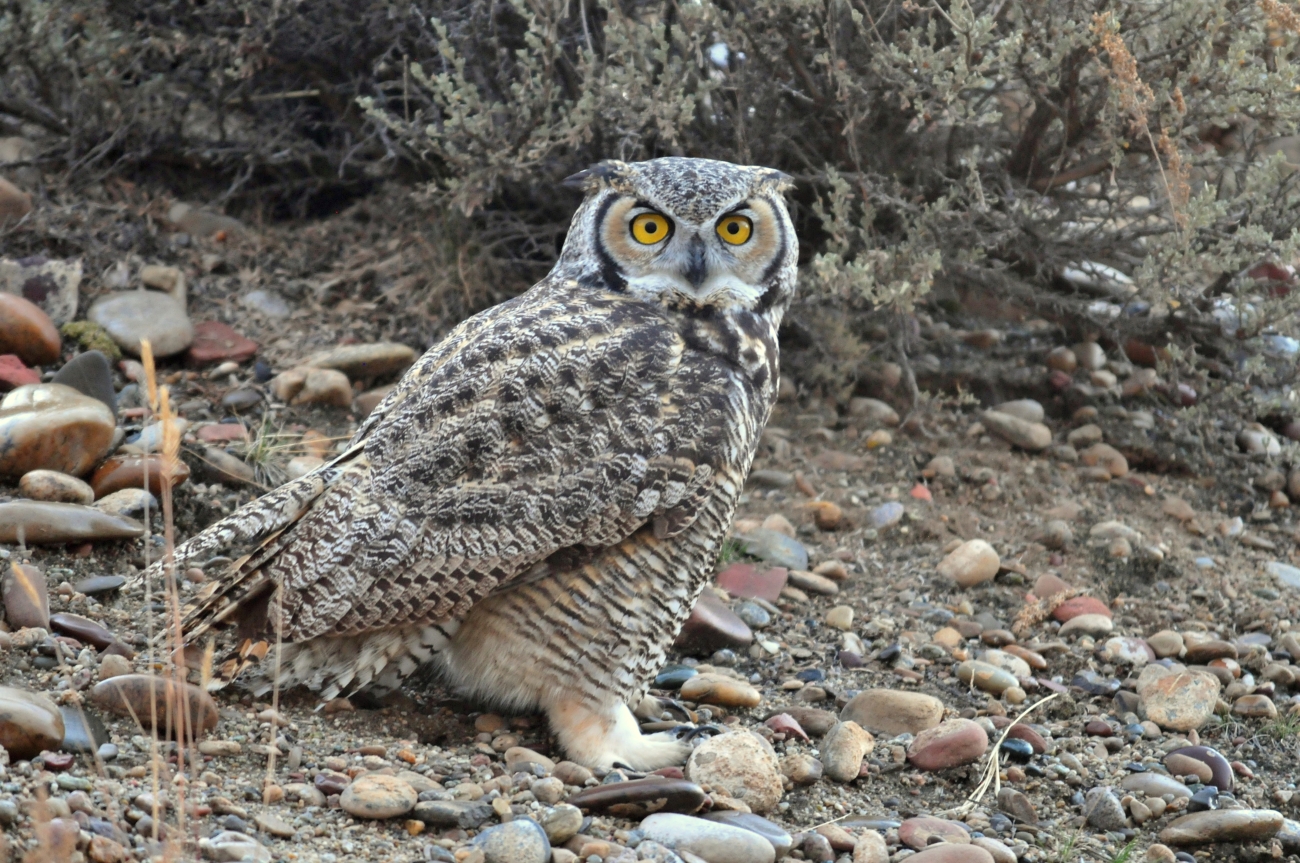
A Great Horned Owl is perched on the transition from sage steppe to riparian habitats at Seedskadee NWR. Great horned owls are common in the river valley and their calls can be heard up and down the river on calm nights. They are a significant predator on Seedskadee NWR and there are very few things they will not eat. Great horned owls have the most diverse diet of all North American raptors. They eat mostly mammals and birds at Seedskadee NWR , especially cottontail rabbits, white-tailed jackrabbits, meadow voles, mice, and American Coots. They also kill and eat many other species including least chipmunks, white-tailed prairie dogs, bats, feral house cats, ducks, mergansers, grebes, rails, other owls, hawks, crows, ravens, doves, and starlings. They are one of the few to kill porcupines and striped skunks. They supplement their diet with reptiles, insects, fish, invertebrates, and sometimes carrion. They are primarily nocturnal hunters and use their excellent hearing and night vision to locate prey. They will occassionally hunt in broad daylight, but run the risk of other raptors harrassing them severely. We have spotted both prairie falcons and Northern harriers taking turns driving great horned owls out of their territory. www.allaboutbirds.org/guide/Great_Horned_Owl/lifehistory
Species