


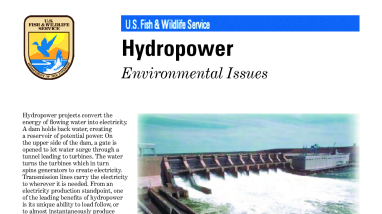
Hydropower projects convert the energy of fl owing water into electricity. A dam holds back water, creating a reservoir of potential power. On the upper side of the dam, a gate is opened to let water surge through a tunnel leading to turbines. The water turns the turbines which in turn spins generators to create electricity. Transmission lines carry the electricity to wherever it is needed. From an electricity production standpoint, one of the leading benefits of hydropower is its unique ability to load follow, or to almost instantaneously produce electricity as consumers require it. When demand is up, more water is released from above the dam, through the turbines and into the river downstream. As demand wanes, water flow is reduced. The resulting modifications in streamflow can have both immediate and long-term impacts on aquatic life and on basic components of water quality (e.g., temperature, dissolved oxygen, dissolved nitrogen).
Media Usage Rights/License
Public Domain